Supporting the Primary Health Care Response to Family, Domestic and Sexual Violence

good-design-award_winner_rgb_blk_logo

The Supporting Primary Health Care response to FDSV Program (SPC FDSV) turns general practices and other primary health services into entryways to safety and support for those impacted by FDSV. It bridges the gap between health and social support sectors to ensure equitable, effective support for all victim-survivors.
view website

2.jpg
3.jpg
4.jpg
5.jpg
6.jpg
7.jpg
8.jpg
  • CHALLENGE
  • SOLUTION
  • IMPACT
  • MORE
  • FDSV is a public health crisis with profound impacts that extend across the lifespan. While many victim-survivors may never access specialist FDSV services, most will engage with the primary health system. Primary health care, particularly General Practitioners (GPs), are cited as having a key role in international, national and state level FDSV policy responses. However, GPs face many barriers to adopting a role in a system response to FDSV, including time & financial constraints, siloed service sectors and lack of FDSV education. Brisbane South PHN recognised that there were limited supports available to assist GPs in overcoming these barriers.

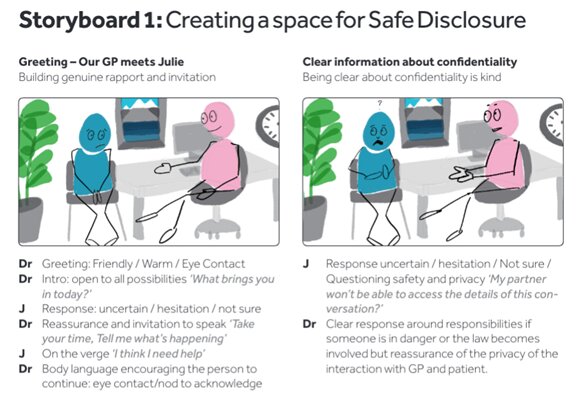
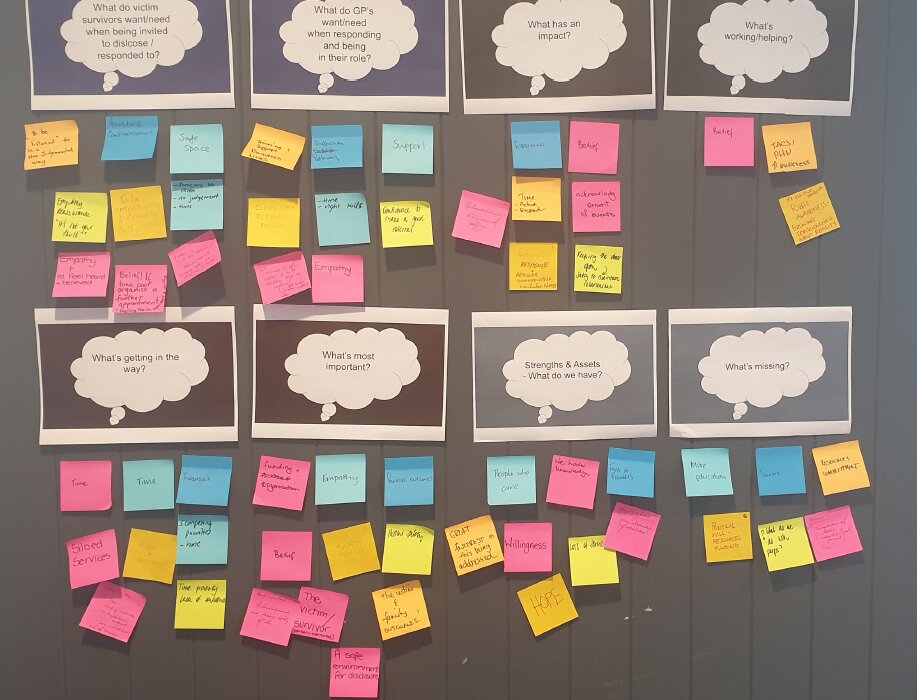
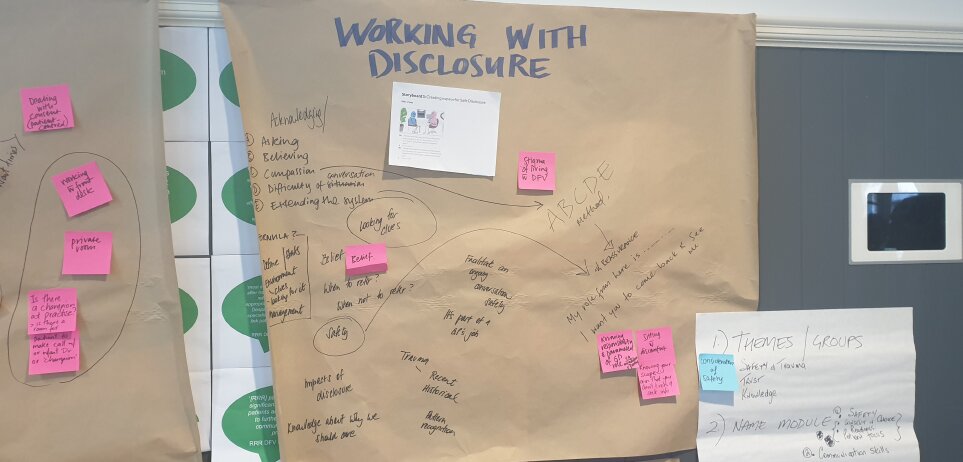
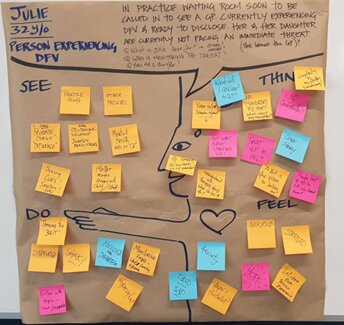
  • To assist with developing a place-based response, BSPHN commissioned The Australian Centre for Social Innovation (TACSI) to support a human-centred design process over 2018. This involved GPs, DFV services, people with lived experience of DFV and other stakeholders and led to the then named ‘Recognise, Respond, Refer’ model (DFV focus). BSPHN implemented it in 2019 and in 2020, the Commonwealth Government committed funding to piloting the model in five additional PHN regions. In 2023, the pilot was expanded to 7 additional PHNs (12 total) and extended to also support the primary health response to sexual violence and child sexual abuse.

  • The independent national evaluation reported the program is overwhelmingly perceived as valued, useful, important & needed. There is evidence that the program is contributing towards an improved support experience & outcomes for FDSV victim-survivors by: generating primary care sector FDSV awareness & understanding; enhancing the primary care sector’s FDSV capacity, processes & confidence; establishing & embedding trust between GPs & FDSV services; and increasing the number & quality of FDSV referrals from the primary care sector.July 2020-Apr 2025:· 5,451 Primary Care staff trained· 11,946 Meaningful Engagements between primary care and FDSV Specialist· 1,763 referrals from primary care to FDSV Specialist

  • The model is comprised of six influencing activities that support primary care professionals to take up a defined role in a systems response to FDSV. It is an overarching framework that enables place-based adaption, allowing it to be effectively implemented in each Australian jurisdiction by guiding local co-design and collaboration. 1. Specialist Linking Role - a dedicated FDSV Specialist that can provide FDSV advice and support to primary health care professionals & is their single point of referral for patients impacted by FDSV.2. Workforce capacity building - improves capability and confidence of primary health care professionals to respond to FDSV.3. Whole of practice approach - supports primary health care services to embed organisational level measures to support a coordinated FDSV response across the team.4. Locality integration - assists the primary health care sector to integrate with the existing local FDSV system, which includes the jurisdictional FDSV response.5. System Influence - brings together key system stakeholders on a regional, state, and national level to jointly work on overcoming systems issues.6. Evaluation, design and iteration - builds measurement, evaluation, co-design, and prototyping approaches into the fabric of the model to ensure it keeps evolving and improving the lives of people affected by FDSV.