Vanuatu National Warning System: A Sovereign Digital Lifeline

best-in-discipline

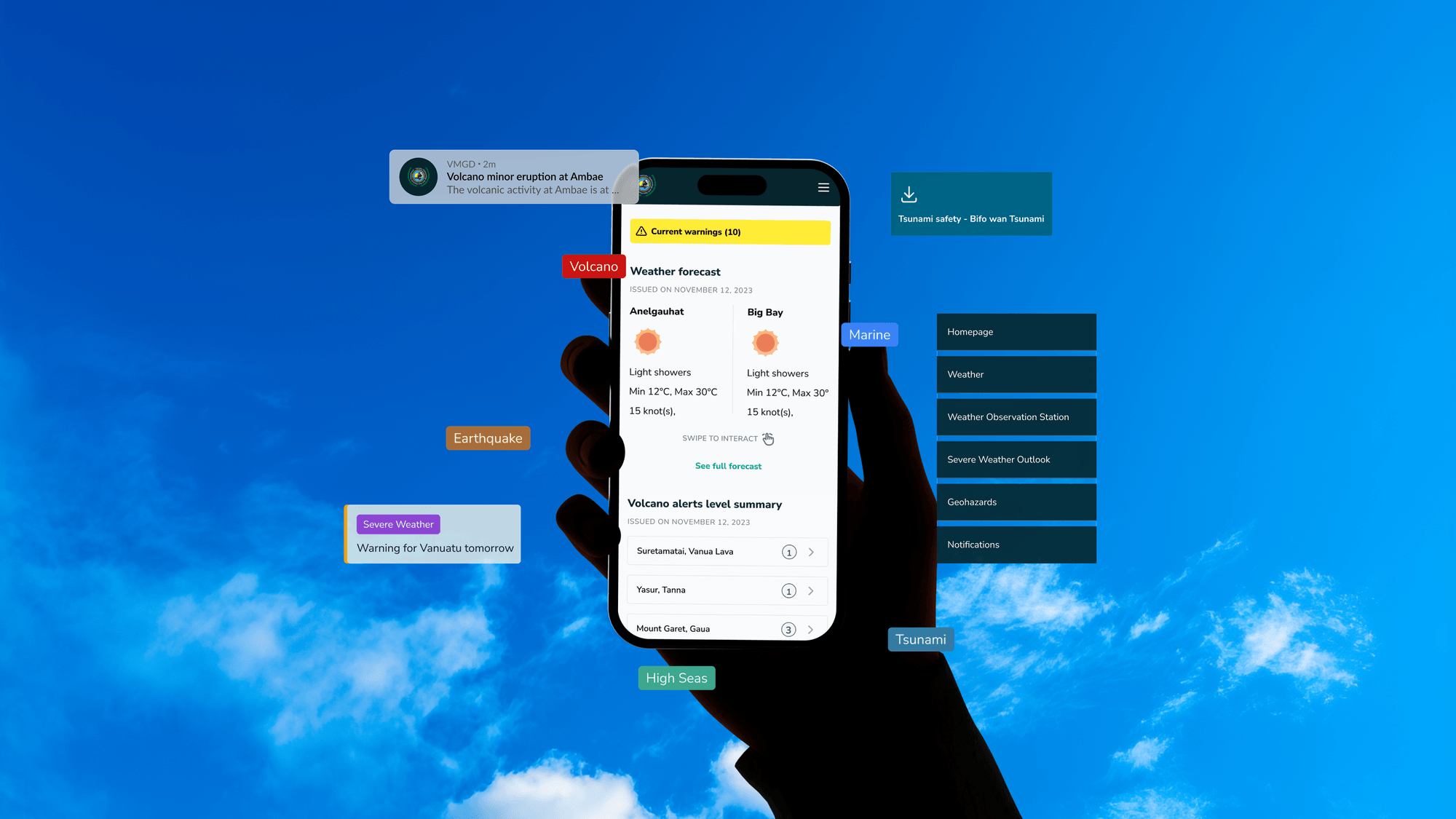
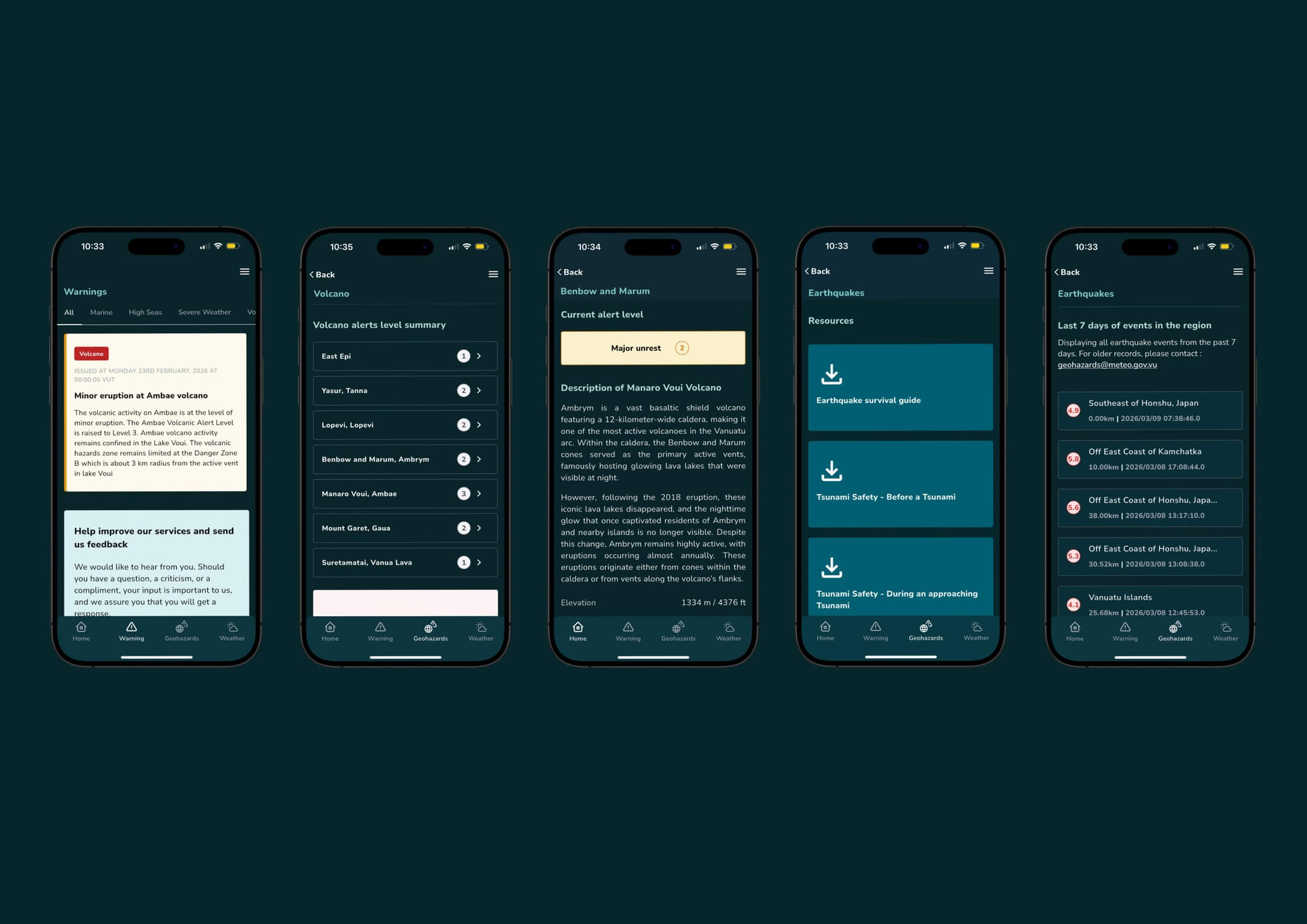
The Vanuatu National Warning System is a climate resilience ecosystem protecting 314,000 people across 83 islands. It bridges the gap between modern meteorology and Indigenous wisdom, delivering sovereign, life-saving data to the world’s most disaster-prone nation. It has transformed how the population interacts with national safety information and alerts.
view website

2.jpg
3.jpg
4.jpg
5.jpg
6.jpg
7.jpg
8.jpg
9.jpg
9.png
10.png
11.png
12.png
  • CHALLENGE
  • SOLUTION
  • IMPACT
  • MORE
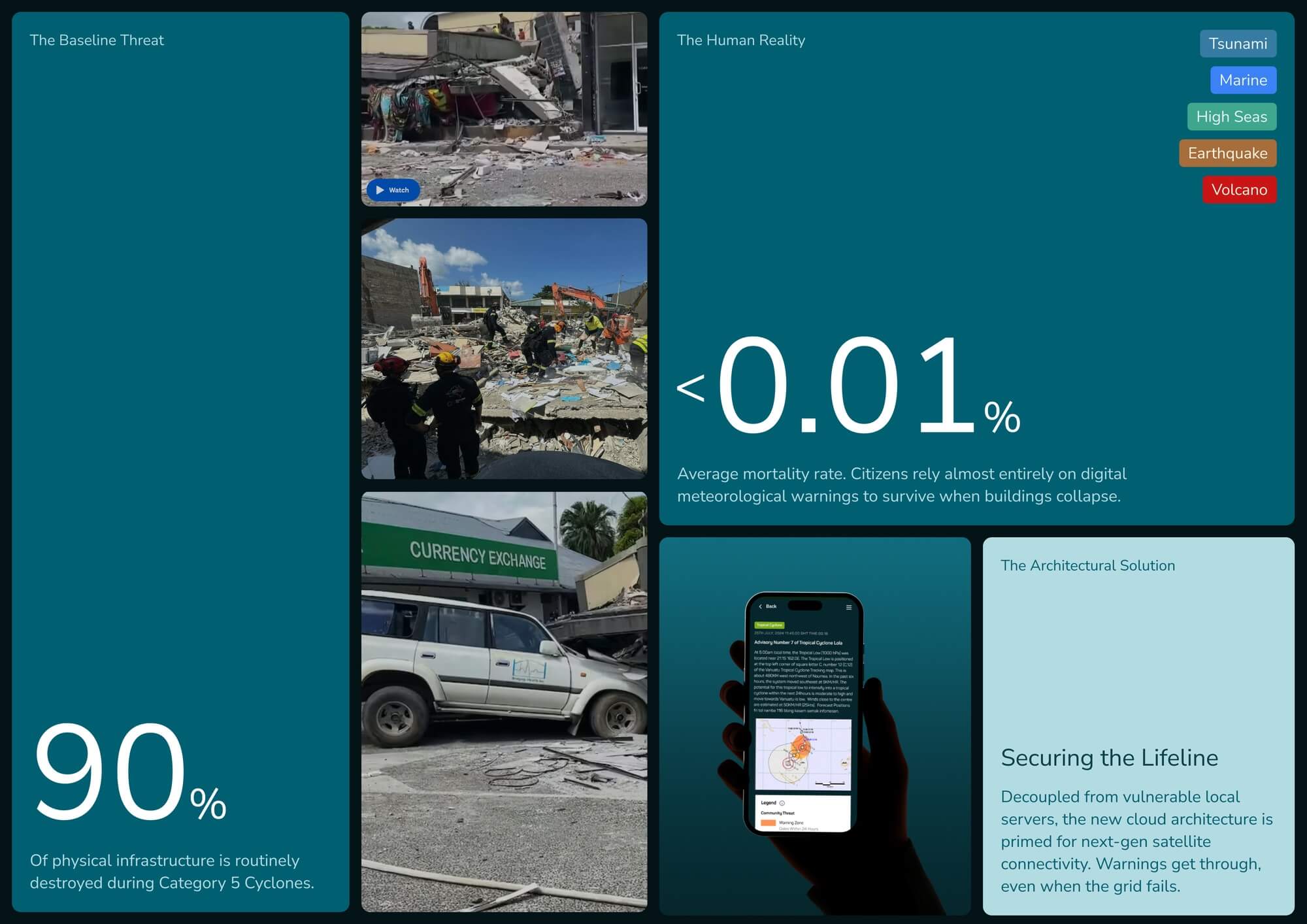
  • Vanuatu is the world’s most disaster-vulnerable nation, yet legacy infrastructure often fails when needed most. Previous alert systems suffered lethal delays of up to three hours due to telecom bottlenecks. Technical warnings in English and French often alienated the 80% subsistence-based population. The challenge was to build a resilient, culturally inclusive service on a micro-budget that could survive total grid collapse. We had to overcome the aid cycle where foreign-built systems struggle without local ownership while solving for remote maritime and island areas where radio and SMS coverage are frequently non-existent, leaving isolated communities exposed during seismic events.

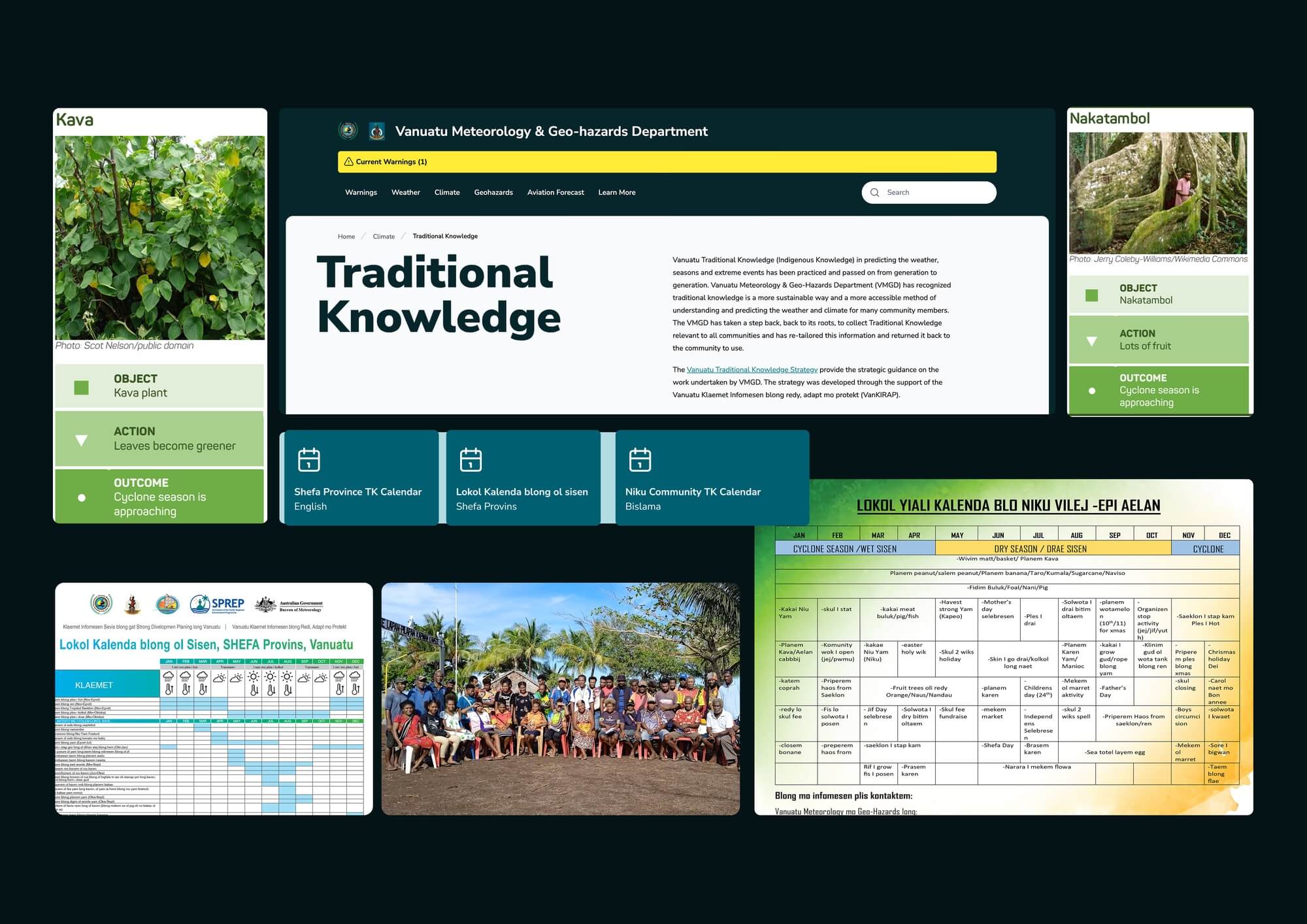
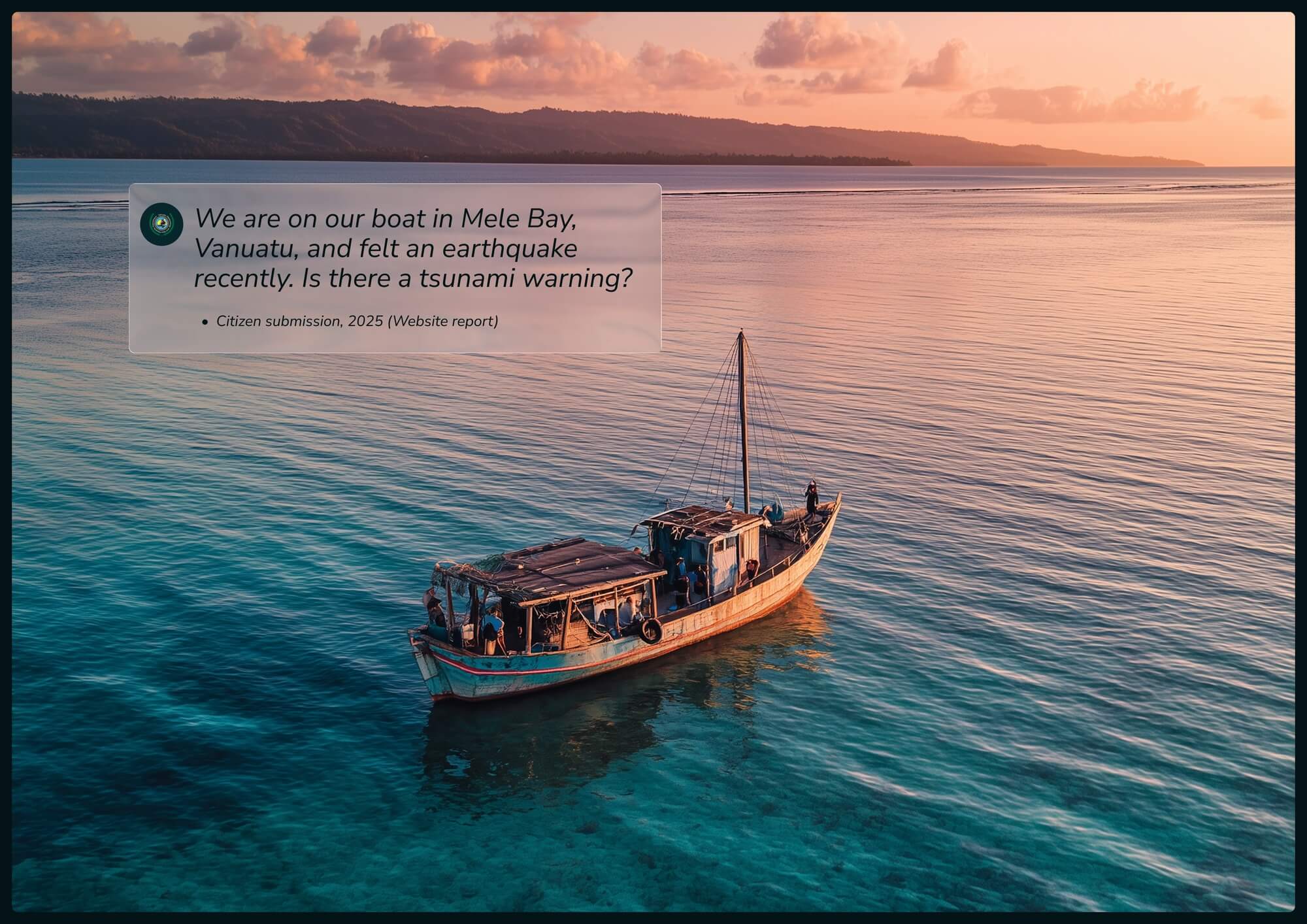
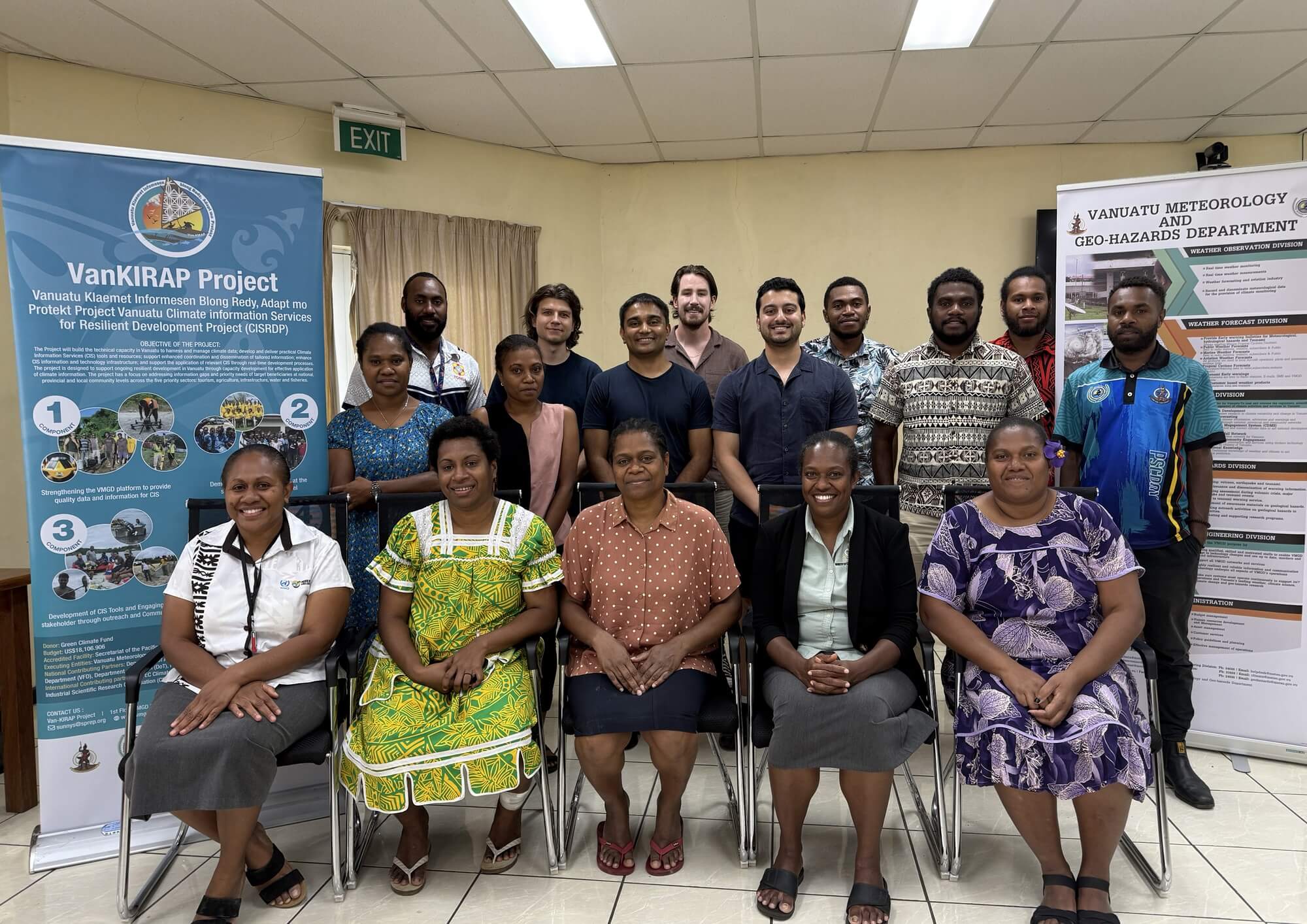
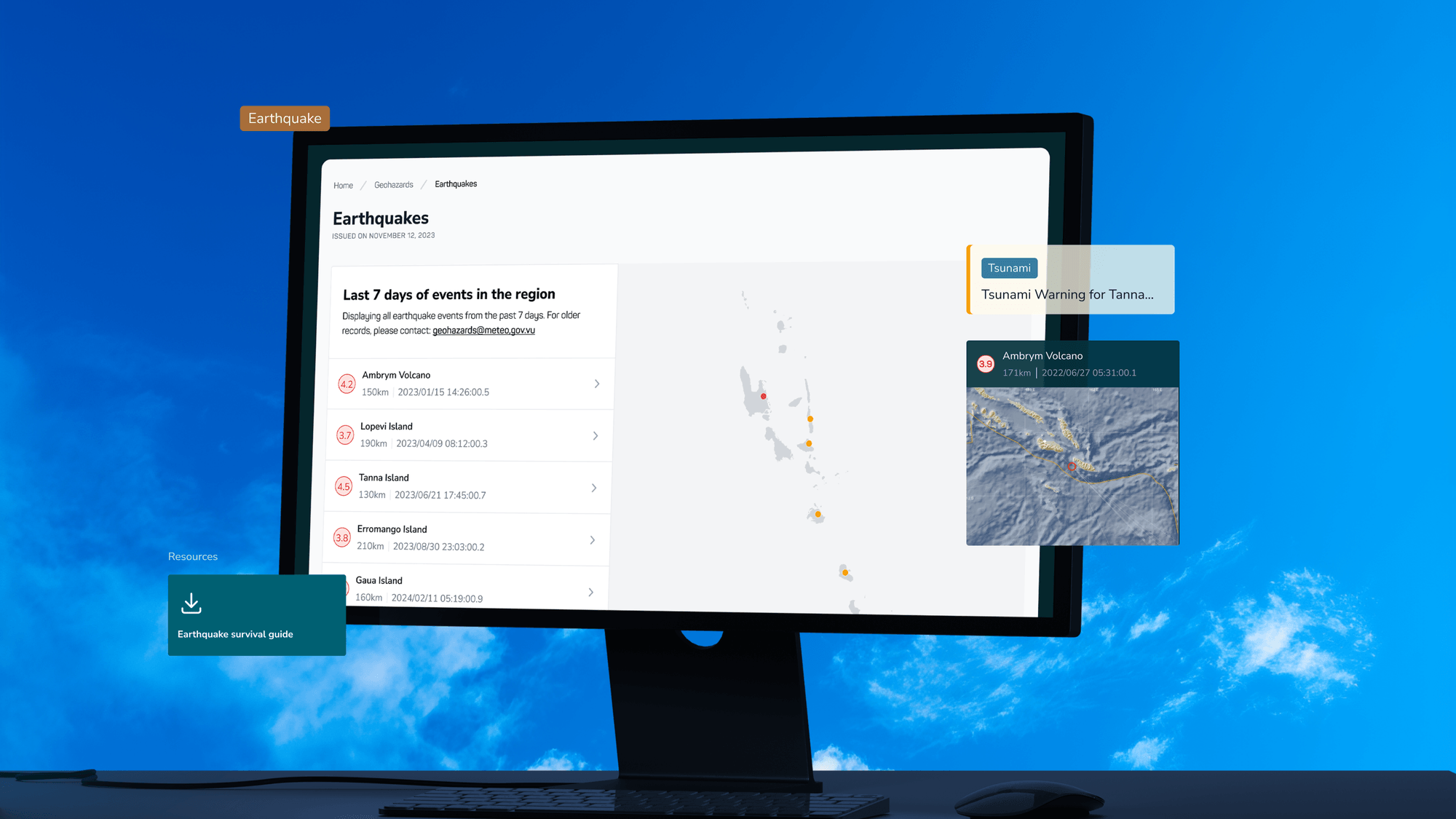
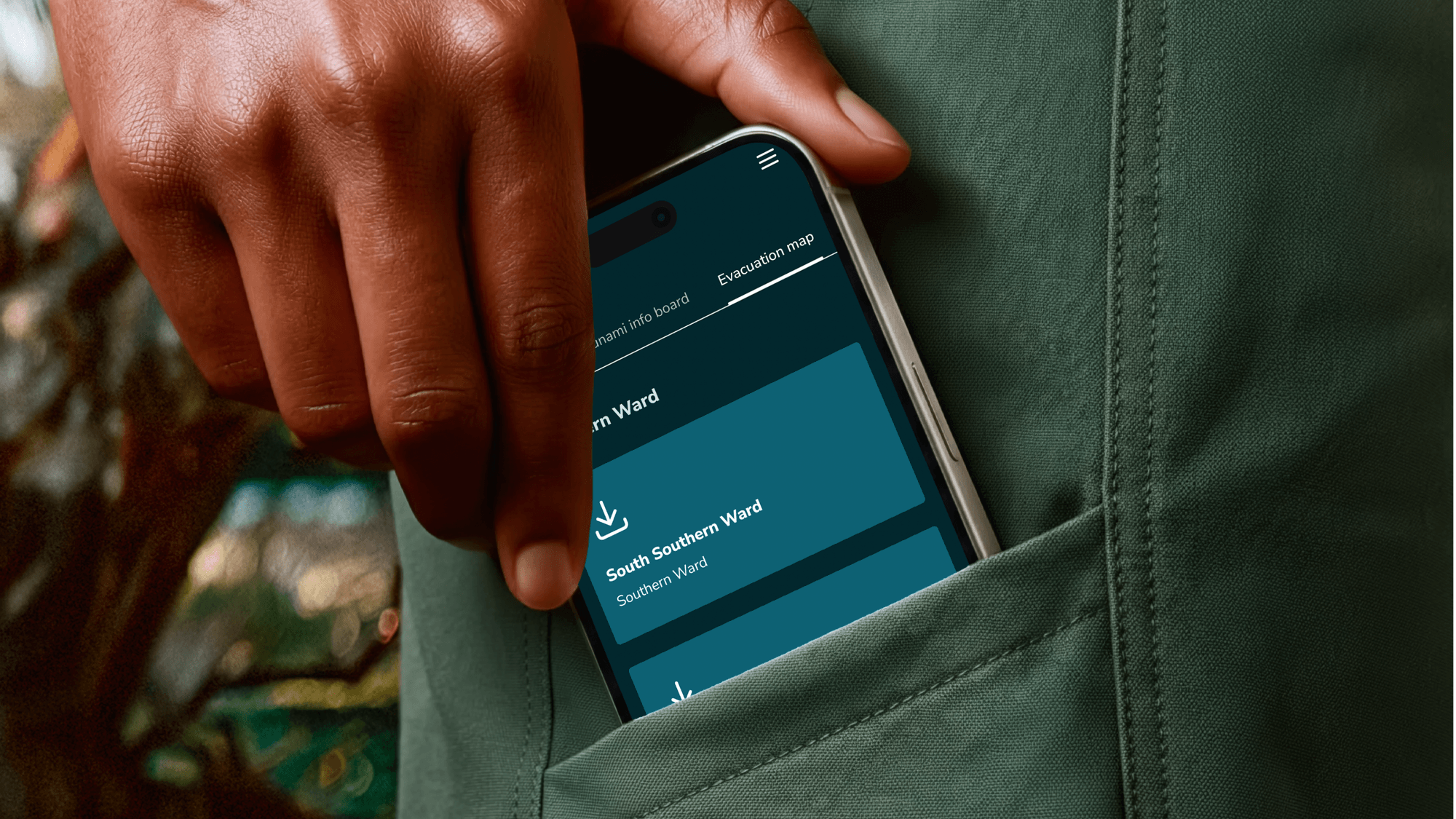
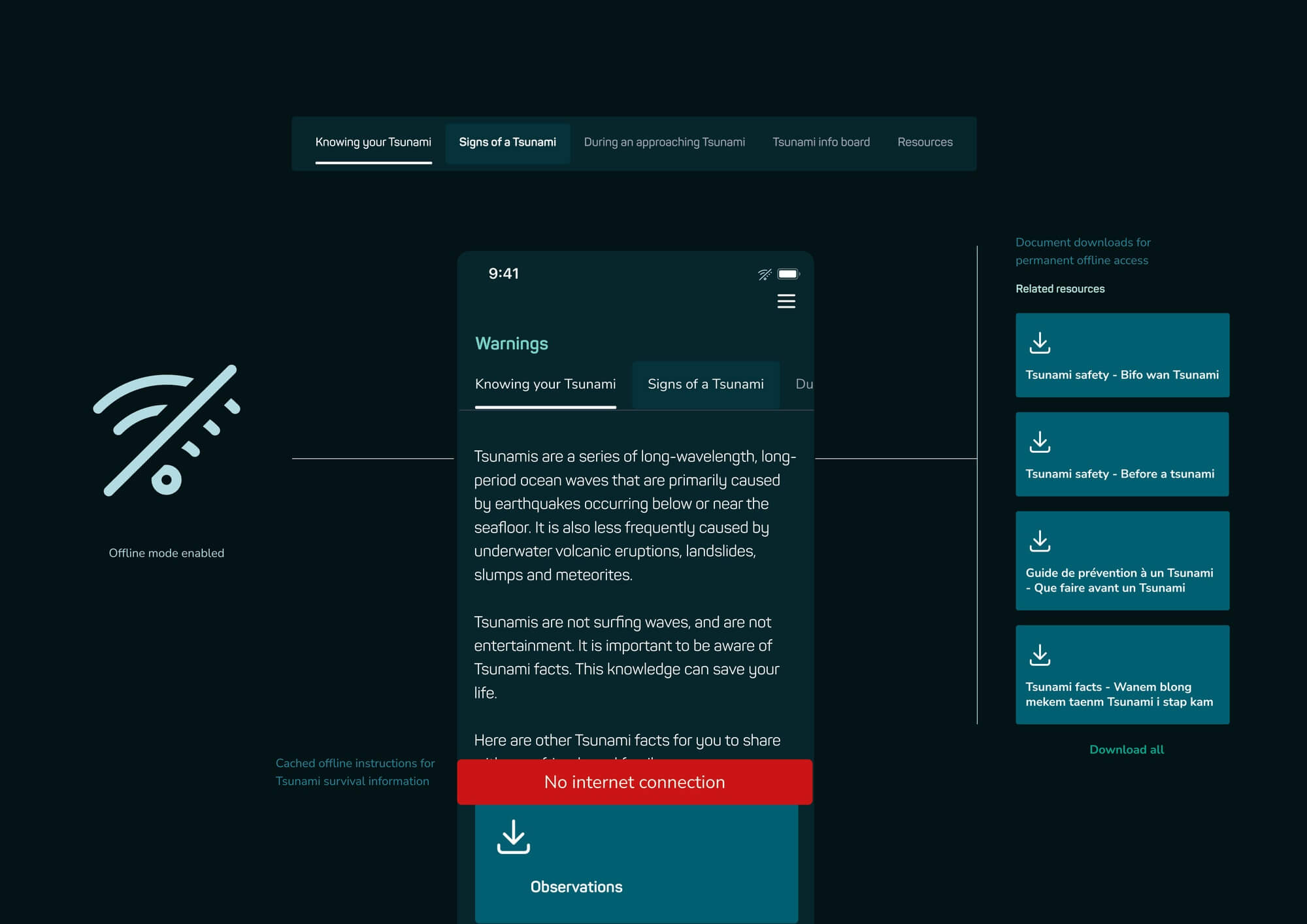
  • Our solution centred on digital sovereignty and cultural resonance. We bypassed failing cellular grids by engineering an offline-first mobile platform featuring near-instant push notifications and locally cached survival guides. To earn national trust, we fused modern satellite data with Traditional Knowledge indicators and prioritised Bislama as a primary technical language. A key feature included the Felt Report mechanism, designed as a participatory channel for users to provide feedback during seismic events. Crucially, we provisioned the local IT team with AI-assisted tools, ensuring they own and manage their infrastructure, shifting the paradigm from passive aid to self-determined resilience.

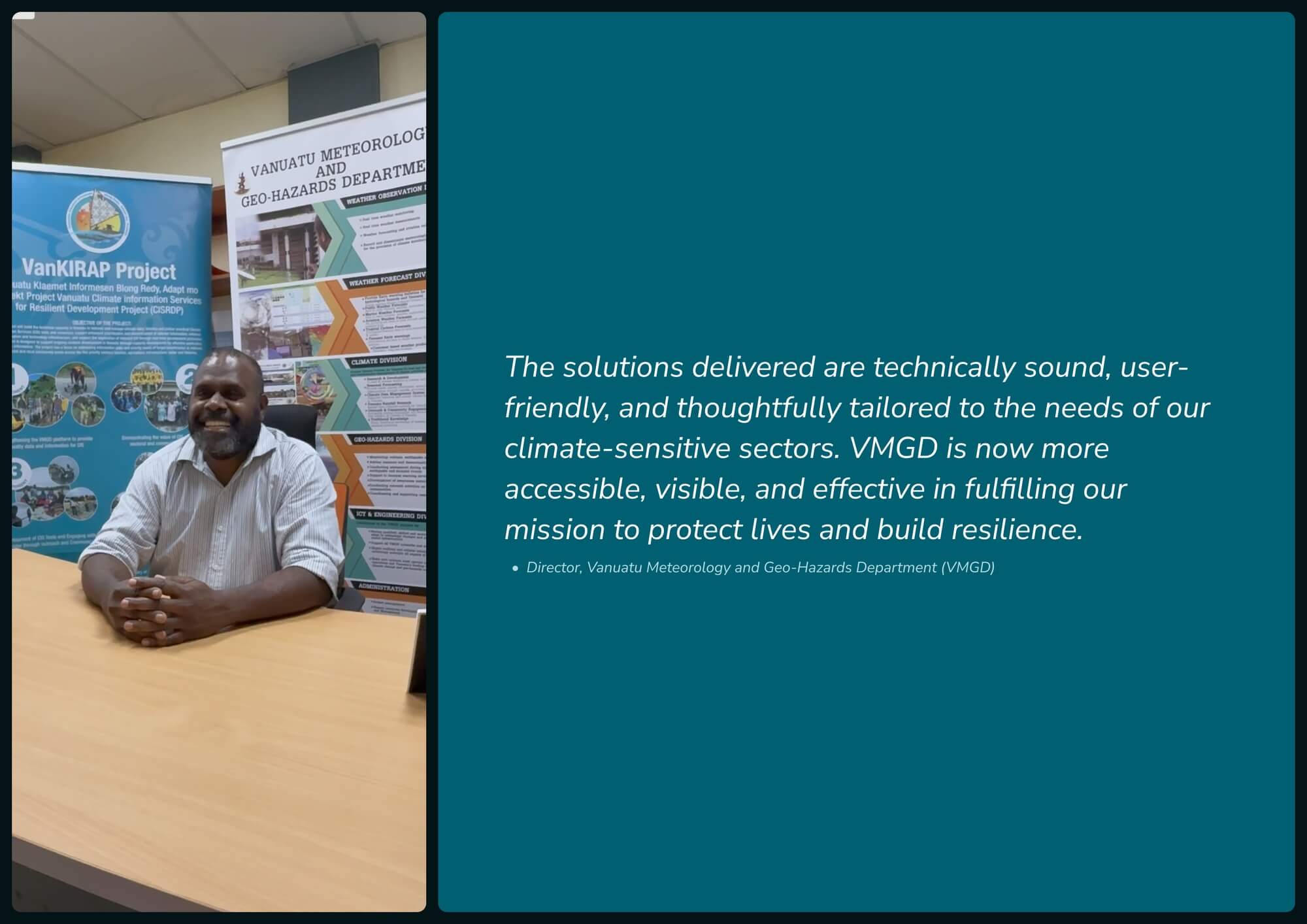
  • Impact is measured in lives saved. The Lancet notes our design approach as a factor in Vanuatu’s surprisingly low disaster mortality rates. Within one year, 25% of the population adopted the system. Beyond immediate alerts, the platform provides data utilized by global organizations. The WHO reached out to utilize climate data for disease early warning systems, while Peace Corps volunteers and the ADB have used the platform’s observations to inform water security and infrastructure planning in remote villages. This project proves that lean, professional design can solve complex problems by prioritizing human trust and technical resilience at the edge.

  • Linguistic and Cultural Sovereignty: The first national service to treat Bislama as a primary technical language, ensuring survival information and downloads reach grassroots communities rather than just urban centres.Traditional Knowledge Fusion: A digitisation of ancestral climate indicators, such as bird migrations and plant flowering, layered with modern meteorological models to build deep tribal trust.Felt Report Mechanism: A participatory feature designed to allow citizens to provide feedback on seismic activity, assisting in the verification of risks in remote areas.Offline-First Resilience: Survival guides and maps are silently cached to devices, ensuring life-saving data remains accessible even when national power and cellular grids are compromised.Institutional Data Backbone: Documented outreach and data usage from the WHO for disease tracking and the Peace Corps for water desalination projects in remote villages.Sovereign Maintenance: We avoided the cycle of aid decay by provisioning the local government IT team with AI-assisted development tools, allowing the nation to independently manage and evolve its own digital infrastructure without ongoing reliance on foreign consultants.