Reef of Hope – PHA made Topology-Optimized Artificial Reef for Pearl Oyster Restoration

good-design-award_gold-winner_rgb_blk_logo
  • 2026

  • Social Impact

Commissioned By:

Better 14

Designed In:

Hong Kong

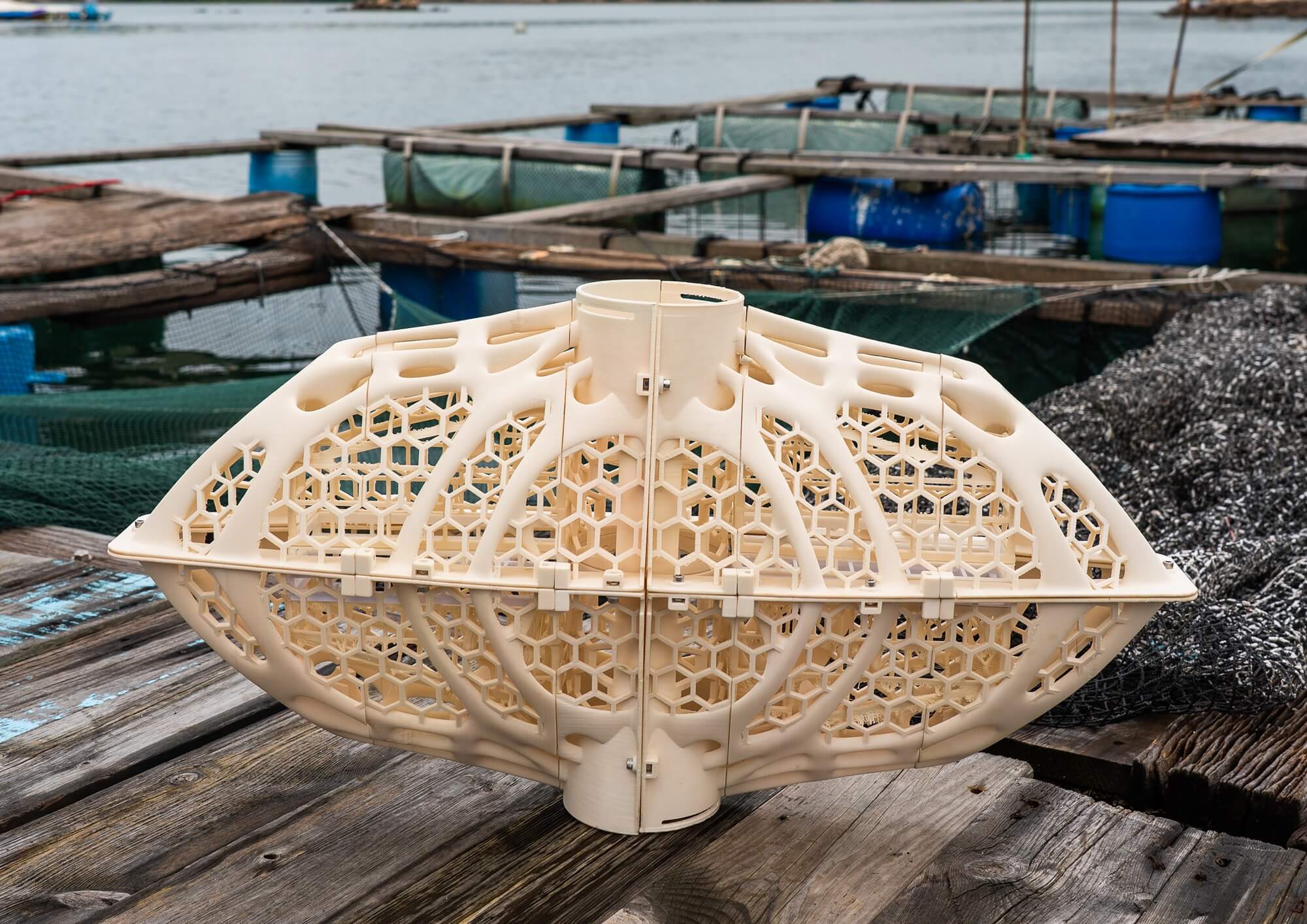
Reef of Hope is a floating biodegradable artificial reef designed for deployment within aquaculture areas to restore pearl oyster ecosystems. Created for coastal farmers and marine restoration practitioners, the system enhances oyster cultivation while rebuilding habitat, improving water quality, supporting biodiversity and sustainable ocean-based livelihoods.

view website

2.jpg
3.jpg
4.jpg
5.jpg
6.jpg
7.jpg
8.jpg
9.jpg
  • CHALLENGE
  • SOLUTION
  • IMPACT
  • MORE
  • Pearl oyster populations have declined due to habitat loss on coastal ecosystems, while aquaculture areas remain largely disconnected from ecological restoration efforts. Conventional artificial reefs are designed for seabed installation and cannot be easily integrated into active farming zones without disrupting operations or navigation. Aquaculture infrastructure typically prioritises production efficiency rather than ecosystem regeneration. The challenge was to develop a restoration system that functions within existing aquaculture environments, enabling habitat recovery without occupying seabed space or interfering with farming activities. The project required a lightweight, adaptable solution that supports oyster growth while aligning ecological restoration with everyday aquaculture practices.

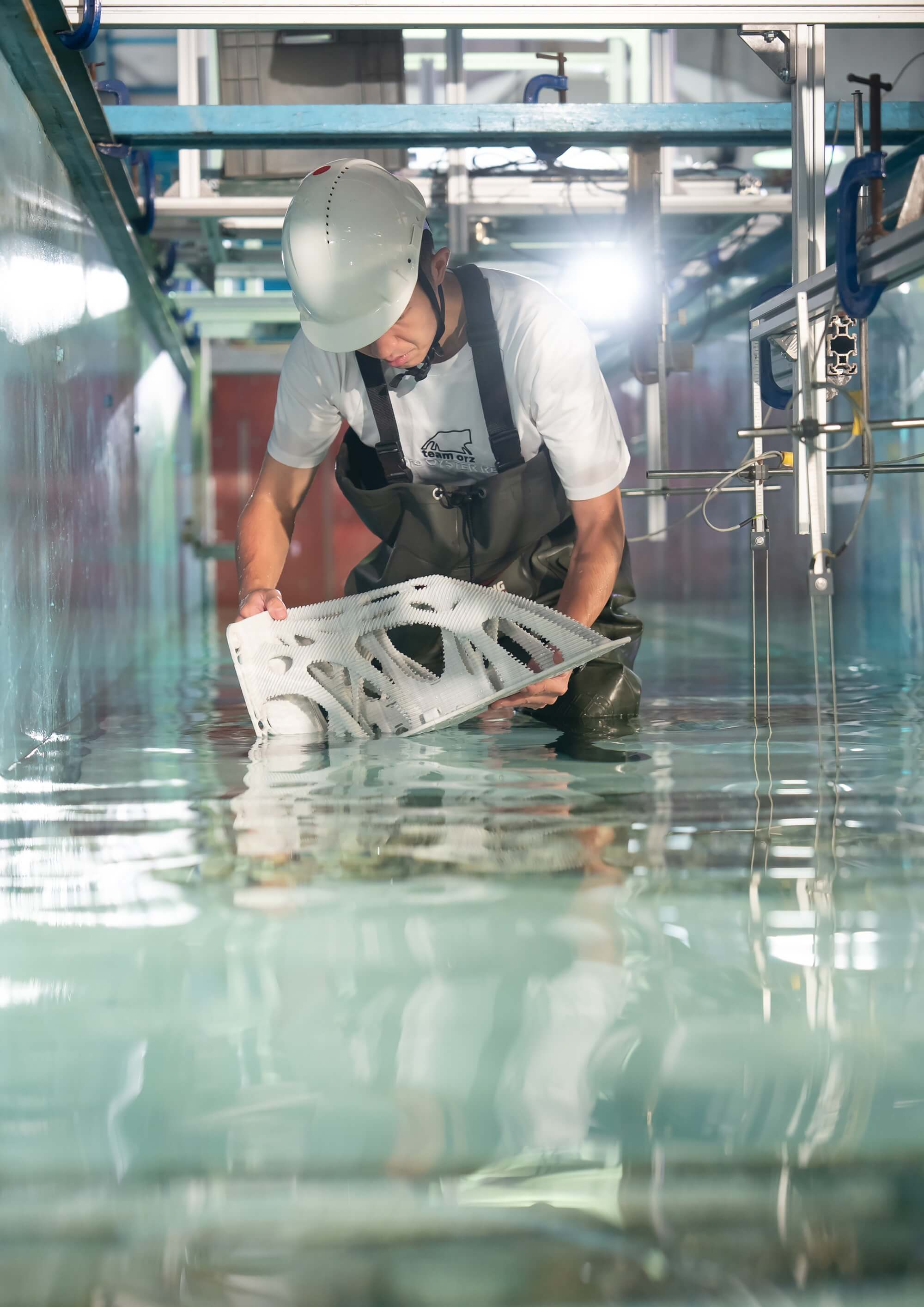
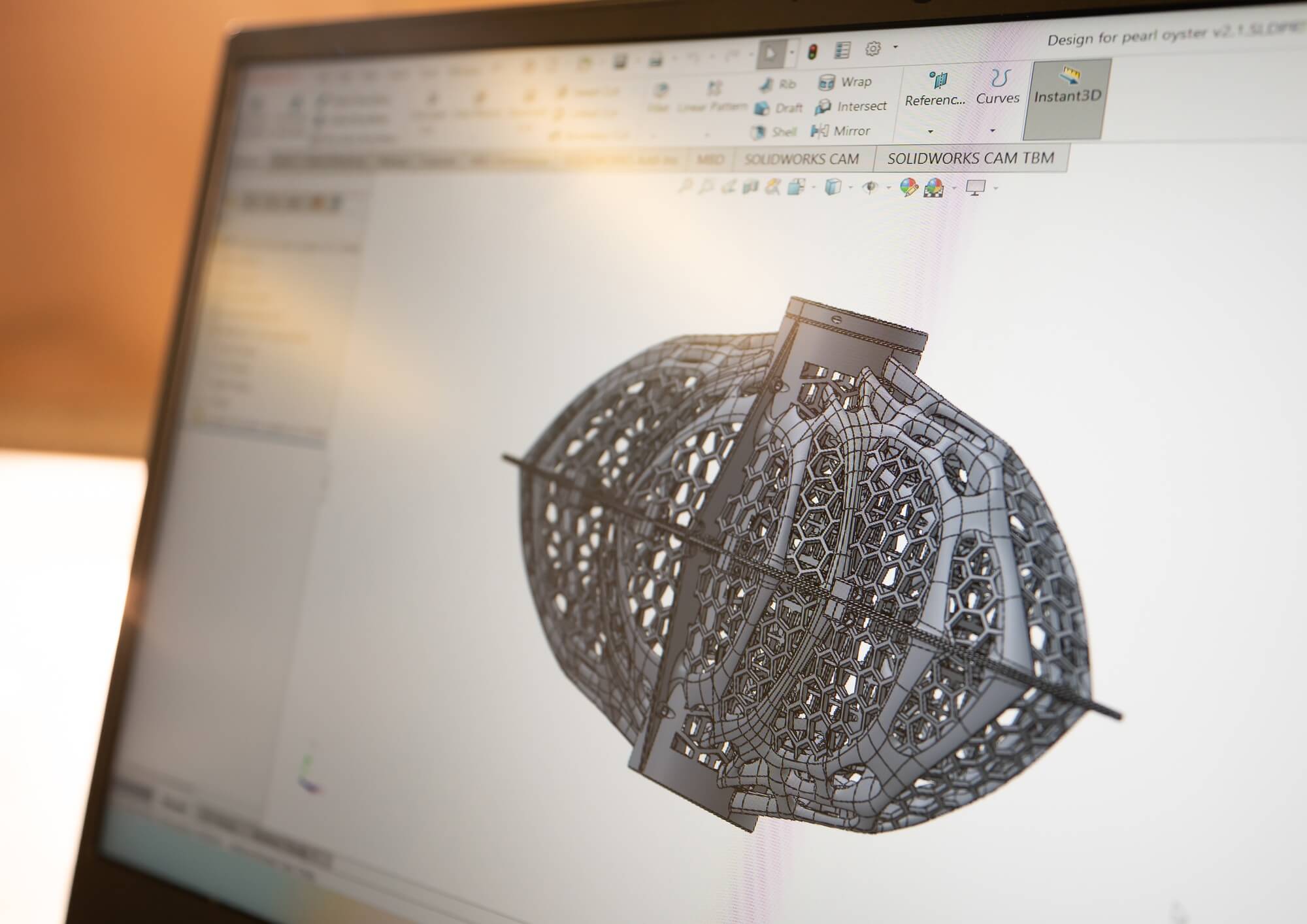
  • Reef of Hope introduces a floating artificial reef suspended within aquaculture systems to enable ecosystem restoration alongside pearl oyster farming. The structure applies topology optimisation principles to achieve high surface complexity with minimal material use, creating stable yet lightweight modules that enhance oyster attachment and water circulation. Fabricated through 3D printing using biodegradable PHA blended with recycled oyster shell material, the design balances buoyancy, strength, and ecological performance. Iterative prototyping refined structural geometry and suspension configurations to ensure operational compatibility with aquaculture infrastructure, allowing restoration habitats to be seamlessly integrated into existing farming environments without disrupting daily activities.

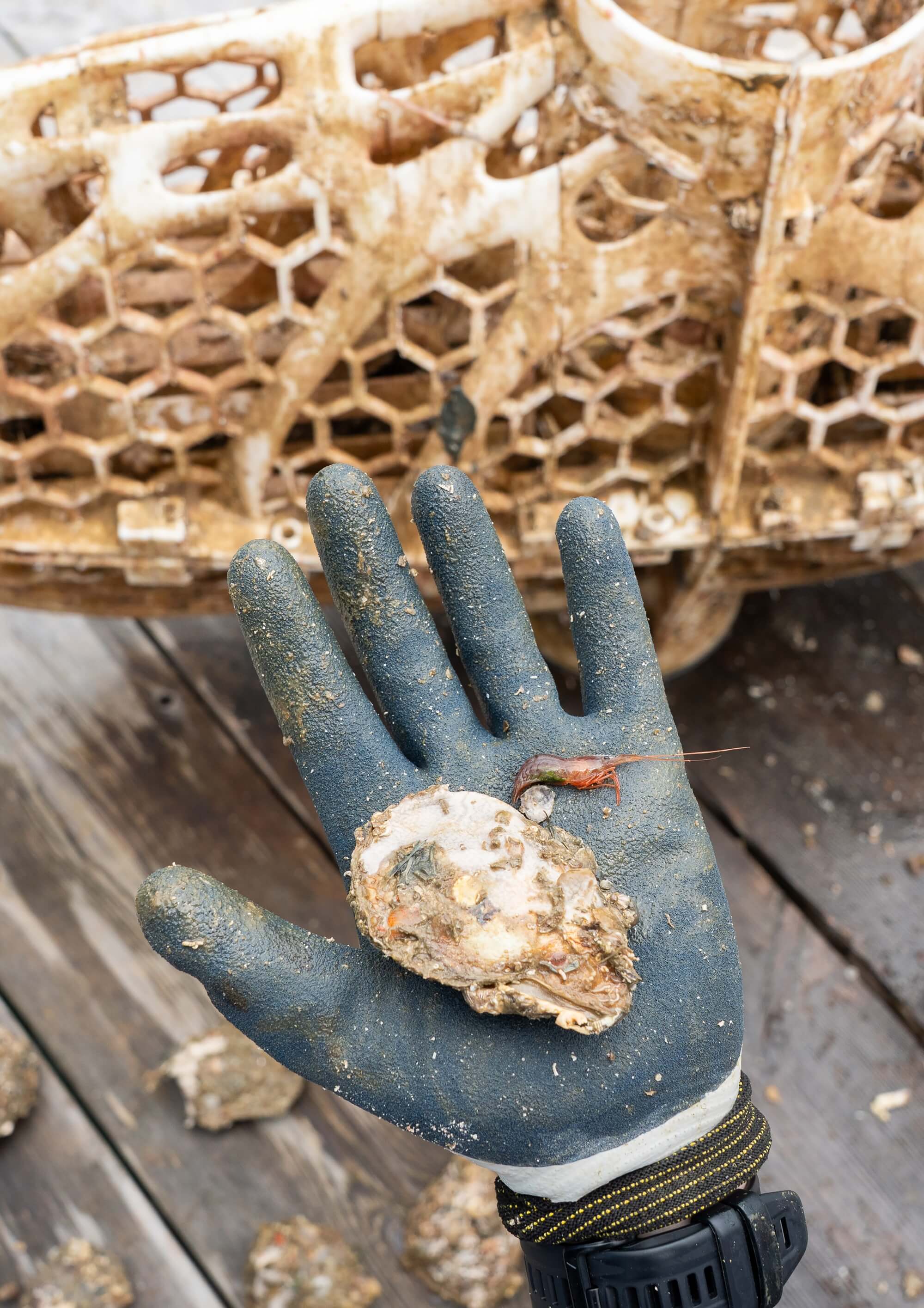
  • Pearl oyster populations have declined dramatically in many coastal regions, including Hong Kong, where historical pearl oyster habitats have significantly diminished over recent decades. Reef of Hope addresses this loss by transforming aquaculture areas into active restoration environments. The floating reef enhances oyster survival, supports biodiversity recovery, and strengthens natural biofiltration that improves coastal water quality. Its biodegradable construction avoids long-term marine waste associated with conventional infrastructure. Socially and economically, the system enables aquaculture communities to participate in ecosystem restoration while sustaining production, demonstrating a regenerative approach where marine farming contributes directly to environmental recovery and long-term coastal resilience.

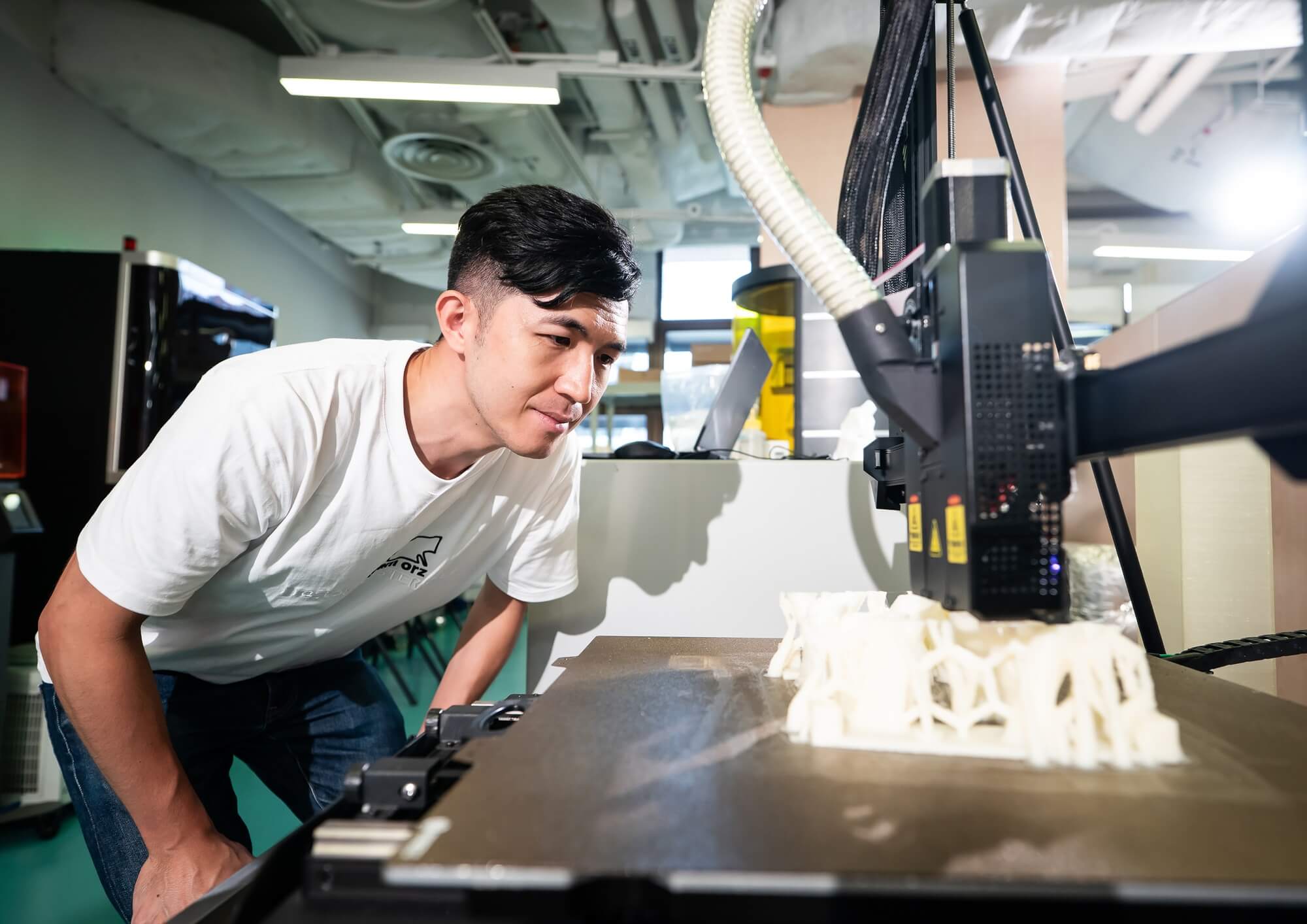
  • Reef of Hope integrates advanced engineering principles with ecological design thinking to create a next-generation restoration platform for aquaculture environments. The reef geometry applies topology-informed structural optimisation to maximise attachment surfaces while minimising material consumption, achieving high structural efficiency with reduced environmental footprint. Its porous configuration enhances water circulation, supporting nutrient exchange and promoting healthy oyster growth within suspended farming systems.The material system combines marine-biodegradable PHA with upcycled oyster shell calcium carbonate, transforming aquaculture waste into a functional ecological resource. Unlike conventional concrete reefs, the structure gradually assimilates into the marine environment over time, preventing long-term ecological accumulation.A floating deployment strategy enables installation directly within aquaculture infrastructure, allowing restoration habitats to operate alongside pearl oyster cultivation without seabed occupation. Modular units support scalable deployment, efficient transport, and installation using standard fishing vessels without specialised equipment.Digital fabrication enables rapid prototyping and localised production, allowing reef configurations to be adapted to different farming conditions worldwide. By merging sustainable materials, computational design, and community-based deployment, Reef of Hope establishes a scalable model for regenerative aquaculture and ecosystem restoration.