Meeras Pavilion

good-design-award_gold-winner_rgb_blk_logo

Meeras pavilion celebrates Rohingya stories and builds awareness and care for the world’s largest stateless people. Co-designed over three years and three countries, Meeras weaves traditional crafts with interactive lights and sounds to create an immersive space for diverse communities to gather and strengthen a culture at threat of erasure.
view website

2.jpg
Victor Caringal
3.jpg
Victor Caringal
4.jpg
Victor Caringal
5.jpg
Tasman Munro
6.jpg
Victor Caringal
7.jpg
Victor Caringal
8.jpg
Tasman Munro
9.jpg
Victor Caringal
  • CHALLENGE
  • SOLUTION
  • IMPACT
  • MORE
  • The Rohingya are an Indigenous people of Myanmar. They are among the most persecuted minorities in the world and the largest ‘stateless’ population after facing decades of systematic violence and exclusion. Today 99% live in containment - either countries where citizenship is denied or refugee camps, like Kutupalong where 1.2million Rohingya have been held for 10 years. Despite this urgent situation, it’s often called “the forgotten crisis” because many don’t even know the Rohingya exist. Unfortunately the Rohingya rights movement is also fragmented, as visibility is low and families deal with the daily challenges of living in displacement.

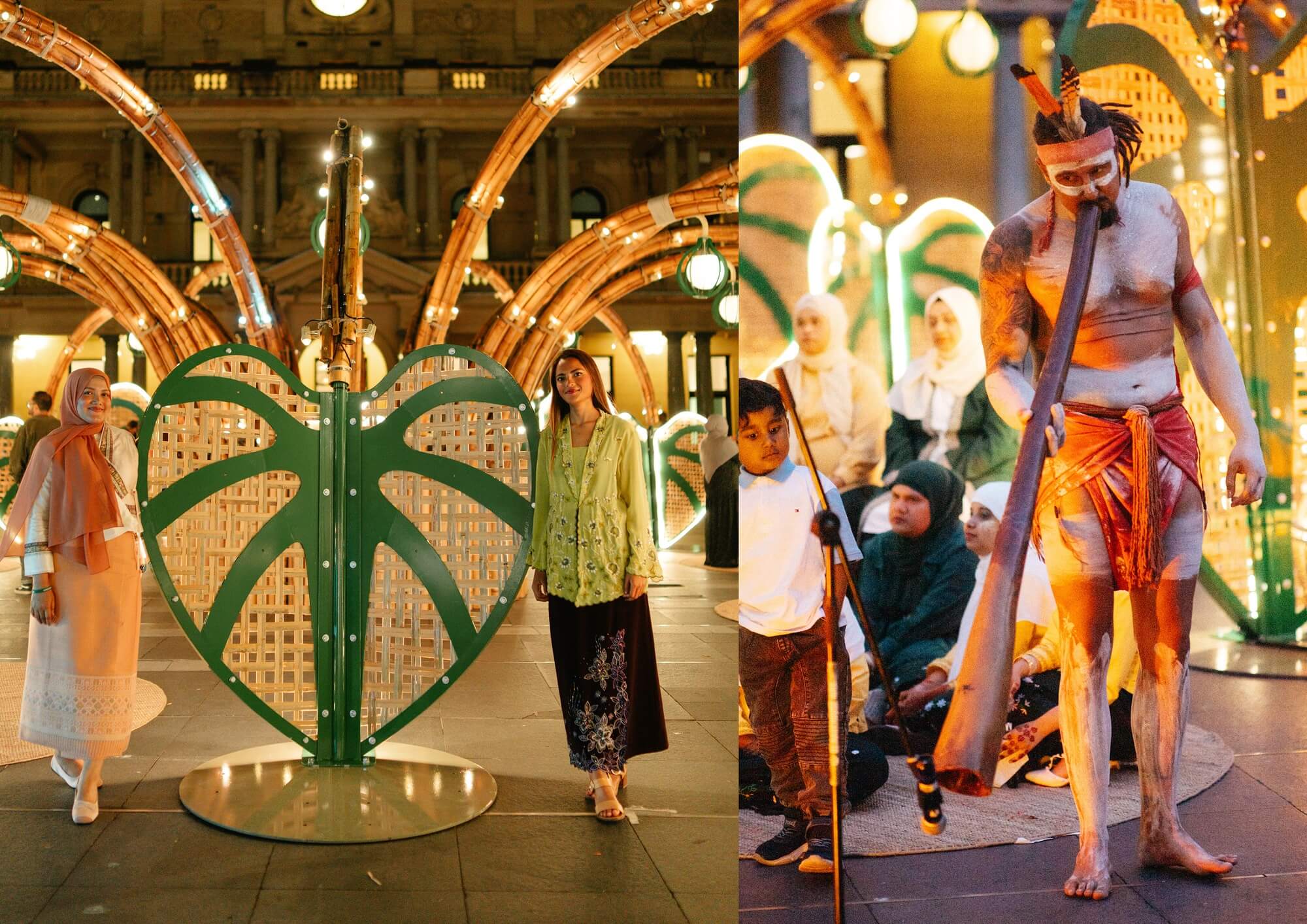
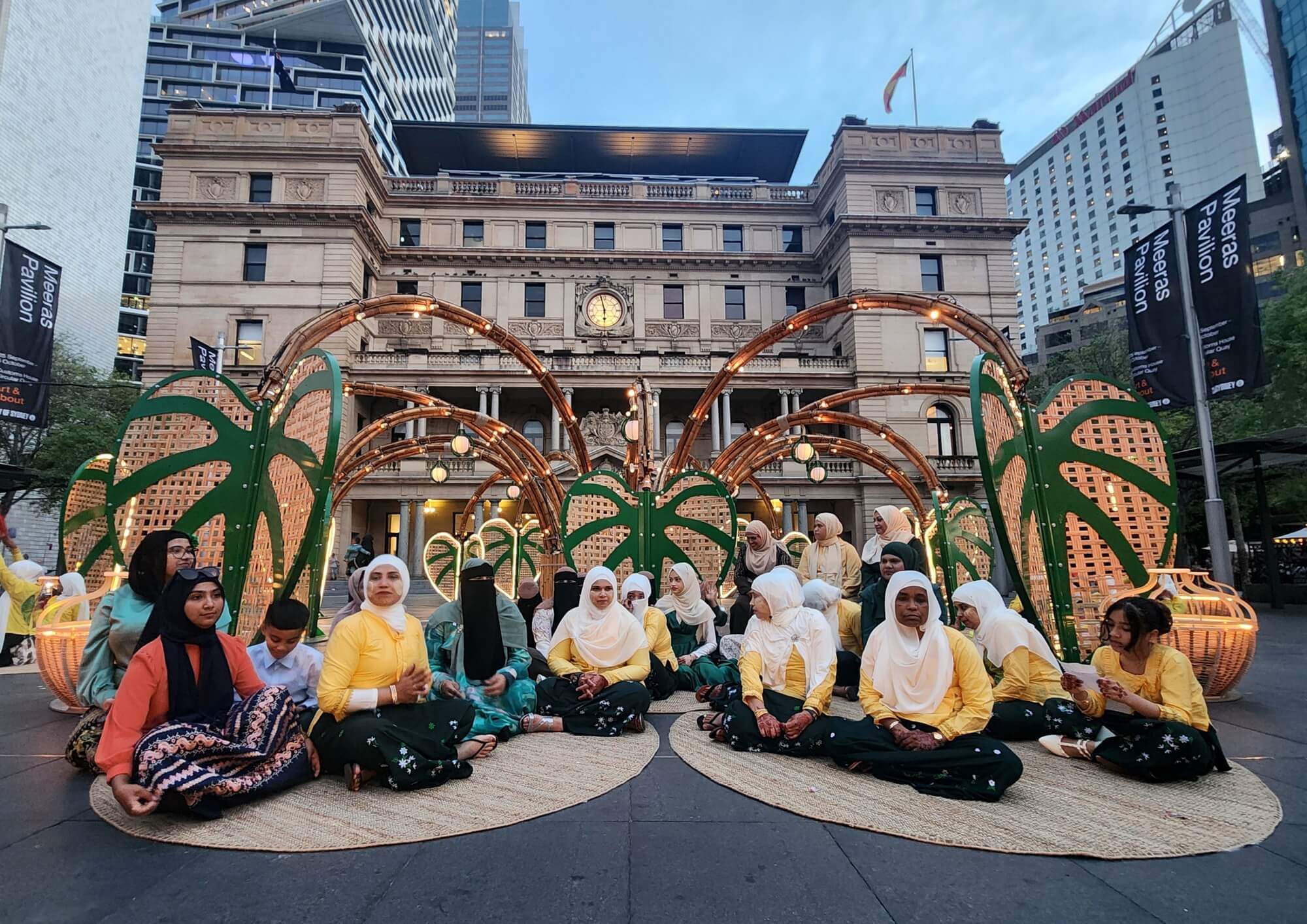
  • Meeras is an immersive pavilion that invites audiences to stand in solidarity with the Rohingya. Meeras was installed in the prominent place of Sydney’s Customs House Square and activated through 10 days of cultural and community events for audiences to engage with the Rohingya story in new ways and build greater care. The process of co-design and collective making was transformative - centring Rohingya leadership, building an international movement and creating space for connection, healing, and strengthening a denied culture.A surrounding online campaign then turned the Taro Leaf (a motif in the pavilion) into an international symbol for Rohingya advocacy.

  • Meeras contributed to: Building international awareness for the Rohingya and their plight (35k visitors and 20million online views) Elevating Rohingya as authors of their own narratives, helping to shift stories that define the community. Creating space to affirm, share and even re-learn a culture at threat of erasure Improving mental health and strengthening social cohesion, through co-design and collective making that supported healing and nurturing relationships within the Rohingya community. Connected the Rohingya rights movement internationally by creating a unifying symbol and mobalising a movement of community leaders, advocates, and allies. Influencing practice in Design, advocacy and humanitarian aid

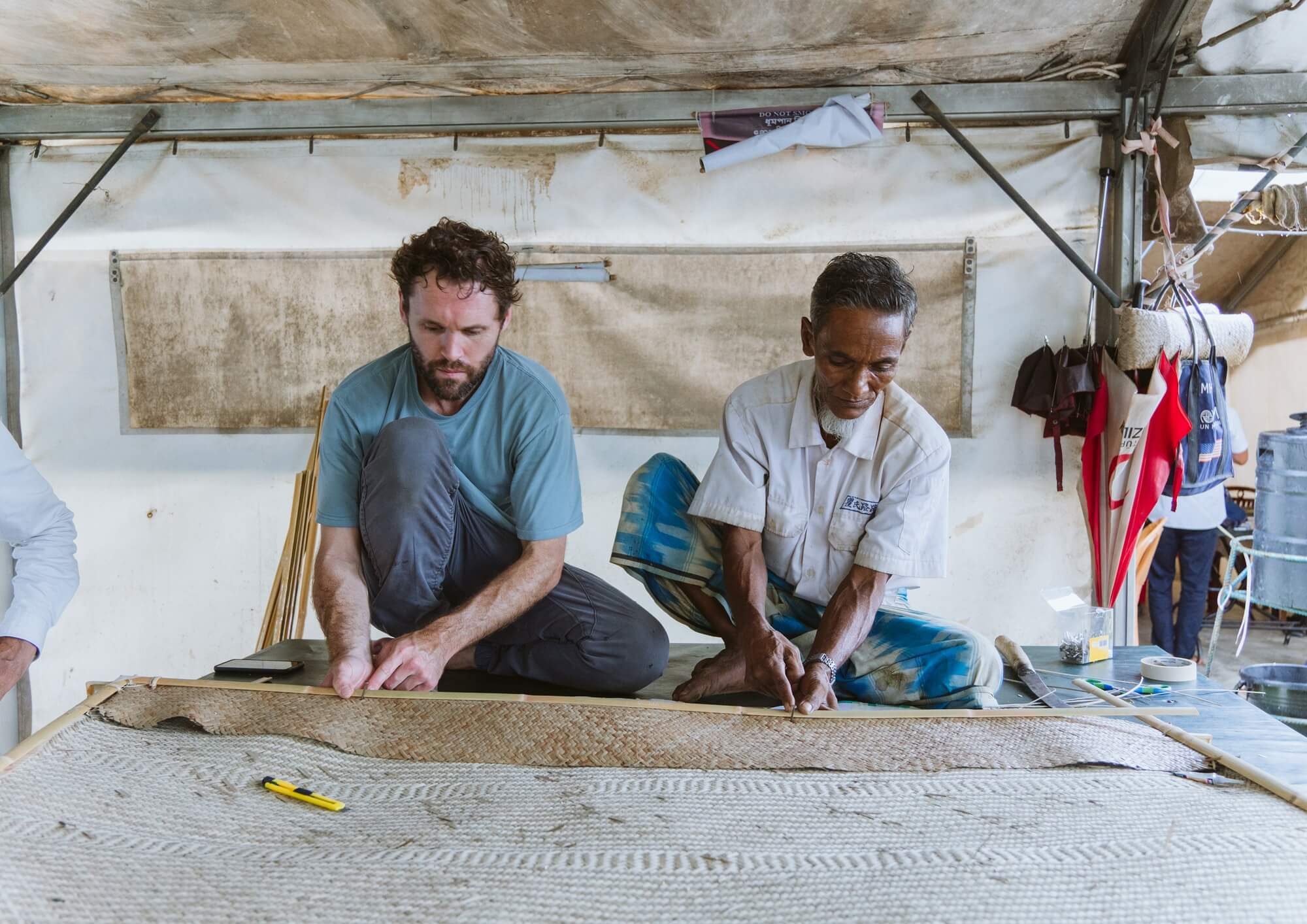
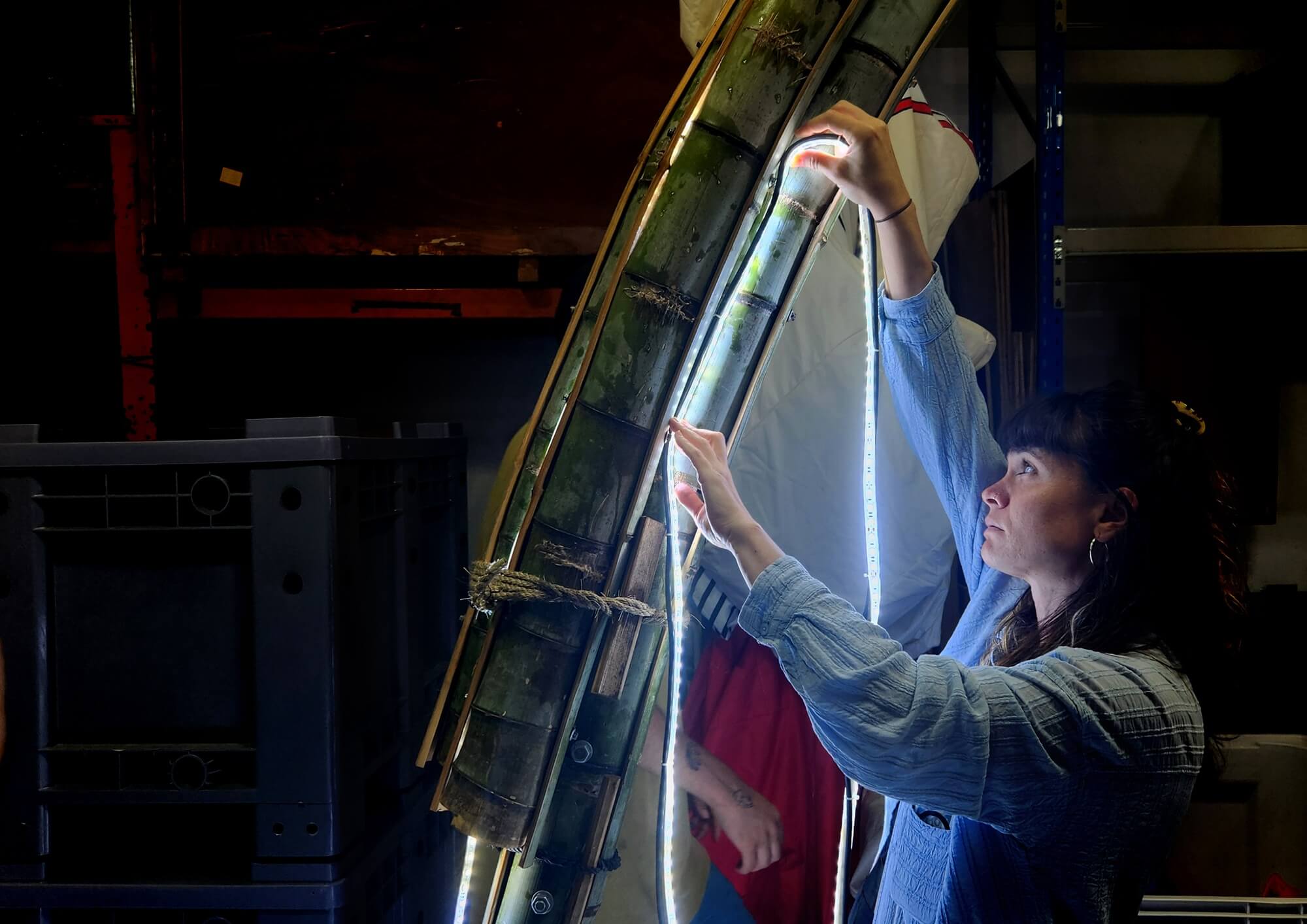
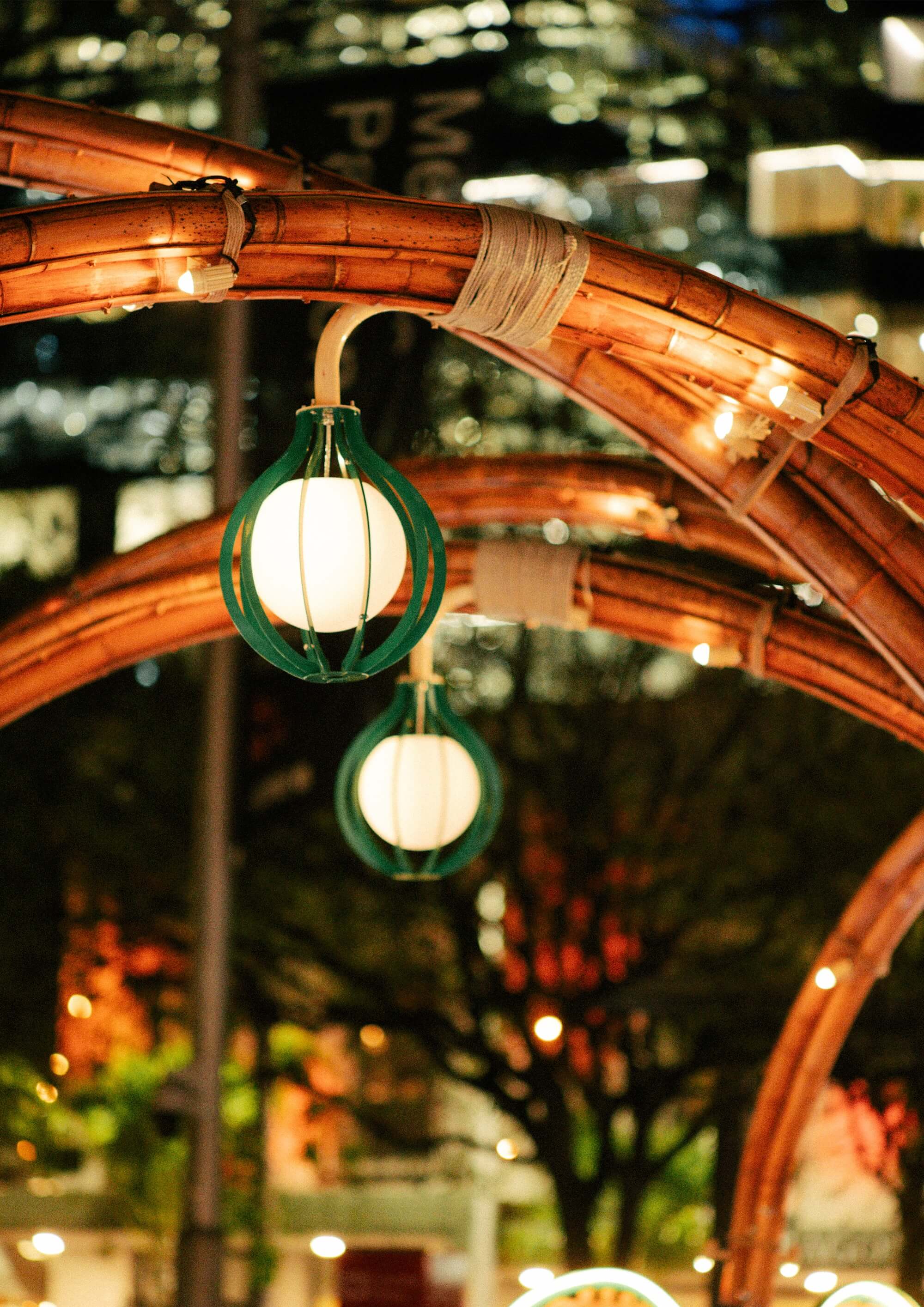
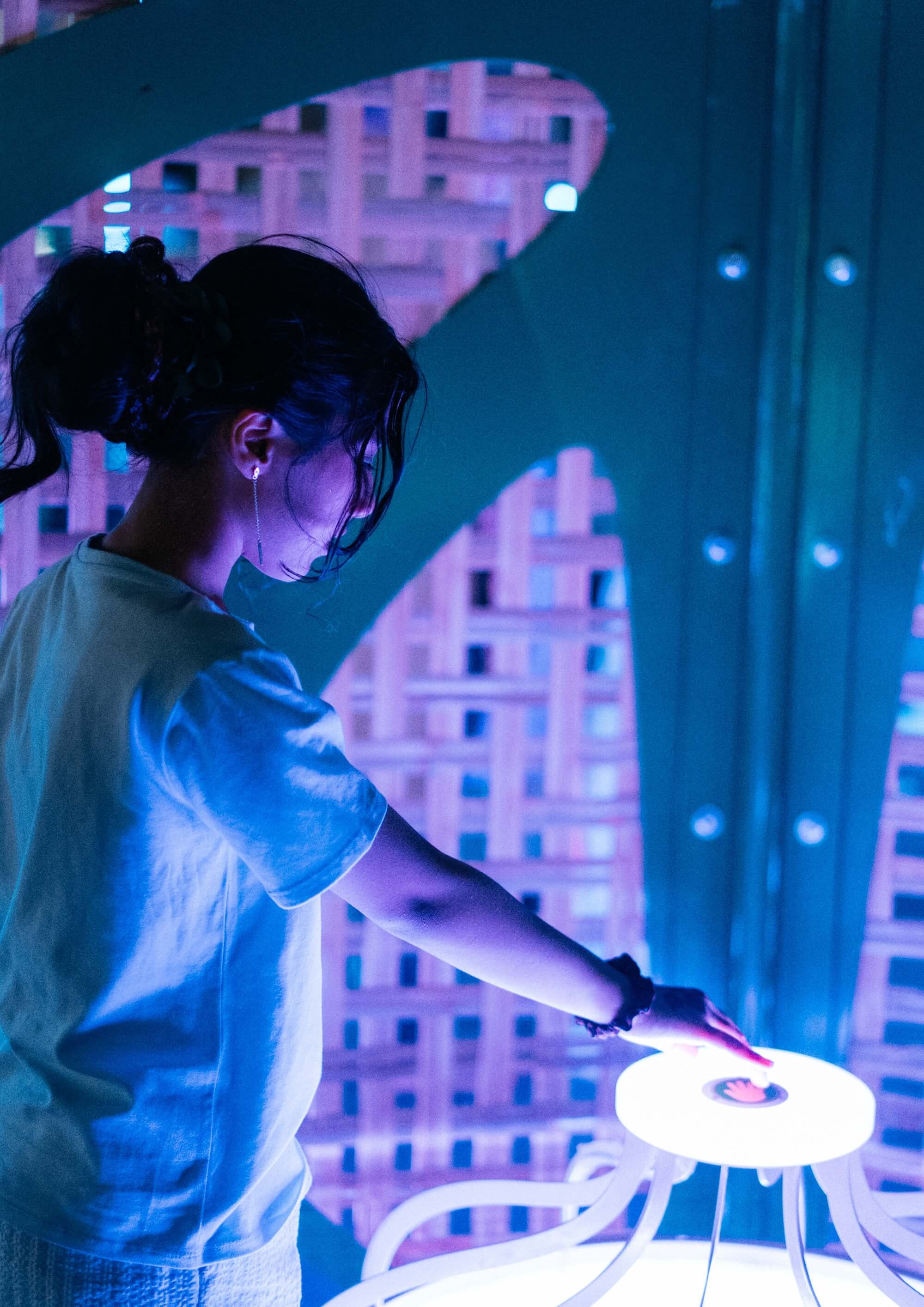
  • The pavilion design is based on a collection of powerful Rohingya symbols, mainly the Taro Leaf, referencing the proverb ‘Hoñsu Fathar Faaní’ about water sitting on a Taro leaf like it’s floating, when the wind blows it rolls off, leaving no mark. This shares the community’s experience of statelessness, “in Myanmar our existence is being erased and no matter where we live we are floating, unable to make a mark”Meeras balances cultural crafts with contemporary design - hand bent bamboo arches meet the colourful steel leafs, filled with panels woven in public workshops.Water jugs at the base of the leaves are lined in rope work, which hold touch sensors that trigger light and sound animations of rolling water. The form is architecturally lit and at night the Pavilion comes to life with light displays and an immersive soundscape created from field recordings of rain on the borders of Myanmar and moments of making together. Activations included bamboo, embroidery and henna workshops, a fashion parade of specifically designed outfits, music performances, school programs, talks and advocacy training. The connected campaign used design to reintroduce the Rohingya crisis through a new story, building care and a unified movement pushing for change.