Making Nature Count

good-design-award_winner_rgb_blk_logo
  • 2026

  • Social Impact

Designed By:

Commissioned By:

Seabin Pty Ltd

Designed In:

Australia

The Seabin Nature Intelligence Platform turns marine pollution into open public data, democratising what was once locked behind academic paywalls. Built so a six-year-old, a sustainability lead, and a policymaker can see the same evidence: who pollutes Sydney Harbour, where, when, and what regulators have failed to fix.
view website

2.jpg
3.jpg
4.jpg
5.jpg
6.jpg
  • CHALLENGE
  • SOLUTION
  • IMPACT
  • MORE
  • Marine pollution is a public-health and equity issue. Microplastics are linked to cancer, heart disease, and reproductive harm, yet pollution data is fragmented, slow, and locked behind academic paywalls. Communities most exposed are least able to act. Seabin needed to:• Make the evidence base publicly accessible to citizens, schoolchildren, and elected officials.• Hold government accountable for legislation that isn’t moving the needle.• Give communities and brands a credible alternative to greenwashing.• Build something rigorous enough for white papers yet intuitive enough for a six-year-old.

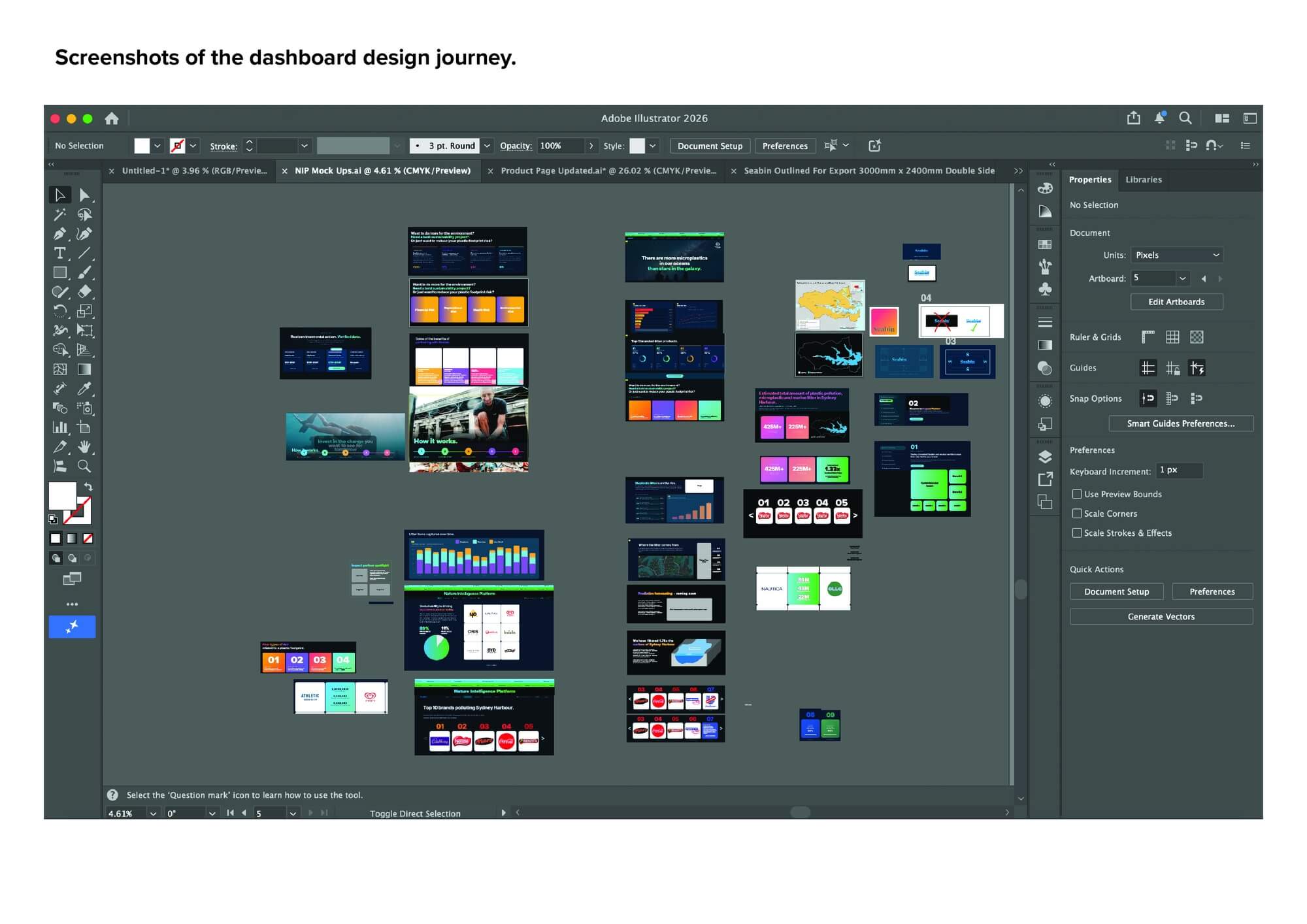
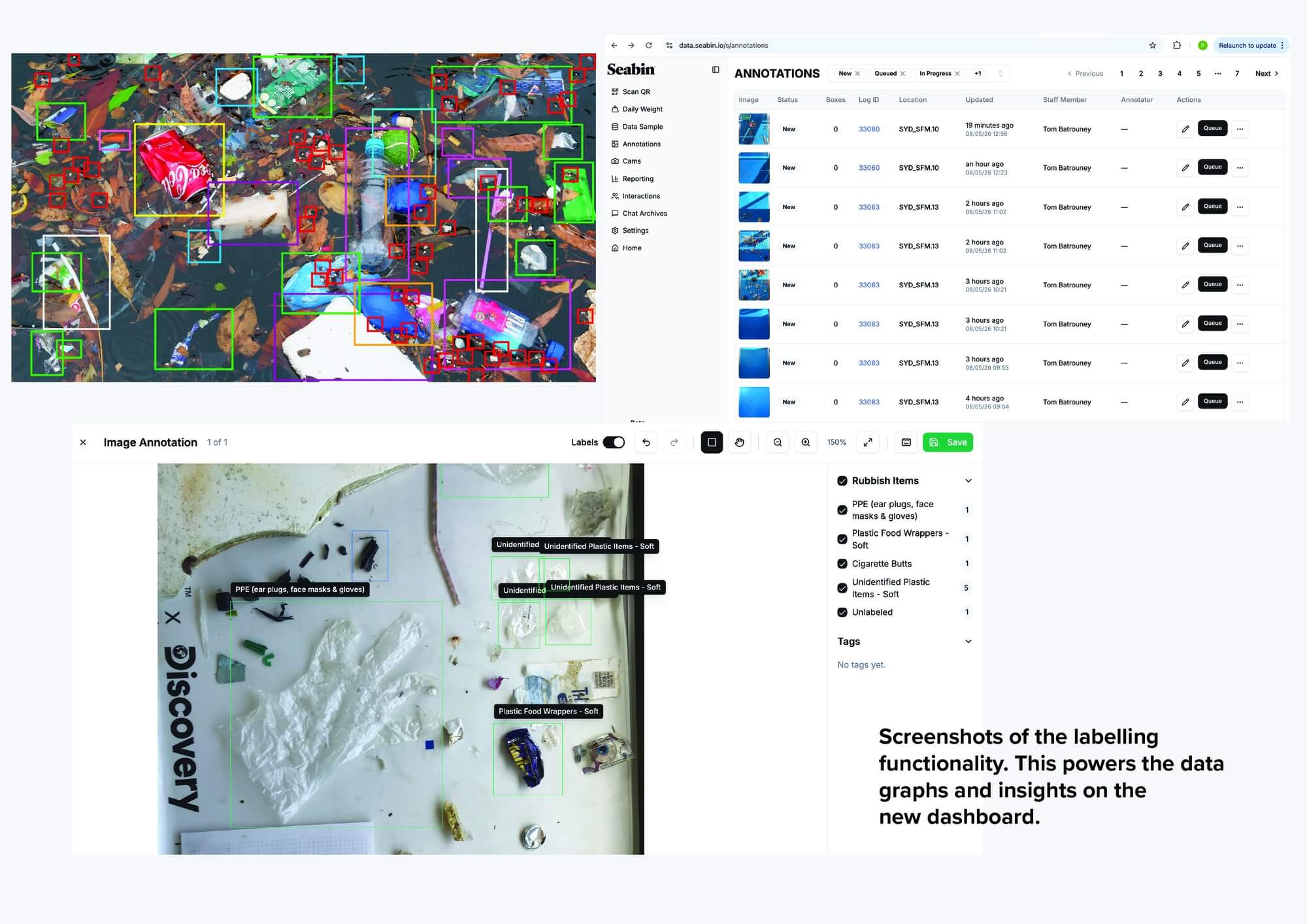
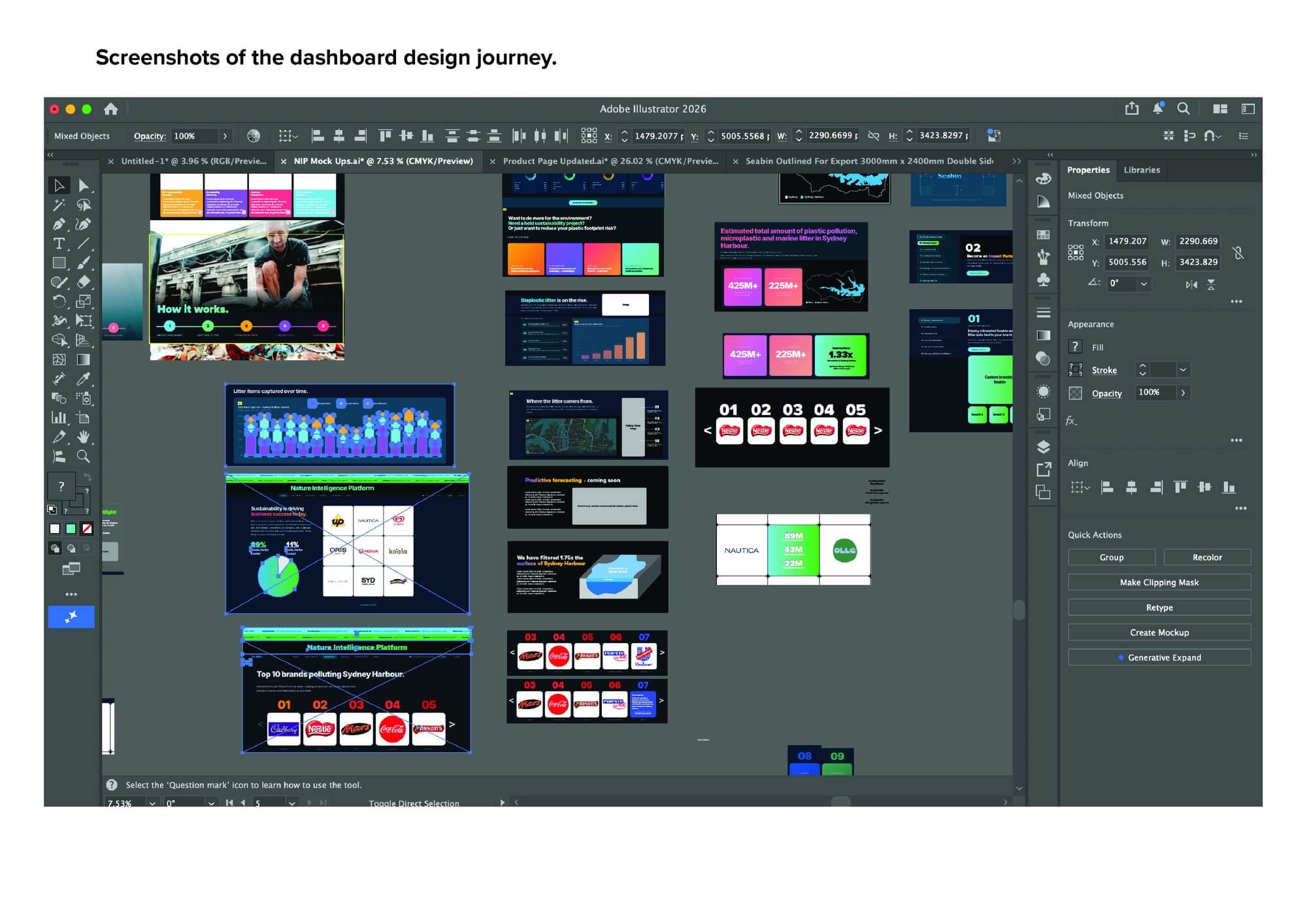
  • Built entirely in-house. Seabin combined hardware in the water with custom annotation software and a public dashboard to make pollution data visible for the first time. Open by default: every chart, every pollution figure, every branded litter percentage is free to view. A built-in MP-email tool turns each viewer into a potential political actor, pre-written, one-click. The harder design choice was open data itself; in a sector where pollution data is hoarded as IP, Seabin chose to publish. The trusted source of truth has to be public to be trusted.

  • The Platform makes plastic pollution measurable, accountable, and actionable for ordinary people. Six pillars of social impact:• Health — exposing the microplastic risks linked to cancer, heart disease, and reproductive harm.• Equity — democratising data once locked behind academic paywalls.• Civic participation — built-in MP-email tool turning viewers into political actors.• Education — used by schools, councils, and citizens, not just scientists.• Accountability — branded litter publicly displayed; polluters can no longer hide.• Environment — over 100 tonnes of marine litter captured; a healthier harbour for everyone.

  • Open by Default. In a sector where pollution data is hoarded as competitive IP, the Platform makes every figure free to view. Sydney’s harbour pollution becomes Sydney’s public business.Built-In Activism. A one-click email to a local MP. Pre-written. Citizen-grade evidence ready for political pressure. Especially around voting time.Designed for Everyone. A six-year-old reads the same Pollution Index a senator does. Different depth, same trust. No academic gatekeeping.Accountability by Visibility. Branded litter, Cadbury, Nestlé, Coca-Cola, Mars, named publicly with verified percentages. Polluters can’t hide; communities can act.The Pollution Index. One number. Instantly understood. PI 5 — Moderate — has held since July 2020, evidence that current legislation isn’t moving the needle.Citizen-Led Use Cases. Schools using the Platform for science class. Councils citing it in environmental briefings. Communities petitioning local representatives with the same data corporates use for ESG reports.Health-First Framing. Microplastics framed as a public-health crisis not a vague environmental problem. Linked to cancer, heart disease, and reproductive harm in language non-scientists can act on.Replicable Worldwide. The same model can drop into any harbour city, Hobart, Auckland, Lisbon, San Francisco, Mumbai.