Factory of the Future

good-design-award_winner_rgb_blk_logo
  • 2026

  • Built Environment
    Interior Design

Designed By:

Commissioned By:

Western Sydney University

Built

Designed In:

Australia

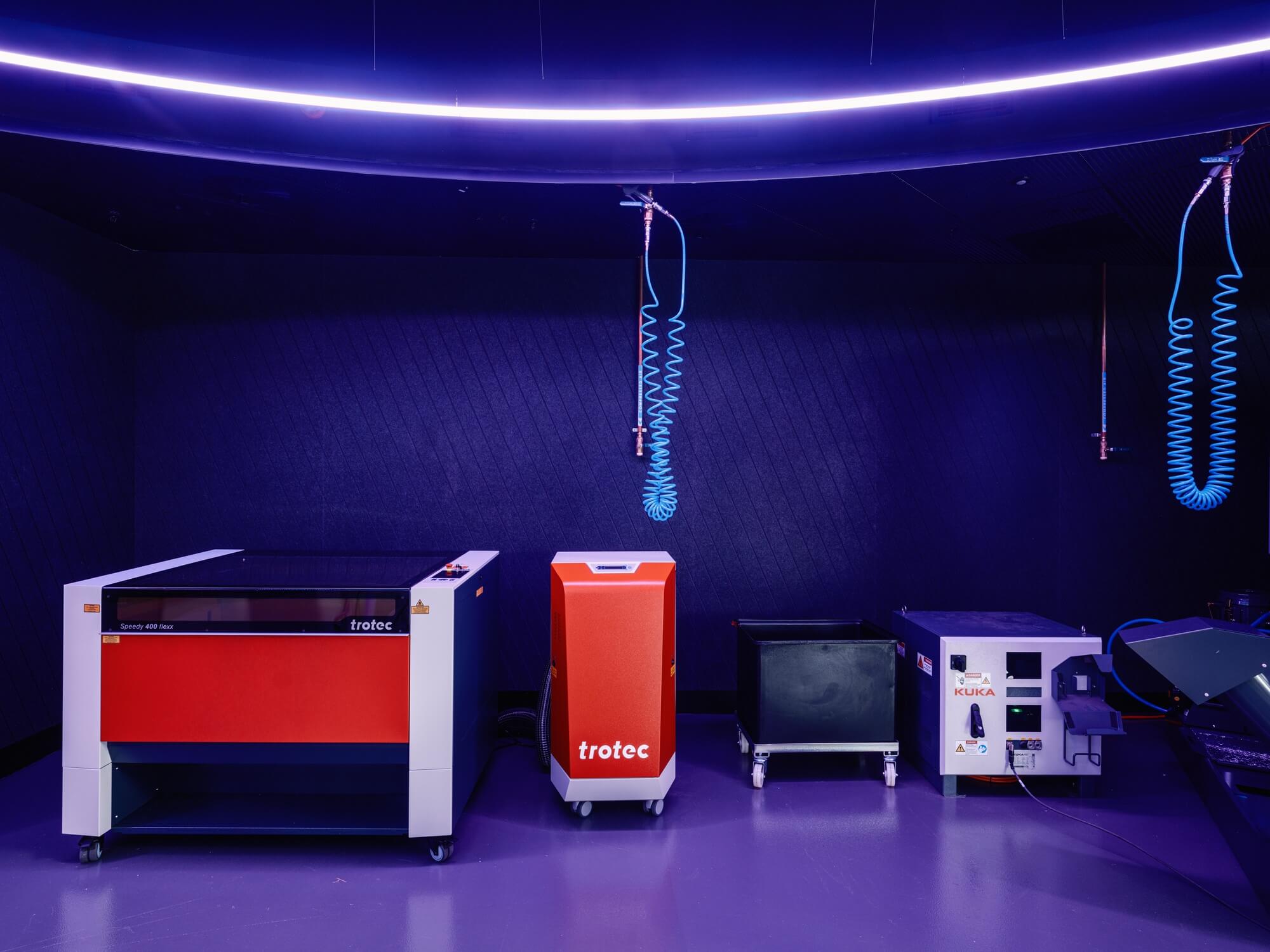
Factory of the Future is an immersive learning and innovation environment at Western Sydney University’s Bankstown City Campus. It redefines how emerging technologies are experienced, translating a highly technical brief into an intuitive interior that positions students as active participants in discovery, making, and cross-disciplinary collaboration.

view website

2.jpg
Mike Bell, Courtesy of Built Construction
3.jpg
Martin Siegner, Courtesy of HDR
4.jpg
Mike Bell, Courtesy of Built Construction
5.jpg
Martin Siegner, Courtesy of HDR
6.jpg
Martin Siegner, Courtesy of HDR
7.jpg
Mike Bell, Courtesy of Built Construction
8.jpg
Martin Siegner, Courtesy of HDR
9.jpg
Martin Siegner, Courtesy of HDR
  • CHALLENGE
  • SOLUTION
  • IMPACT
  • MORE
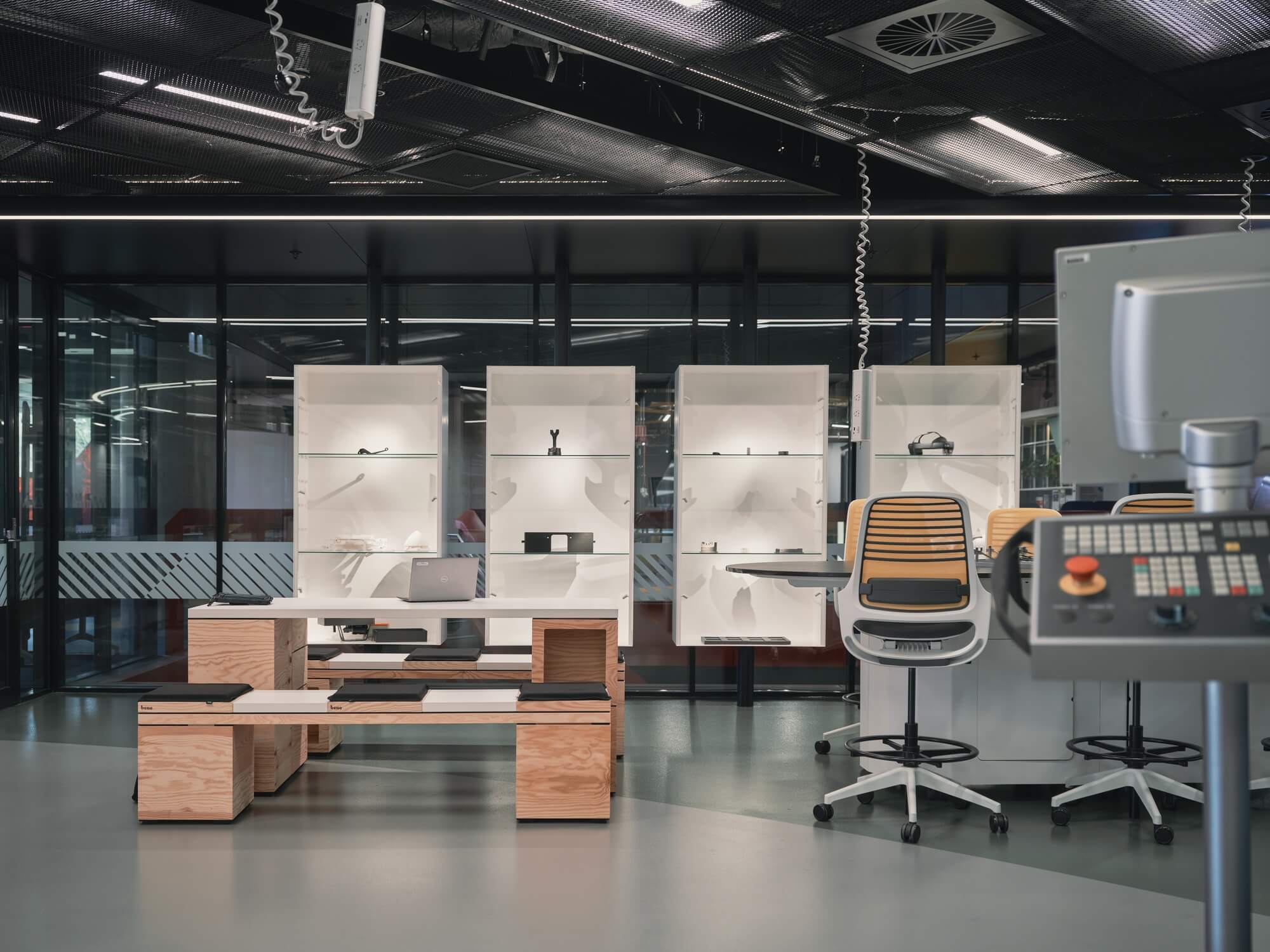
  • The project addresses the integration of advanced manufacturing, robotics and immersive learning within a constrained vertical campus. Limited floorplates, complex servicing, and stringent safety requirements were compounded by the need to support users with varying technical proficiency. Beyond these constraints, the brief called for environments that could demystify complex systems while enabling collaboration, observation and progressive learning. The design resolves these pressures through carefully choreographed adjacencies, circulation and visual connections, allowing technical processes to remain visible yet controlled. A flexible spatial framework anticipates rapid technological change while maintaining clarity, coherence and a strong, legible spatial identity.

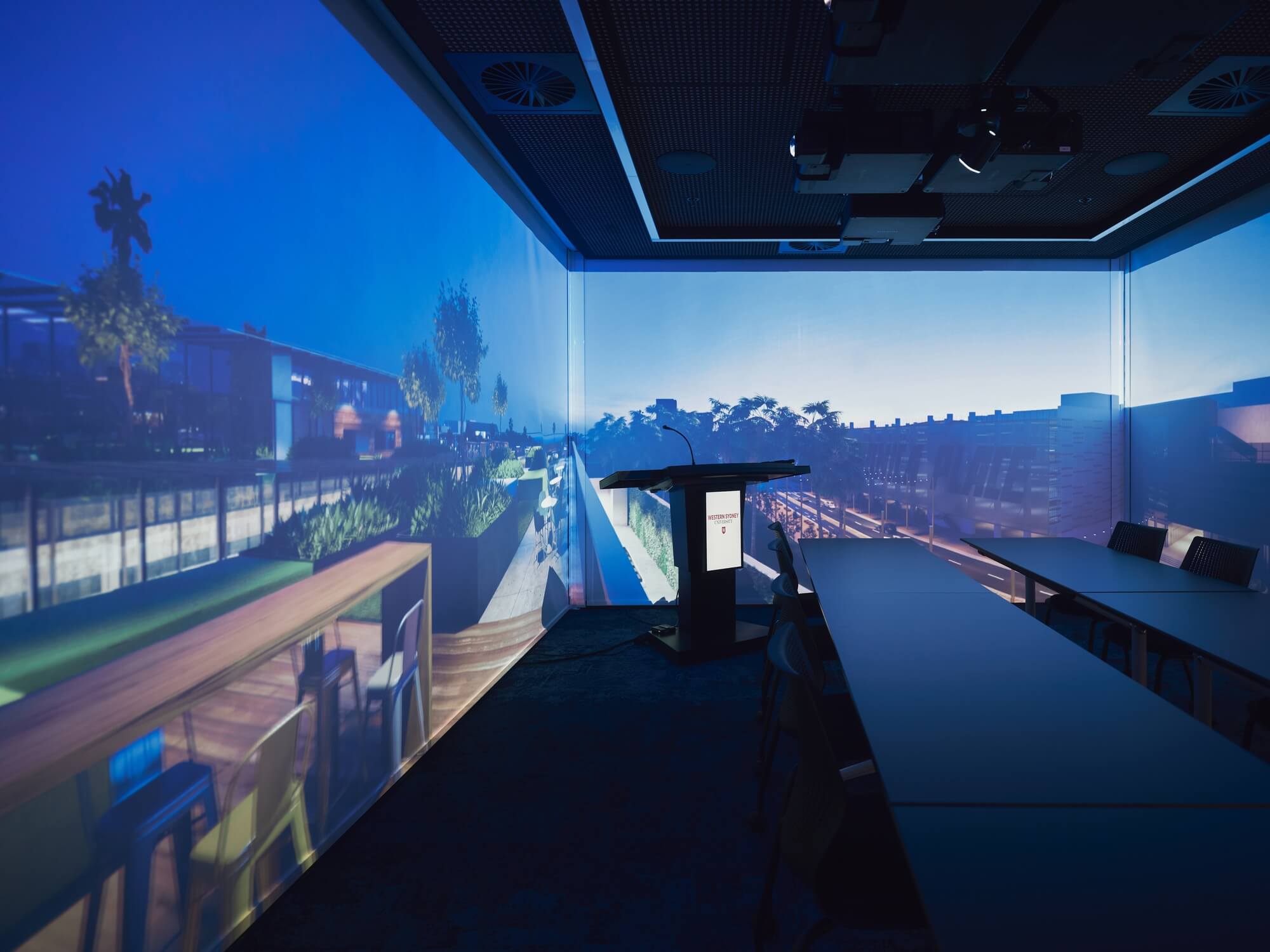
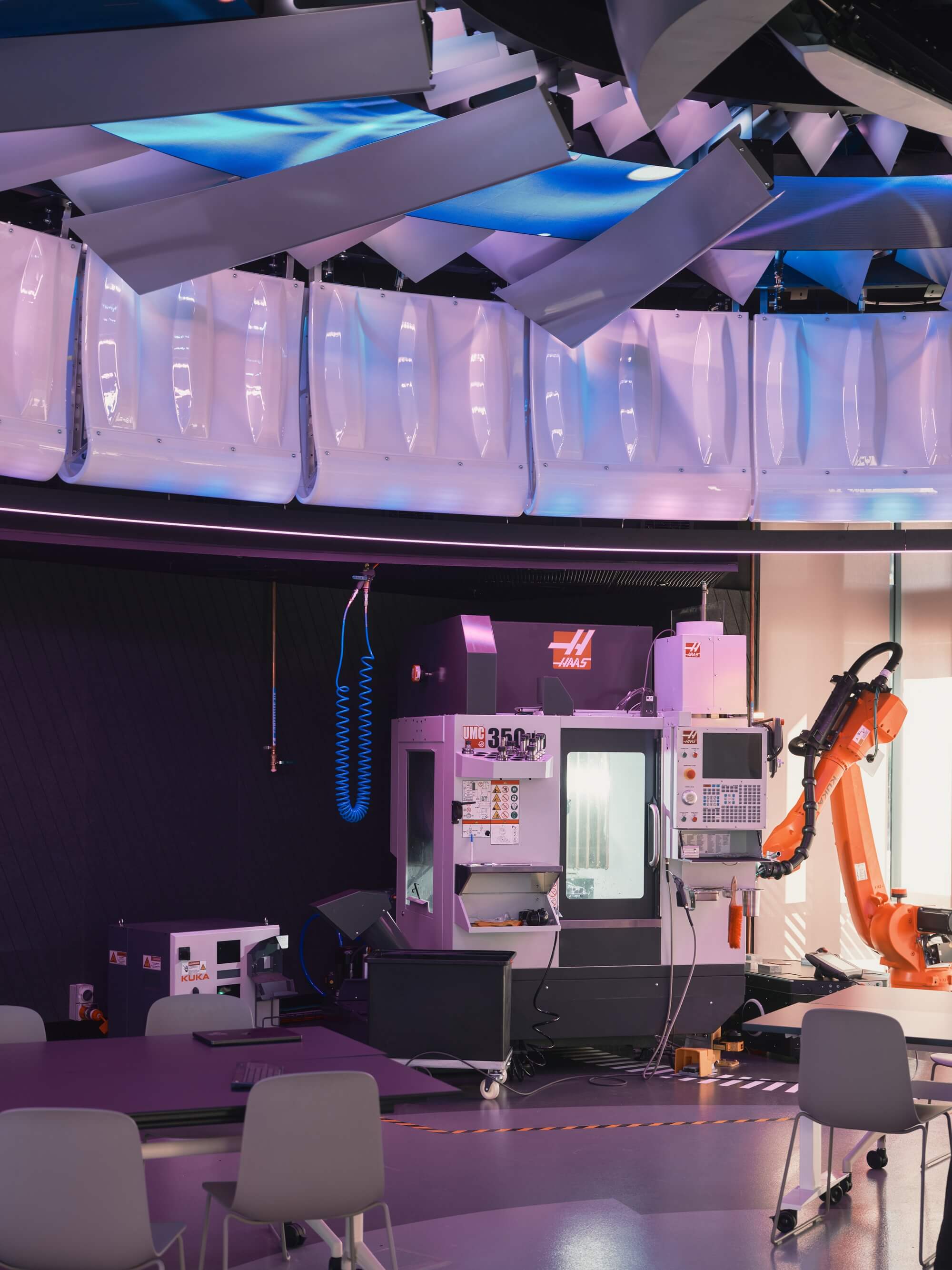
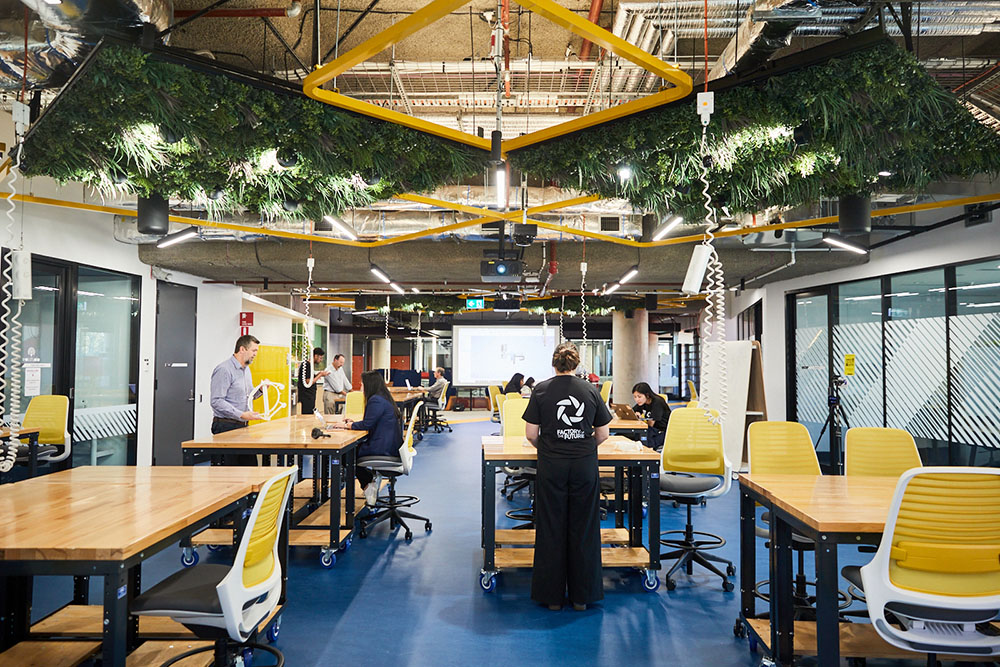
  • The design is structured as a clear learning sequence across two interconnected levels. A circular plan guides students from hands-on exploration in the Discovery Space to advanced application within the Immersive Training Hub. Workshops, robotics zones and VR/AR environments remain open and visually connected, supporting learning through observation and interdisciplinary exchange. The Innovation Engine acts as a dynamic focal point, translating complex mechanical systems into legible motion. Light, transparency and calibrated sightlines reinforce intuitive navigation and spatial understanding. Developed through close collaboration with academics, students and industry, the environment supports evolving pedagogies while remaining inherently adaptable.

  • The project establishes a contemporary model for applied learning, integrating education, research and industry within a cohesive interior architecture. STEM engagement is strengthened through environments that reveal, rather than conceal, complex technologies, enabling learning through making, testing and experimentation. Locally fabricated elements embed Western Sydney’s manufacturing capability into the building, linking pedagogy with production and giving spatial expression to regional expertise. A robust, adaptable framework supports evolving technologies without obsolescence. Beyond the համալսity, the facility operates as a civic learning hub, expanding access and positioning Western Sydney University as a catalyst for innovation, skills development and community engagement.

  • The project is defined by a highly resolved interior architecture that renders advanced manufacturing legible through space. At its centre, the Innovation Engine—an 8.6-metre kinetic installation—translates mechanical systems into visible motion, operating as both pedagogical device and spatial anchor.A continuous learning gradient is organised across two levels. The Discovery Space introduces Industry 5.0 principles through hands-on workshops and collaborative zones, while the Immersive Training Hub supports advanced prototyping, robotics and VR/AR environments. These functions are deliberately interwoven to promote experimentation and cross-disciplinary exchange.A circular spatial logic, informed by Bankstown’s industrial and aeronautical heritage, structures movement and reinforces intuitive navigation. Luminous thresholds articulate transitions in learning modes and intensity, guiding users through the environment.Material selection prioritises durability, transparency and adaptability, ensuring clarity under intensive technical use. Co-design with students, academics and industry partners informed adjacencies, visibility and workflow.Over 80% of components were fabricated locally, embedding Western Sydney’s manufacturing ecosystem into the project. The result is a highly adaptable learning environment where technology is actively revealed, fostering engagement, understanding and innovation.