Advancing Responsible AI Innovation in Local Government

best-in-discipline
  • 2026

  • Policy Design

Commissioned By:

National Housing Taskforce

Designed In:

Australia

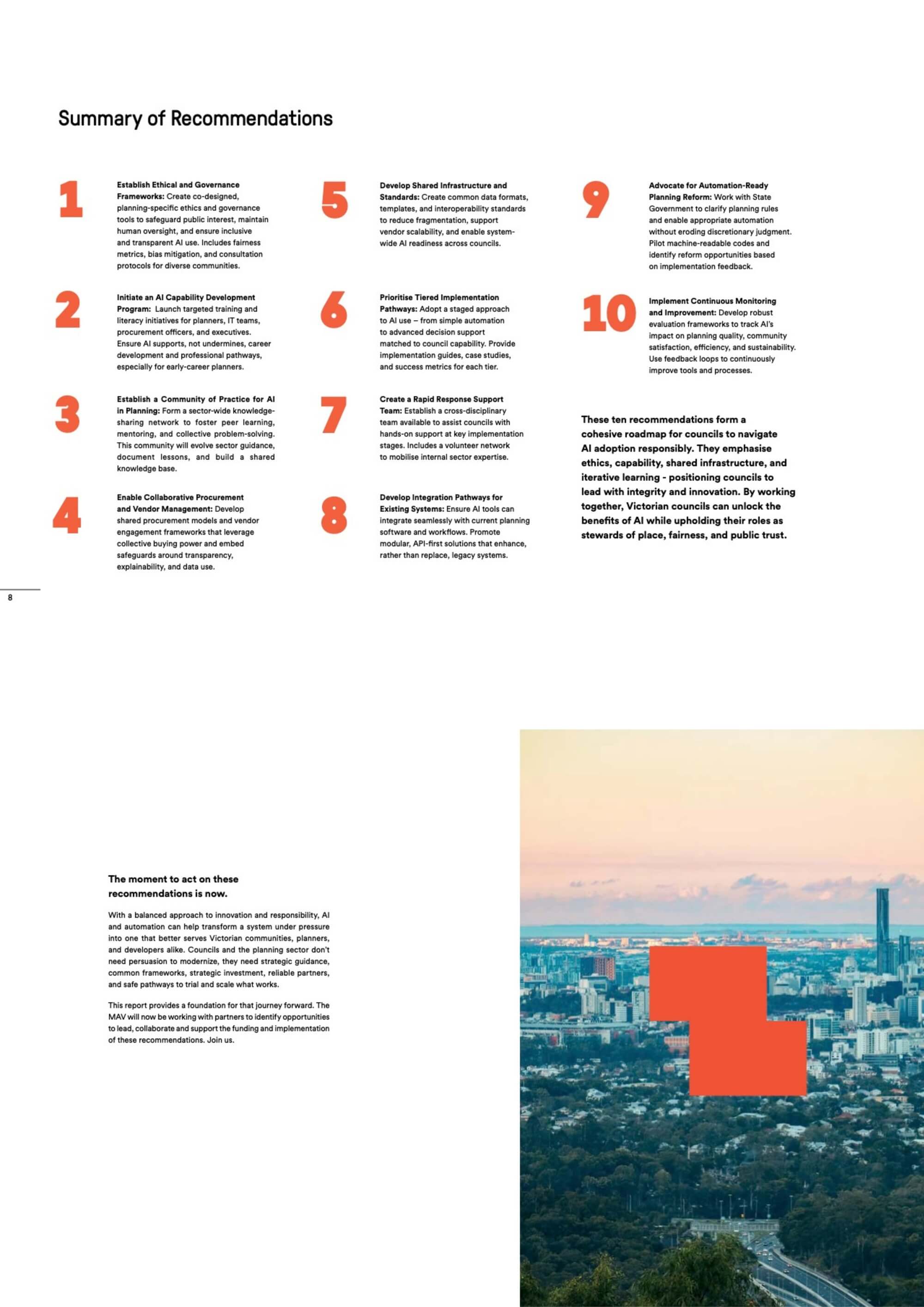
MAVlab developed an adaptive policy framework to guide responsible AI adoption in Victorian local-government. This work addresses the housing crisis and resource‑constrained councils and applied participatory research to deliver a strategic framework, AI procurement coaching guide, a procurement panel, a use‑case-library, and a cross‑sector AI Taskforce informing an AI roadmap.


view website

2.jpg
3.jpg
4.jpg
5.jpg
6.jpg
  • CHALLENGE
  • SOLUTION
  • IMPACT
  • MORE
  • Victoria's councils face compounding pressure: a national housing-affordability crisis, significant planning reform underway, and rapidly emerging AI technologies – all within severe resource constraints. Councils are limited in capacity and cannot bring innovation into statutory planning without sector-wide guidance and shared tools. AI offers a genuine opportunity to introduce more innovative policy and practice – automating routine tasks so planners can focus on complex, high-value work. The challenge was to build the evidence base, governance frameworks, and procurement infrastructure that would enable councils to navigate AI adoption responsibly, collectively, and with confidence, at scale, rather than each 79 councils attempting it alone.

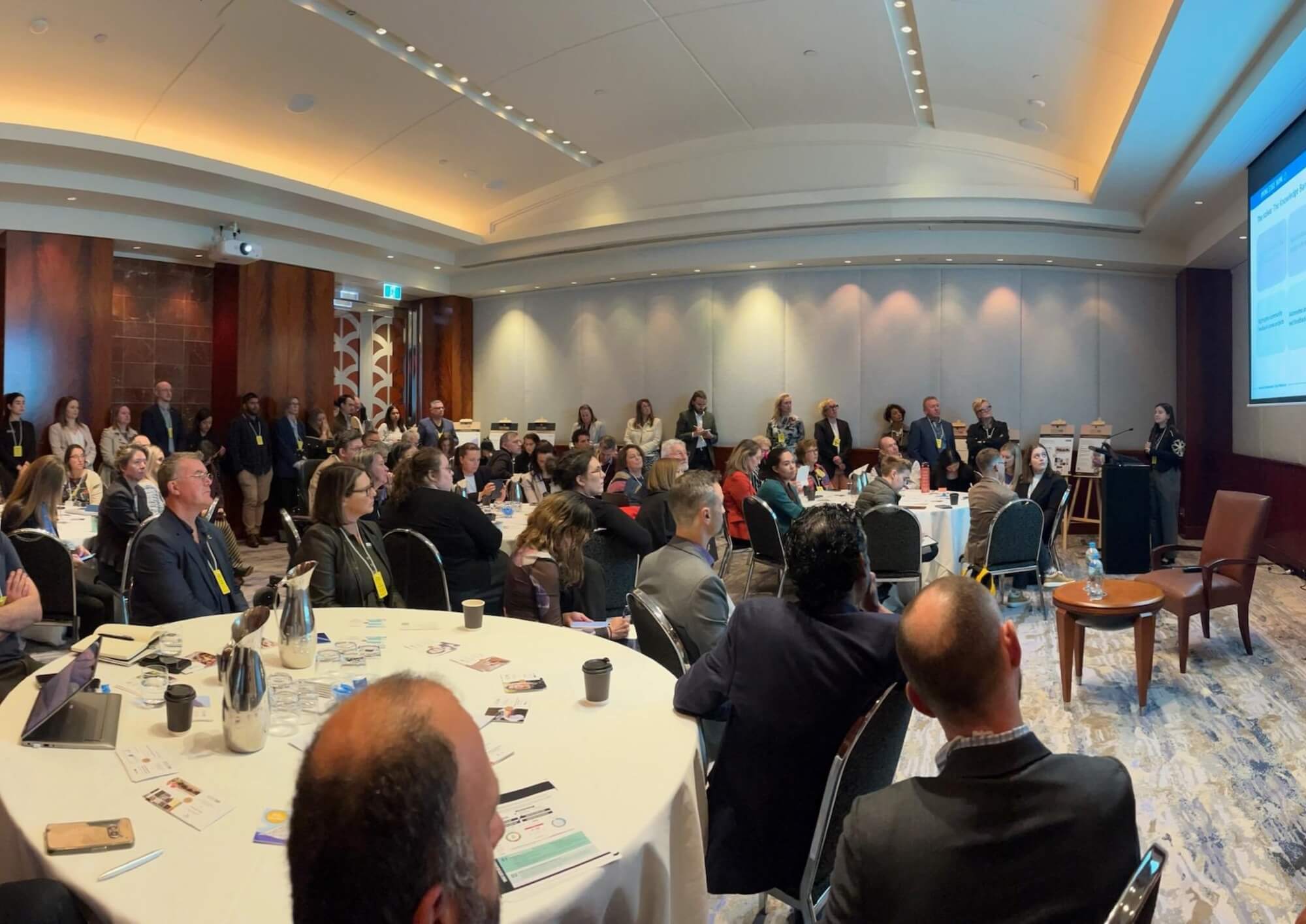
  • MAVlab, in partnership with the City of Greater Dandenong and funded by the Australian Government's National Housing Support Program, undertook deep research and consultation engaging 250+ professionals across 70% of Victorian councils, 18 AI vendors, and 21 subject matter experts. The resulting policy framework produced three interconnected streams of output: sector leadership through use cases and AI adoption guidance for statutory planning; new standards through AI procurement criteria, an EOI process that drew 54 vendor submissions with 19 appointed; and collective leadership through the establishment of a cross-sector AI Taskforce to co-design a sector-wide AI roadmap for shared delivery.

  • The MAVlab AI-Planning Framework delivered the rare achievement of moving from design-research all the way to implementation. New procurement criteria developed through the research were immediately put to work in assessing 54 vendor submissions against the research‑derived criteria, with 19 vendors appointed to a MAV‑managed procurement-panel available to all Australian councils. The procurement-register has been referenced by the Australian-Federal-Government, the Planning-Institute-of-Australia as leading practice. The work is described as world‑leading by national and international institutions. The AI Taskforce has co‑designed a sector-wide roadmap that is moving into implementation. A variety of collaborative, multi-sector and cross‑council AI projects are underway.

  • Research as infrastructure: MAVlab used the research process to build sector infrastructure rather than producing a report for passive consumption. The procurement criteria, vendor panel, and use case library are the policy operationalised. The following EOI process (54-submissions, 19-appointments) was run against criteria the research had produced. From design research all the way through to implementation. Collective intelligence over 79 separate journeys: A foundational principle of the framework is that councils should not navigate AI adoption alone. By distributing risk, creating shared infrastructure, and building collective procurement power, the work makes responsible AI adoption achievable for even the smallest, least-resourced council. Deep relationality: The procurement criteria explicitly valued vendors willing to grow collaboratively alongside councils and recognised that AI adoption requires both parties to mature their capabilities and technologies together. During implementation the team identified that a traditional panel structure would lock vendors into a fixed scope at submission and prevent the co-development and service evolution the policy was designed to enable and pivoted from a traditional procurement panel to a register model. A significant undertaking to navigate with the procurement team, this resulted in a procurement architecture that genuinely reflects the policy's values.