Impact Framework Design and Reporting

good-design-award_gold-winner_rgb_blk_logo
  • 2026

  • Social Impact

Commissioned By:

The Social Outfit

Designed In:

Australia

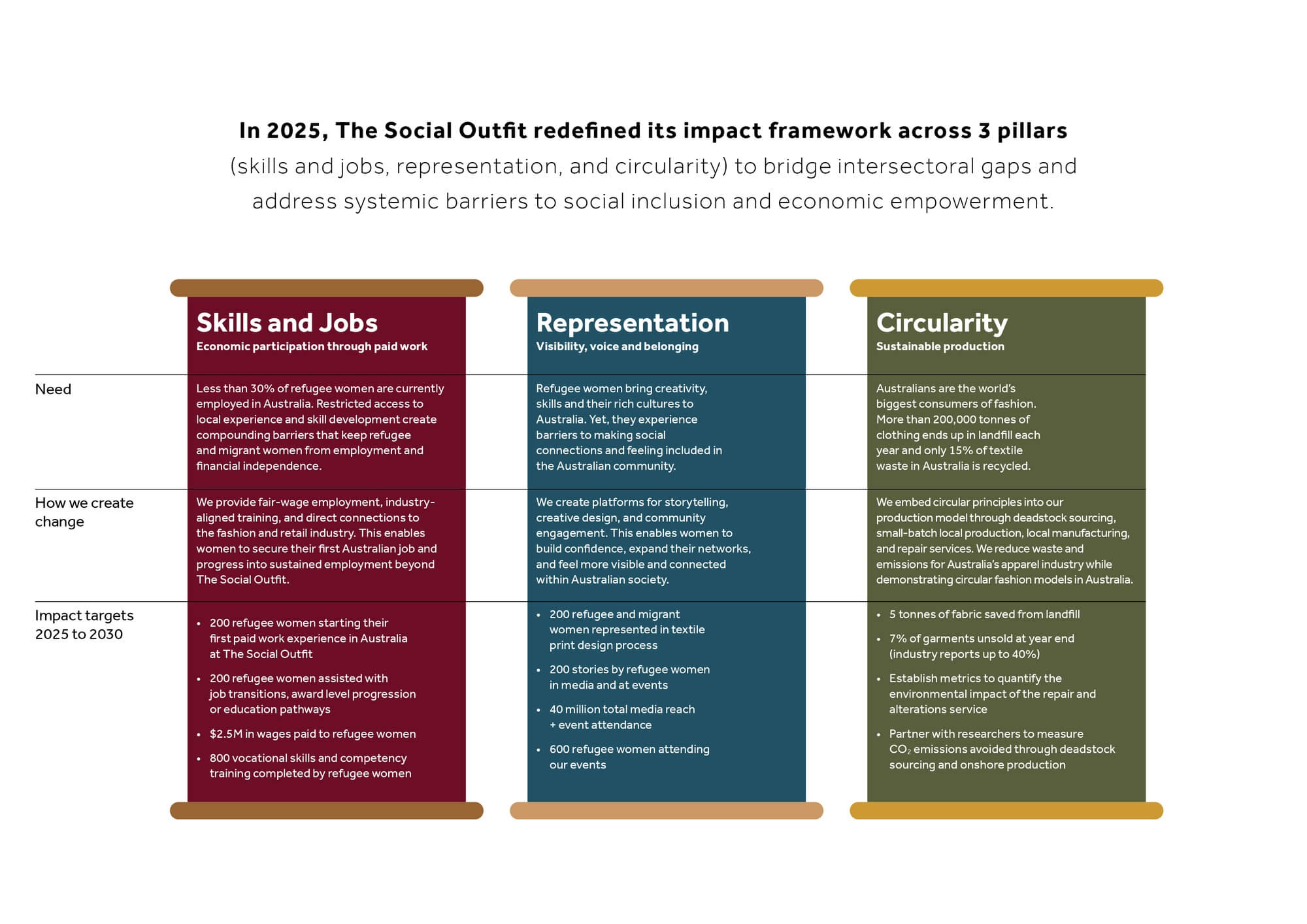
The Social Outfit (TSO) is a Sydney-based social enterprise creating employment pathways for refugee women. TSO’s programs deliver confidence, community and economic empowerment for refugee women through fashion and retail. TSO formalised its three-pillar Impact Framework in 2025, articulating an intersectional shared value for the industries essential to its growth.
view website

2.jpg
3.jpg
Graphic design by Alastair Johnston
4.jpg
5.jpg
6.jpg
Graphic produced by Focus Creative
7.jpg
8.jpg
9.jpg
  • CHALLENGE
  • SOLUTION
  • IMPACT
  • MORE
  • In 2025, less than 30% of refugee women in Australia were employed. Refugee women face compounding barriers: limited English, no local experience, family responsibilities, and systems that aren't designed for them.Decent work, social inclusion, and circular fashion's connectivity is opaque, hiding embedded opportunities for economic participation, belonging, skill development and self expression. A common barrier is an integrated framework to define shared value between diverse industries — employment services, fashion brands, sustainability professionals, philanthropy — whose participation is essential to solving them.Systems change requires identifying common ground amongst intersectional stakeholders, transforming interest into partnerships and a commitment to measurable outcomes.

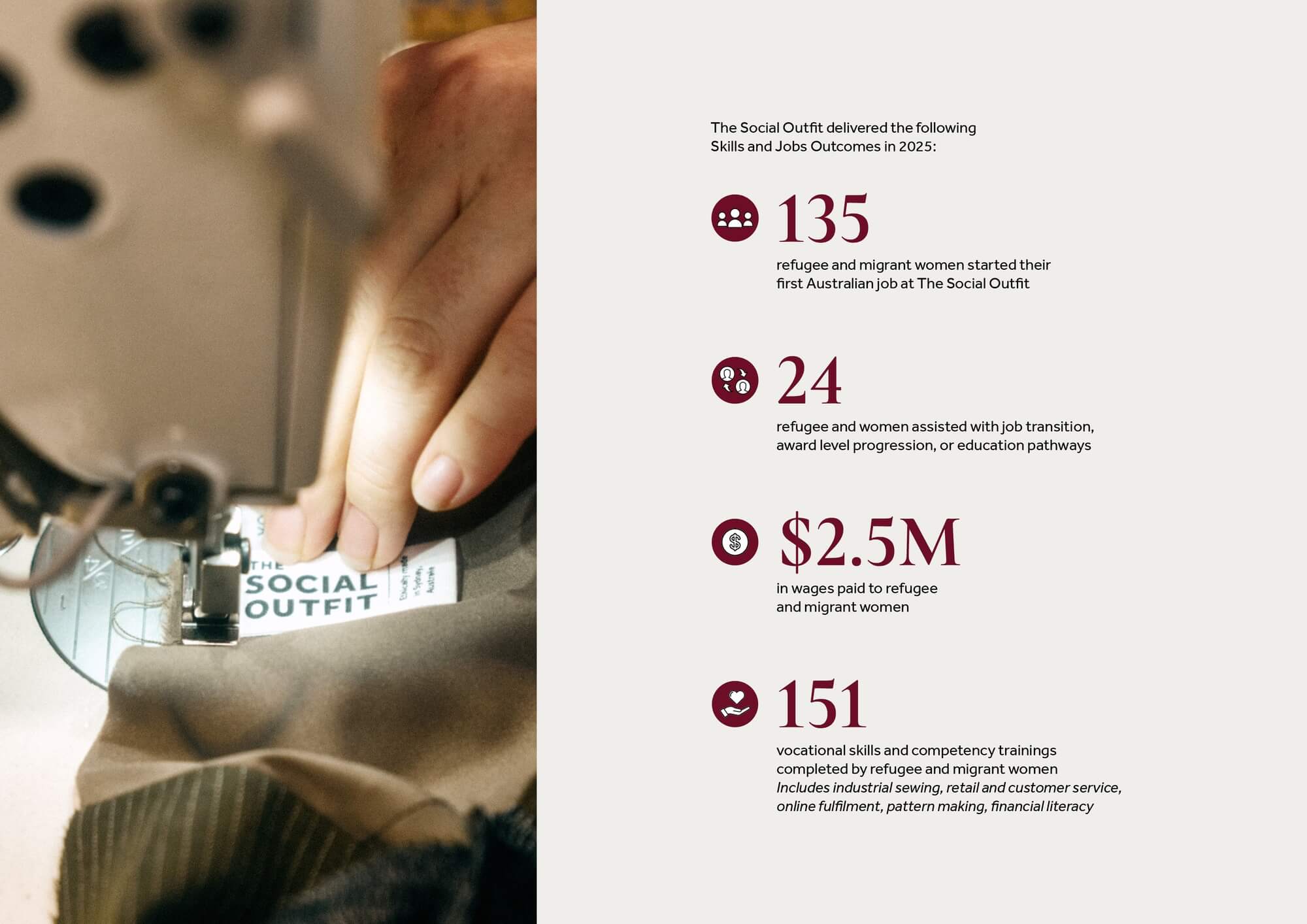
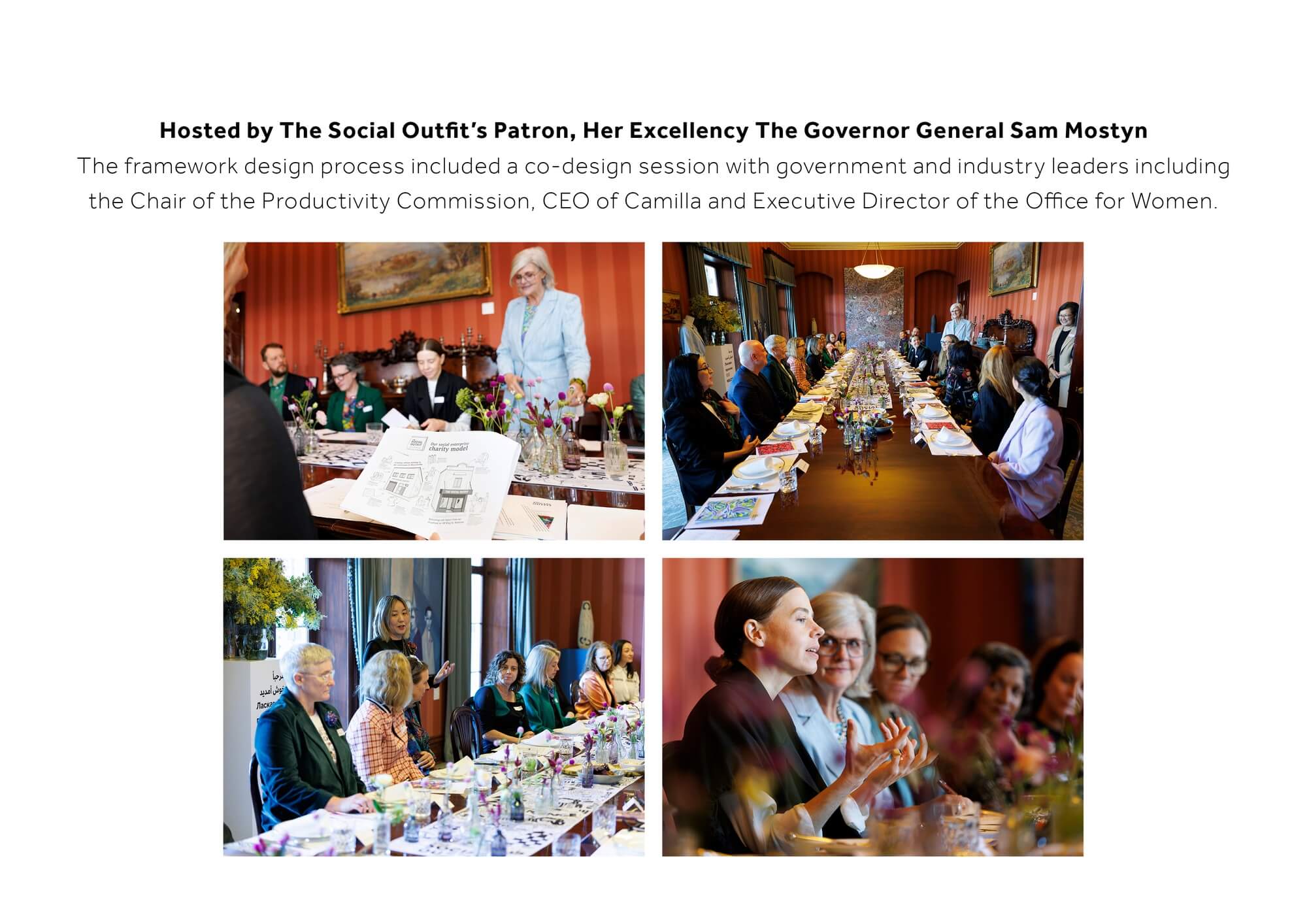
  • TSO's solution has been shaped by the women it employs, industry partners, and a growing evidence base across employment, migration, and fashion sustainability research. More than 135 women employed across sewing and retail roles have generated proprietary, longitudinal knowledge about supporting refugee women in an ethical fashion brand.In 2025, this culminated in a co-design process bringing together leaders across impact, fashion, government, and migrant services. The task was to define credible impact for different industries. This demanded new measurement approaches including mapping environmental intervention points, and linking industry research to make belonging a measurable outcome, not just an aspiration.

  • The consultative design process and new impact framework has focused engagement with TSO's expansive network of stakeholders. The impact measures articulate ambitious targets with clarity on the organisation's contribution to economic productivity, women's empowerment, social cohesion and circularity. This reframes previously limiting discussions stuck on prior achievements rather than systems change.The new integrated model invites participation through credibility, influence and relevance to cross-sector industry partners from fashion, employment, education, settlement, procurement, multicultural communities and advocacy groups. The framework demonstrates how impact is created in one integrated model: a fashion label where the clothes themselves are the vehicle for change.

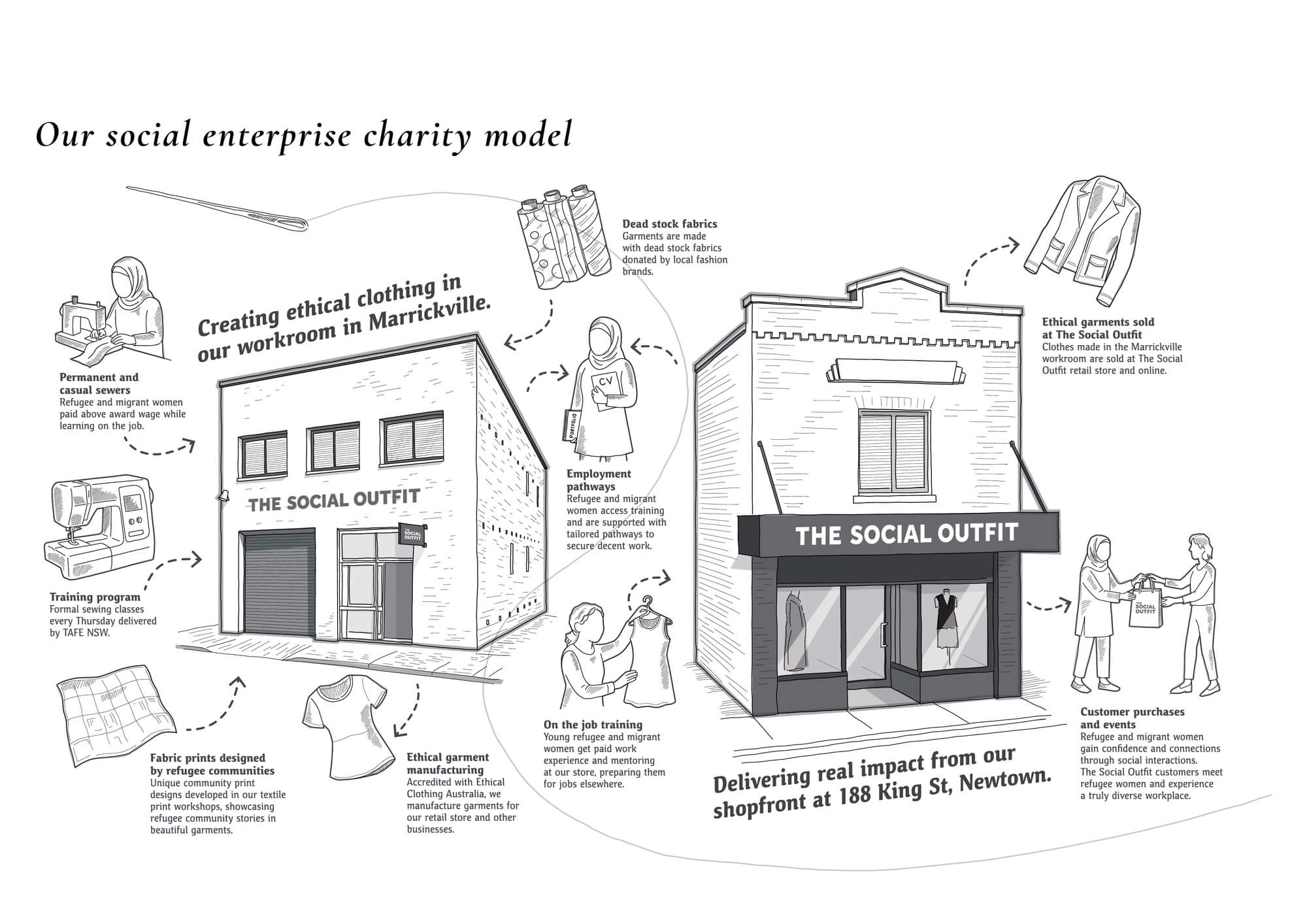
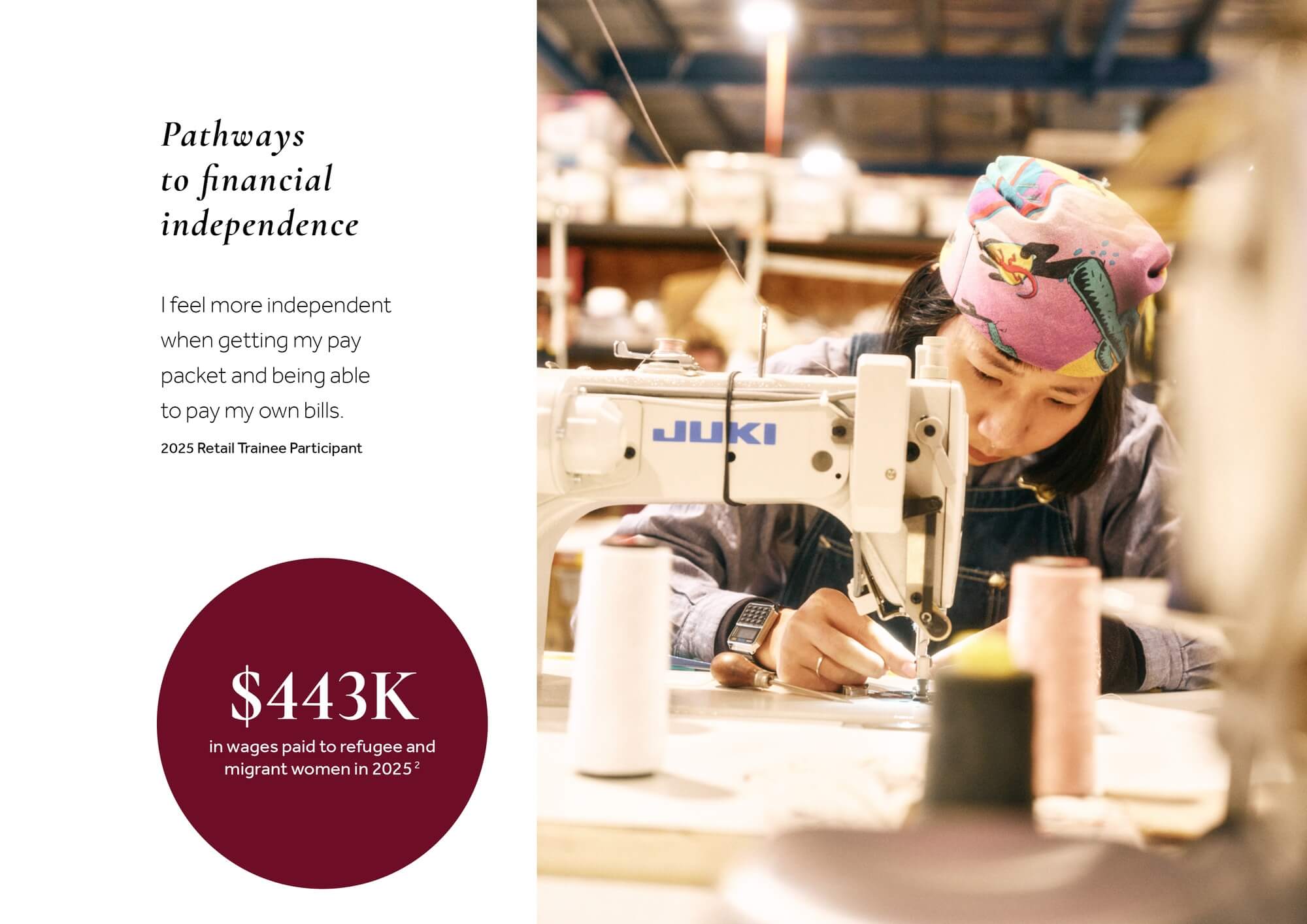
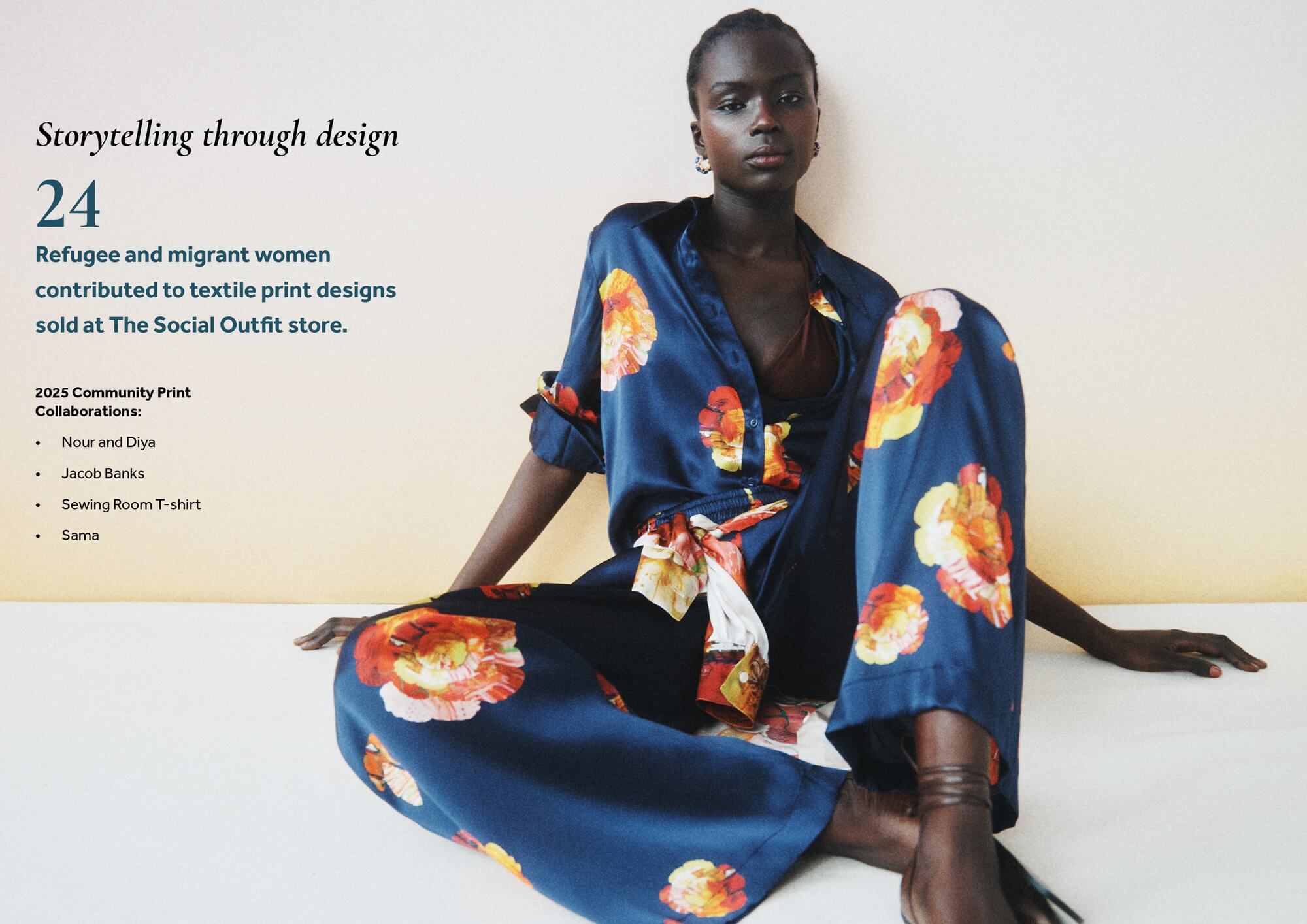
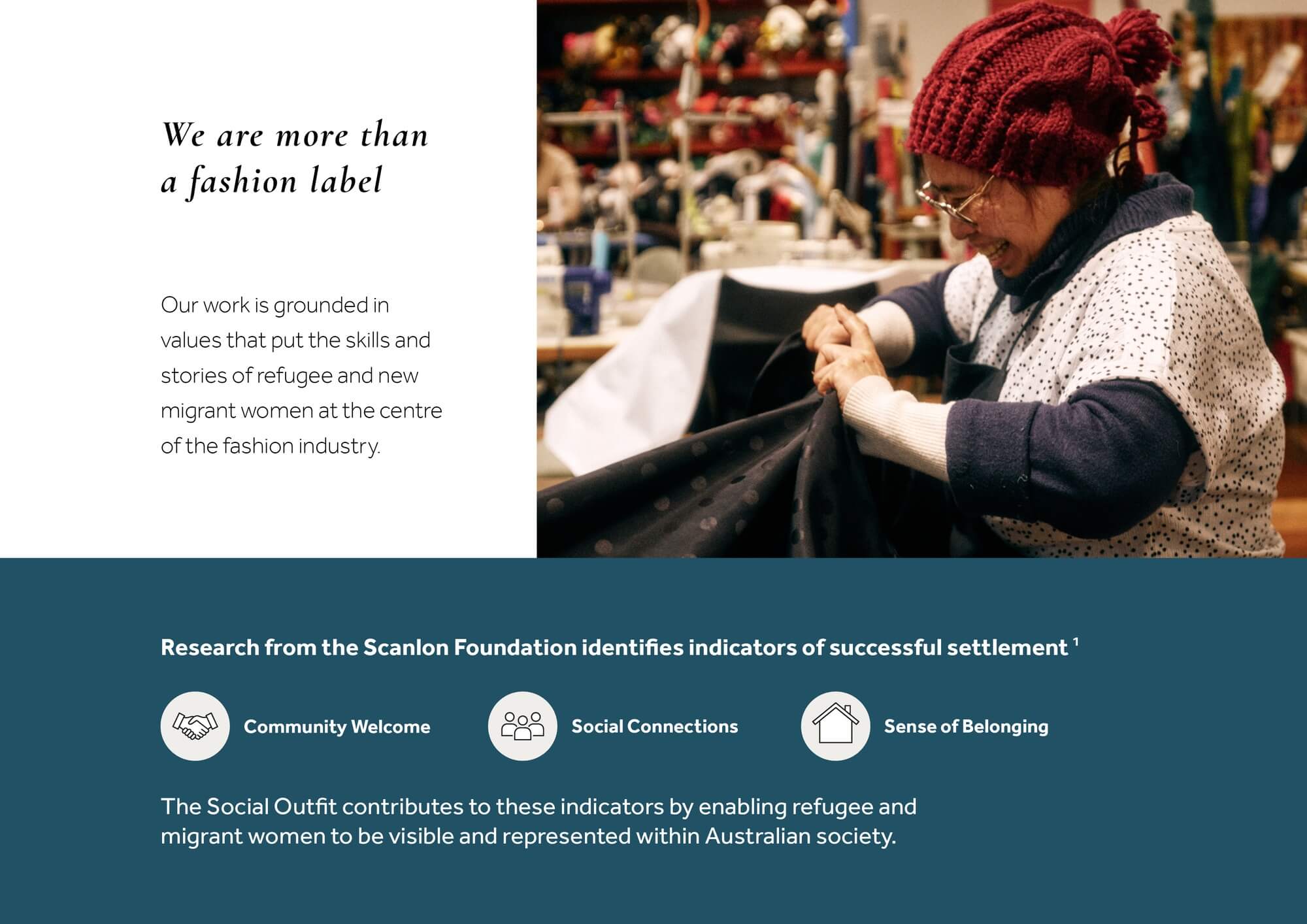
  • The impact framework is the formalisation of more than ten years of direct employment experience with refugee and migrant women inside a real commercial operation. This longitudinal knowledge — about which interventions create lasting change, and what genuine pathways to financial independence require — is proprietary to TSO and underpins every measurement in the framework.TSO's employment model does not end when a woman completes her program. Through active partnerships with retail businesses, TSO places graduates directly into their second jobs.Every production decision is made with circularity in mind. Garments are produced from deadstock fabric donated by Australian fashion brands. Manufacturing happens locally in Marrickville, reducing overseas transport emissions that account for the majority of fashion's carbon footprint. Production runs are small batch and often made-to-order. In 2025, TSO piloted a repair and alterations service, extending garment life and keeping clothing in circulation.Refugee women create original artworks from their cultural stories that are transformed into textile prints on garments sold to the public. In 2025, 24 women contributed designs to TSO's collections. This is representation made tangible: the cultural identities of refugee and migrant women, worn by the broader community.