The Guide to Surplus + Material Impact Calculator

good-design-award_winner_rgb_blk_logo

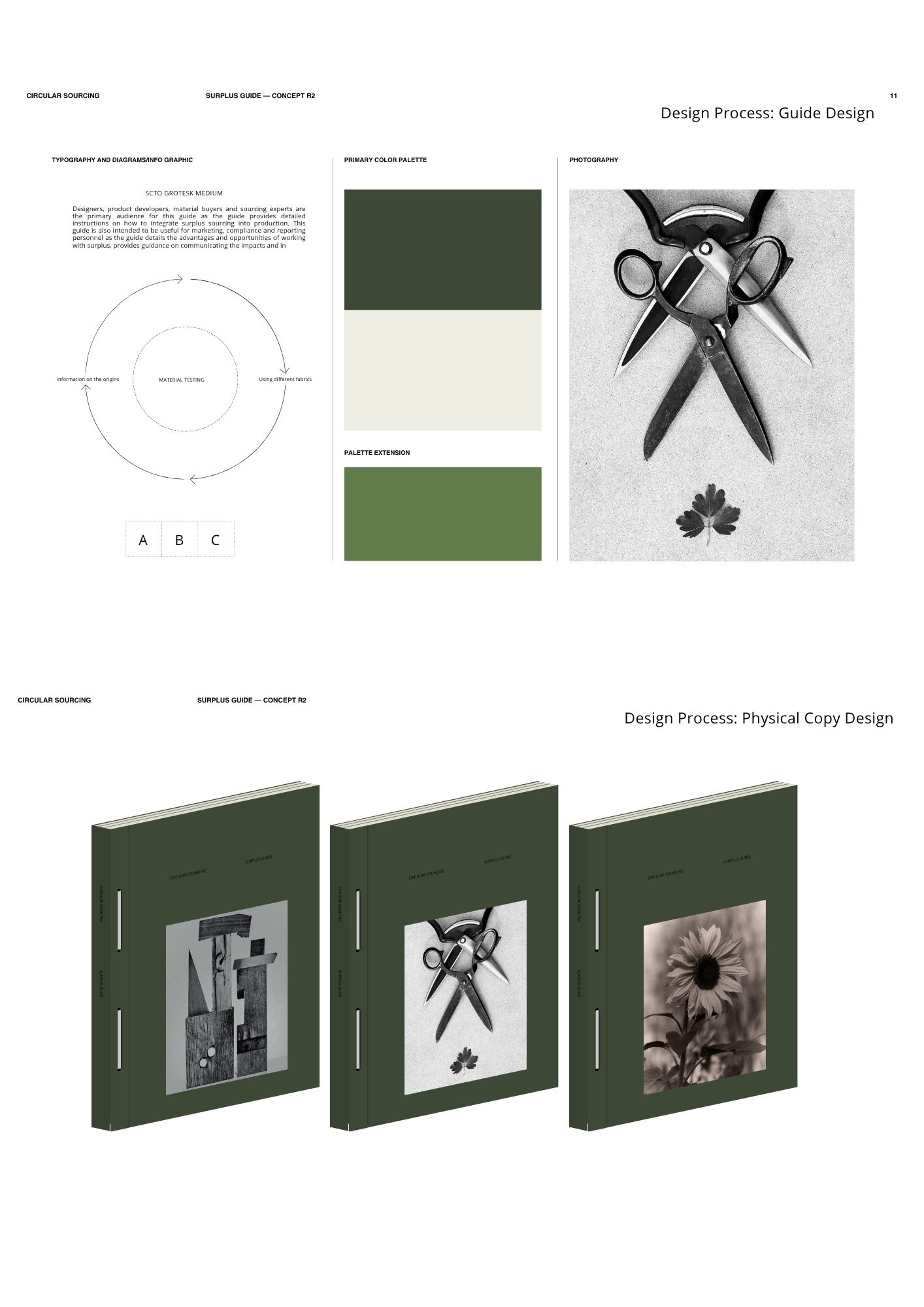
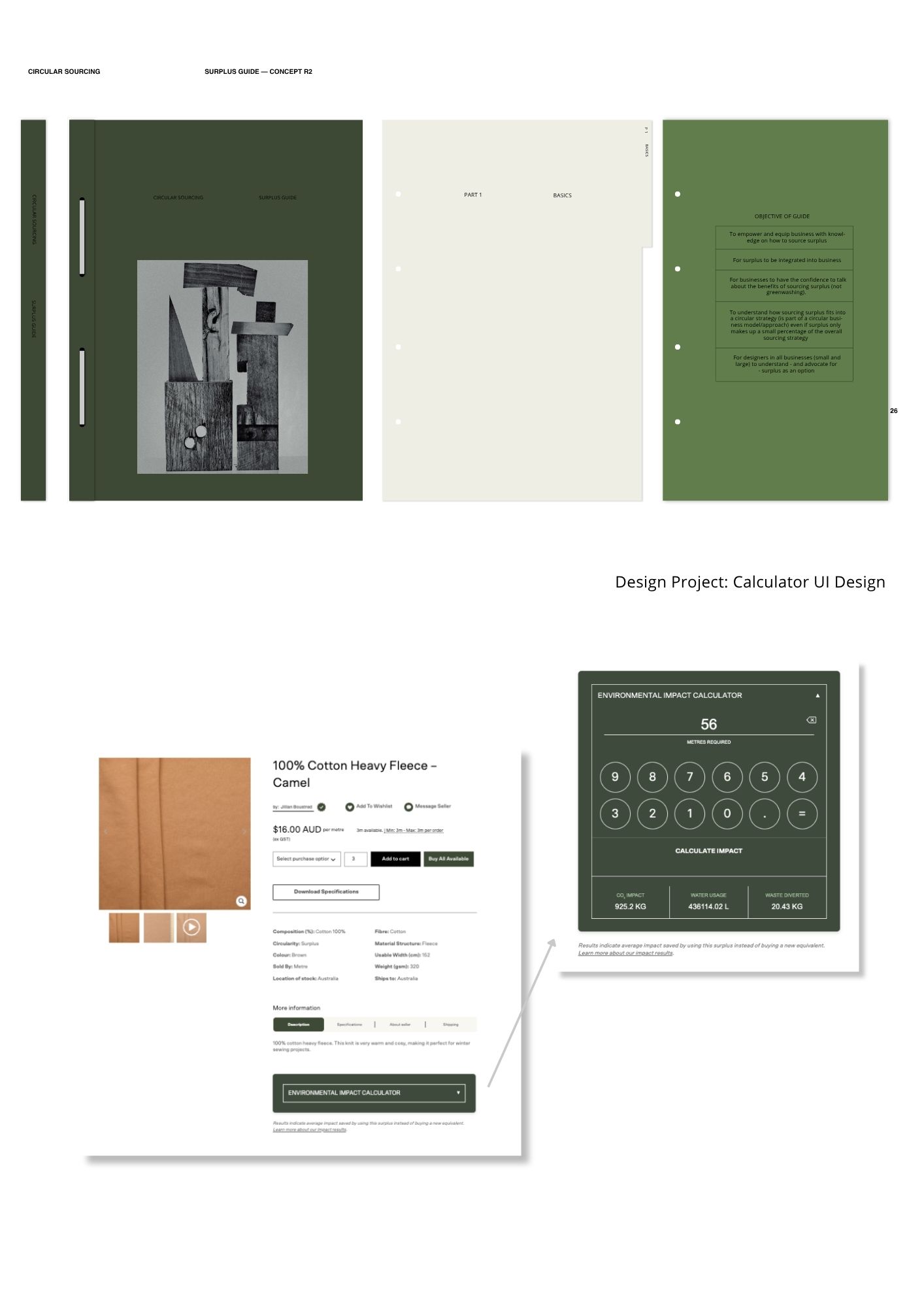
The Guide to Surplus and companion Impact Calculator are open-access industry tools designed by Circular Sourcing. The calculator is built on validated environmental datasets developed by RMIT University. Together, they give fashion brands and sourcing teams the first structured framework for sourcing and measuring the environmental impact of surplus textiles.
view website

2.jpg
Circular Sourcing
3.jpg
Circular Sourcing
4.jpg
Circular Sourcing / Graphic Services NYC
5.jpg
Graphic Services NYC
6.jpg
Graphic Services NYC
7.jpg
Graphic Services NYC / Circular Sourcing
8.jpg
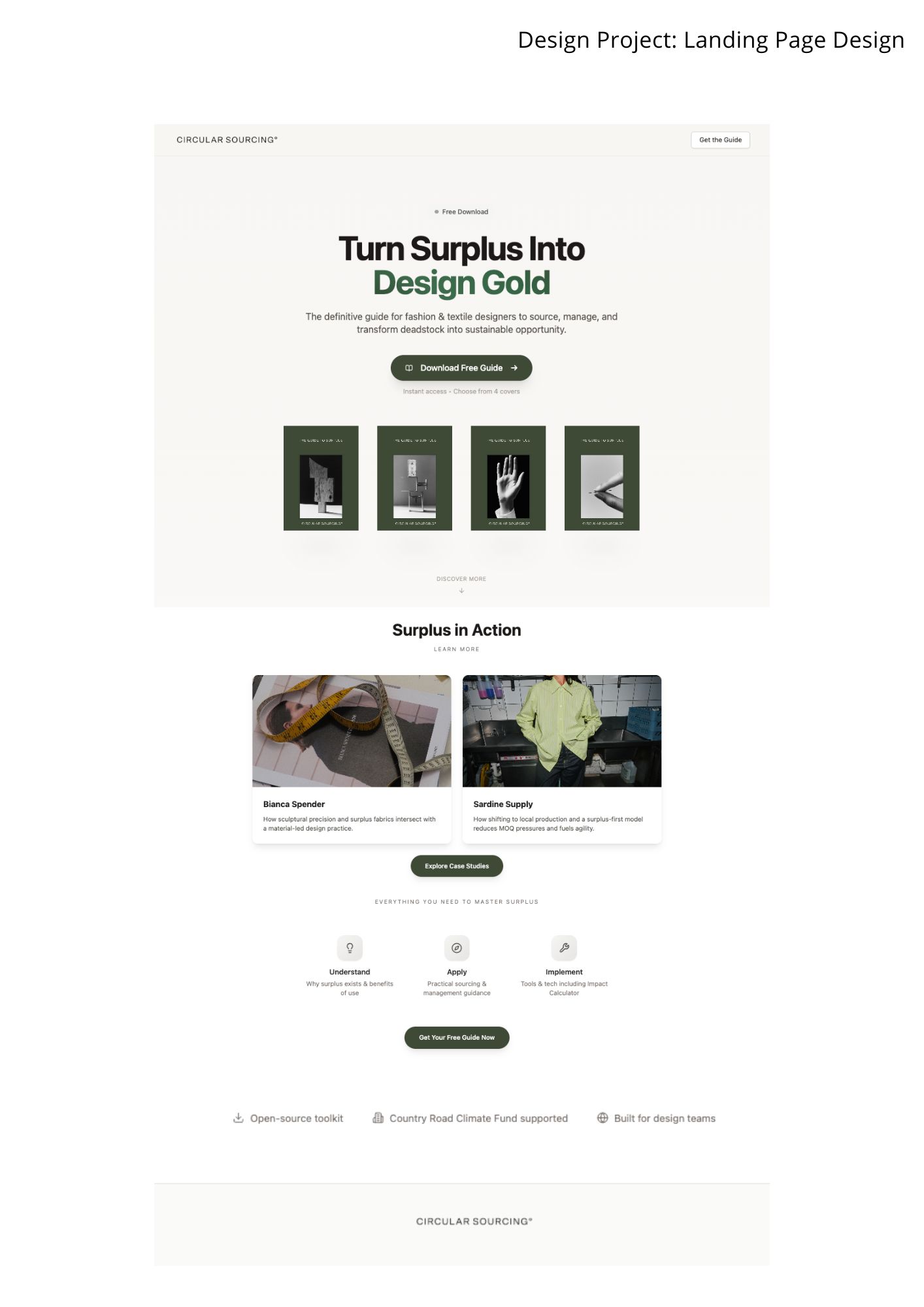
We highly recommend you download the guide for the full design experience: https://guide.circularsourcing.co/
  • CHALLENGE
  • SOLUTION
  • IMPACT
  • MORE
  • Surplus textiles — overproduction, deadstock and excess materials from mills — represent one of the fashion industry's largest untapped circular resources. But there was no shared language, no sourcing framework and no way to quantify the environmental benefit of using them. Brands wanted to source surplus but lacked the knowledge, confidence and data to do it systematically. The challenge was to create a practical, credible industry resource that could shift sourcing behaviour across an entire sector — without oversimplifying the complexity of global textile supply chains or the commercial realities brands operate within.

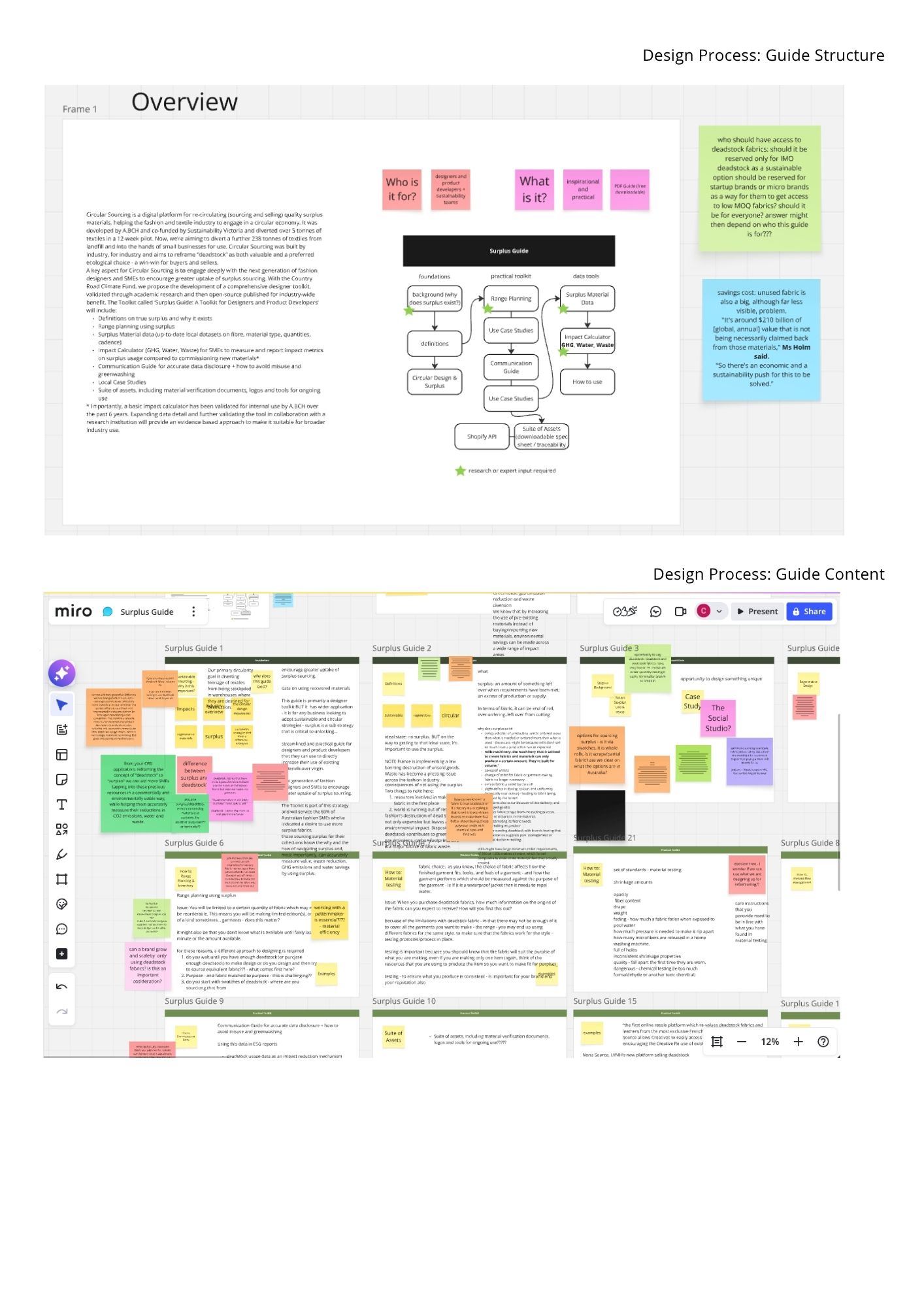
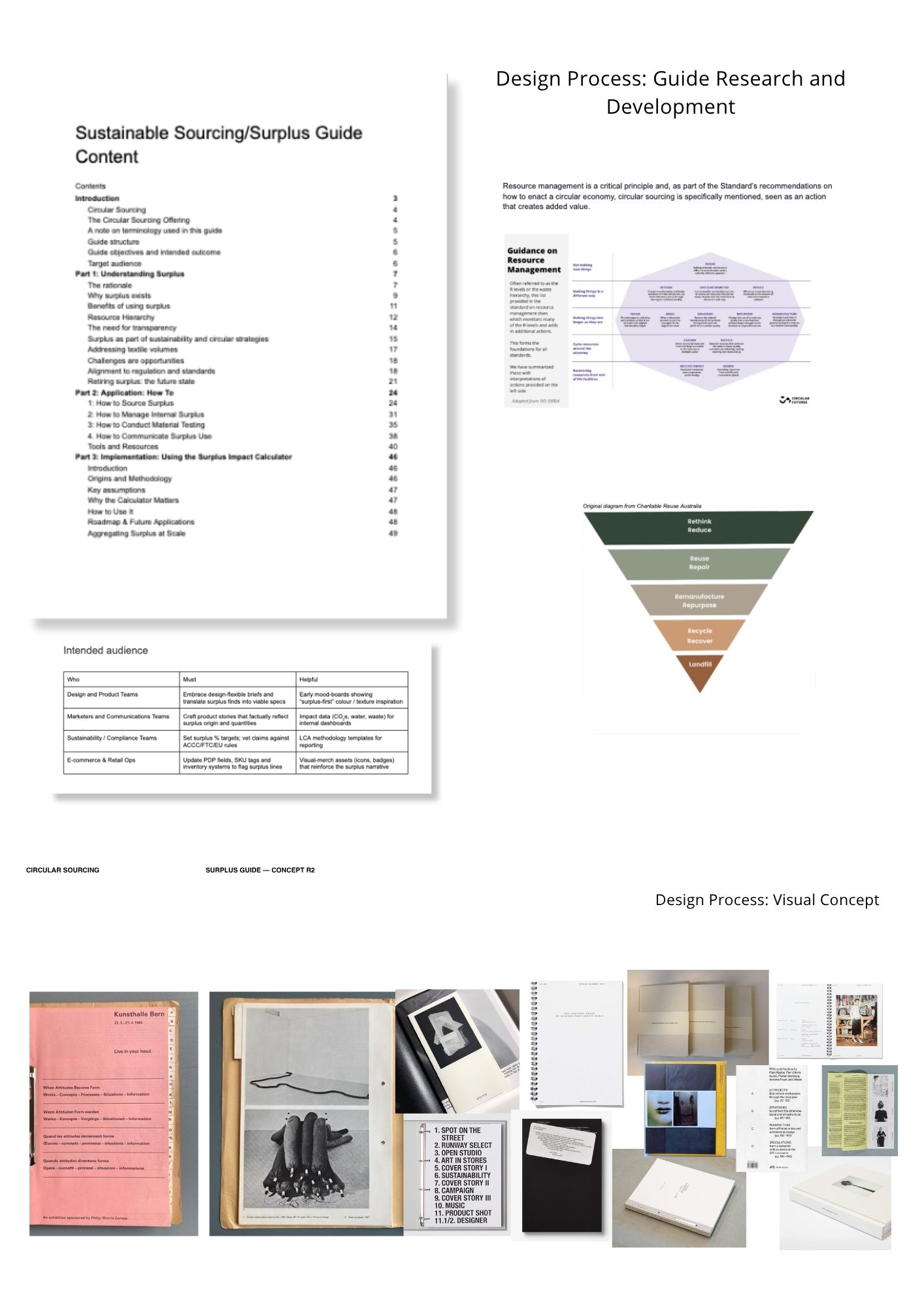
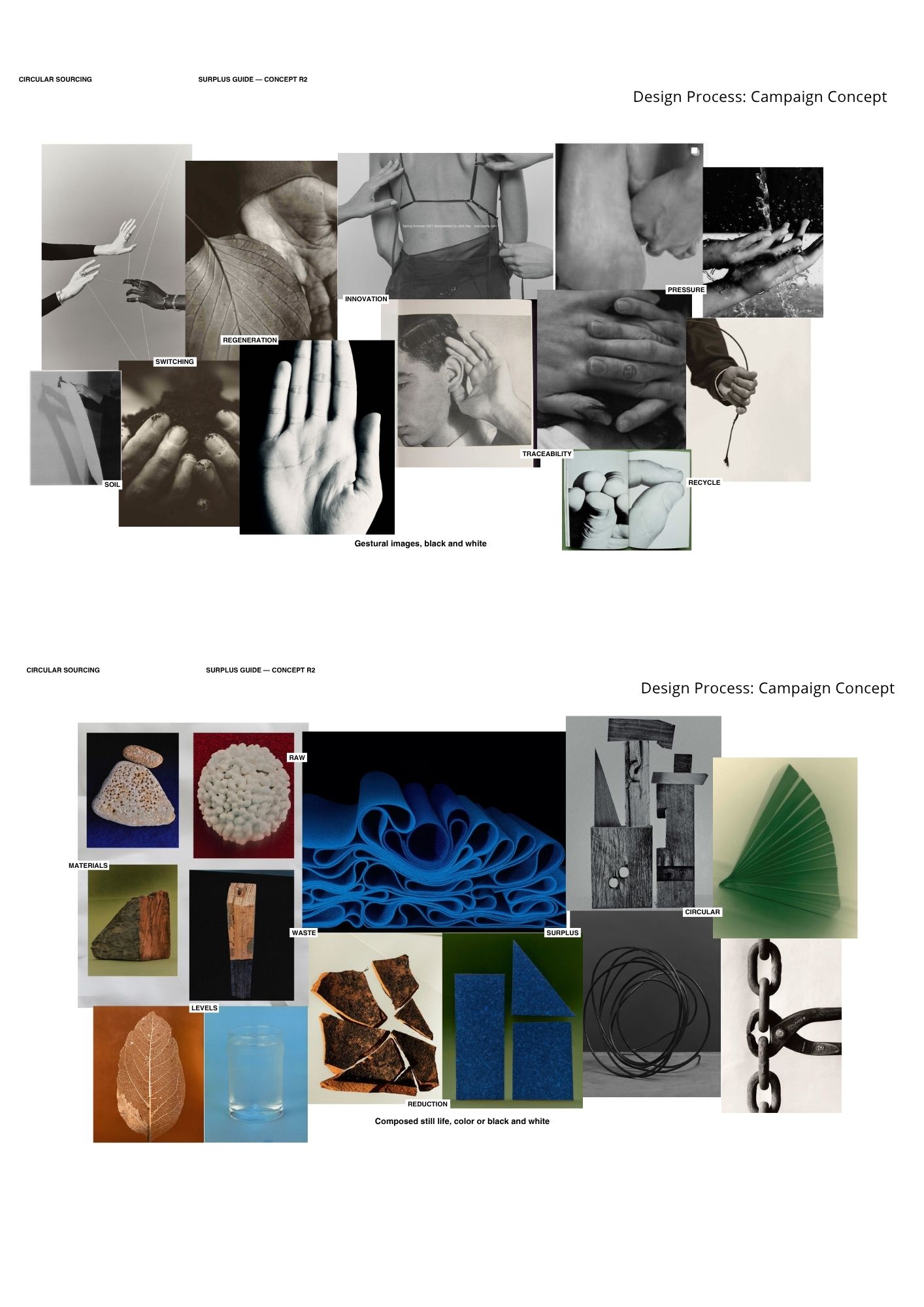
  • Circular Sourcing developed the Guide to Surplus drawing on its direct experience operating a surplus textile sourcing platform and working with fashion brands. The guide covers the rationale for surplus use, how surplus is created, sourcing methods, internal management, material testing and communication frameworks. The companion Surplus Impact Calculator is built on a validated environmental dataset compiled by RMIT University researchers, allowing brands to quantify water, energy and emissions savings when substituting surplus for virgin materials. Both tools are open-access and free to use. The guide was designed by Graphic Services NYC with original campaign imagery by Art Box Black.

  • The Guide to Surplus and Impact Calculator have been adopted by fashion brands and integrated into industry education since launching in September 2025. The calculator has been used over 830 times, giving brands quantified environmental data for sourcing decisions. The guide has been downloaded over 250 times across 10 countries by individual designers, businesses and government users. The tools are embedded in Circular Sourcing's work with brands including Bianca Spender and Country Road. The project addresses a structural gap in the fashion industry's transition toward circular material flows.

  • The Guide to Surplus is a 115+ page open-access resource structured across four sections: Understanding Surplus, Application, Implementation, and the Surplus Impact Calculator methodology. It includes practical guidance on sourcing surplus textiles, managing internal surplus streams, conducting material testing, and communicating surplus use to consumers.The Surplus Impact Calculator is a free digital tool underpinned by a peer-reviewed environmental dataset compiled by RMIT University researcher Tarun Grover under the supervision of A/Prof Jenny Underwood and Prof Lijing Wang. It calculates water savings, energy reduction and carbon emissions avoided when a brand substitutes surplus textiles for virgin equivalents in a garment — giving sourcing teams hard numbers to guide sourcing and design decisions.The project was funded by the Country Road Climate Fund with visual language and original campaign imagery directed by Graphic Services. The guide is hosted at guide.circularsourcing.co and the calculator is embedded into every circularsourcing.world product listing. Casual impact data becomes verification documentation as soon as a material is purchased on the platfrom. Both tools are freely accessible to any brand globally.The project bridges academic research and commercial practice in a sector where most sustainability guidance is either too theoretical to act on or too shallow to trust.