SoilRevive

best-in-discipline
  • 2026

  • Concept Design

Commissioned By:

Liu Chia-Yi

Designed In:

Taiwan

SoilRevive is an AI-powered bioremediation station designed to treat heavy metal-contaminated farmland. Inspired by Arabidopsis root mechanisms and mycorrhizal networks, it autonomously cultivates and releases targeted microbial strains into polluted soil — offering farmers, contractors, and governments a precise, low-carbon alternative to destructive conventional remediation.

2.jpg
Core Concept Overview/Experimental Process and Model Construction
3.jpg
Background of the Issue/Pain Points
4.jpg
Operation Workflow
5.jpg
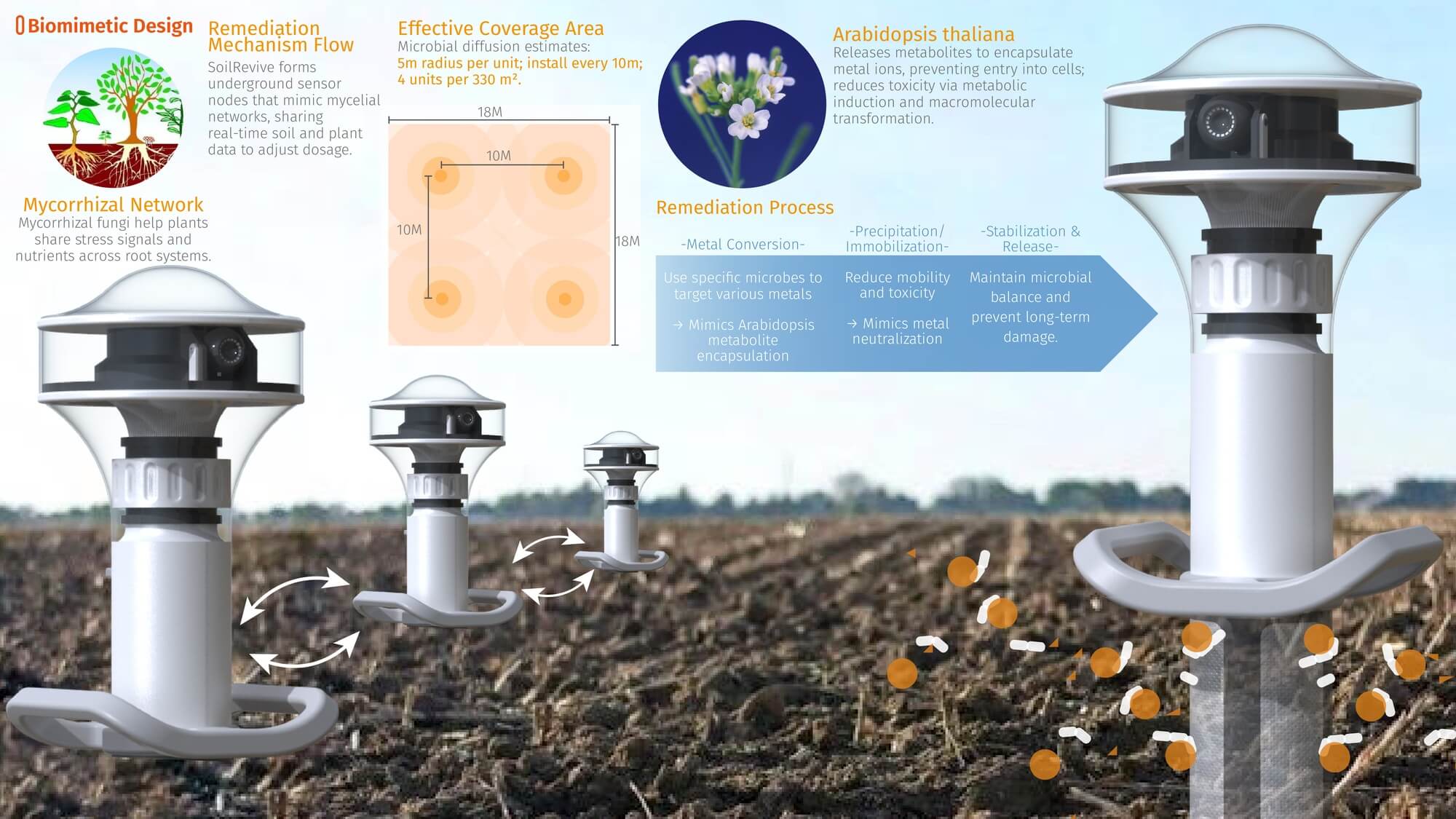
Biomimetic Design
6.jpg
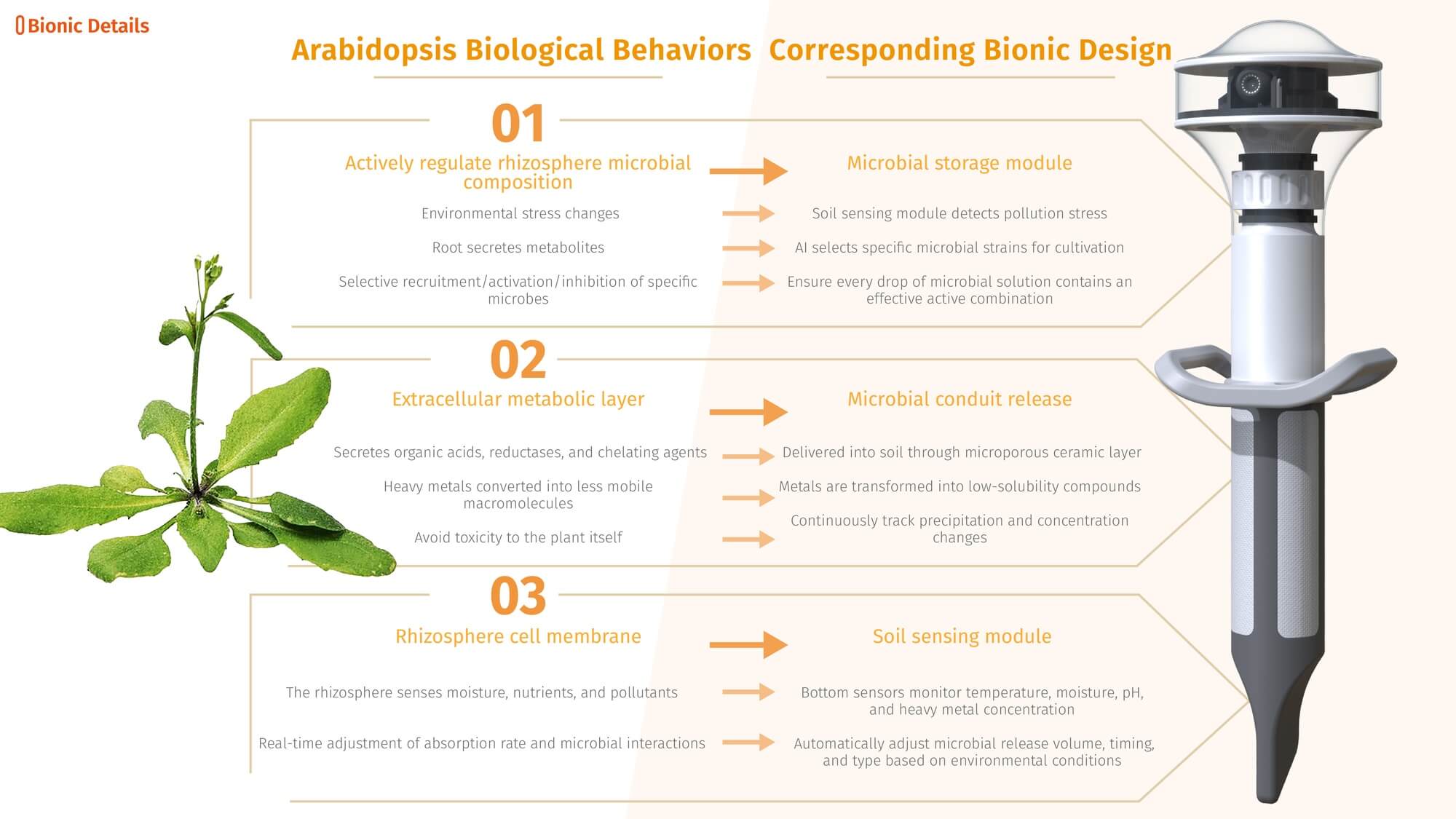
Bionic Details
7.jpg
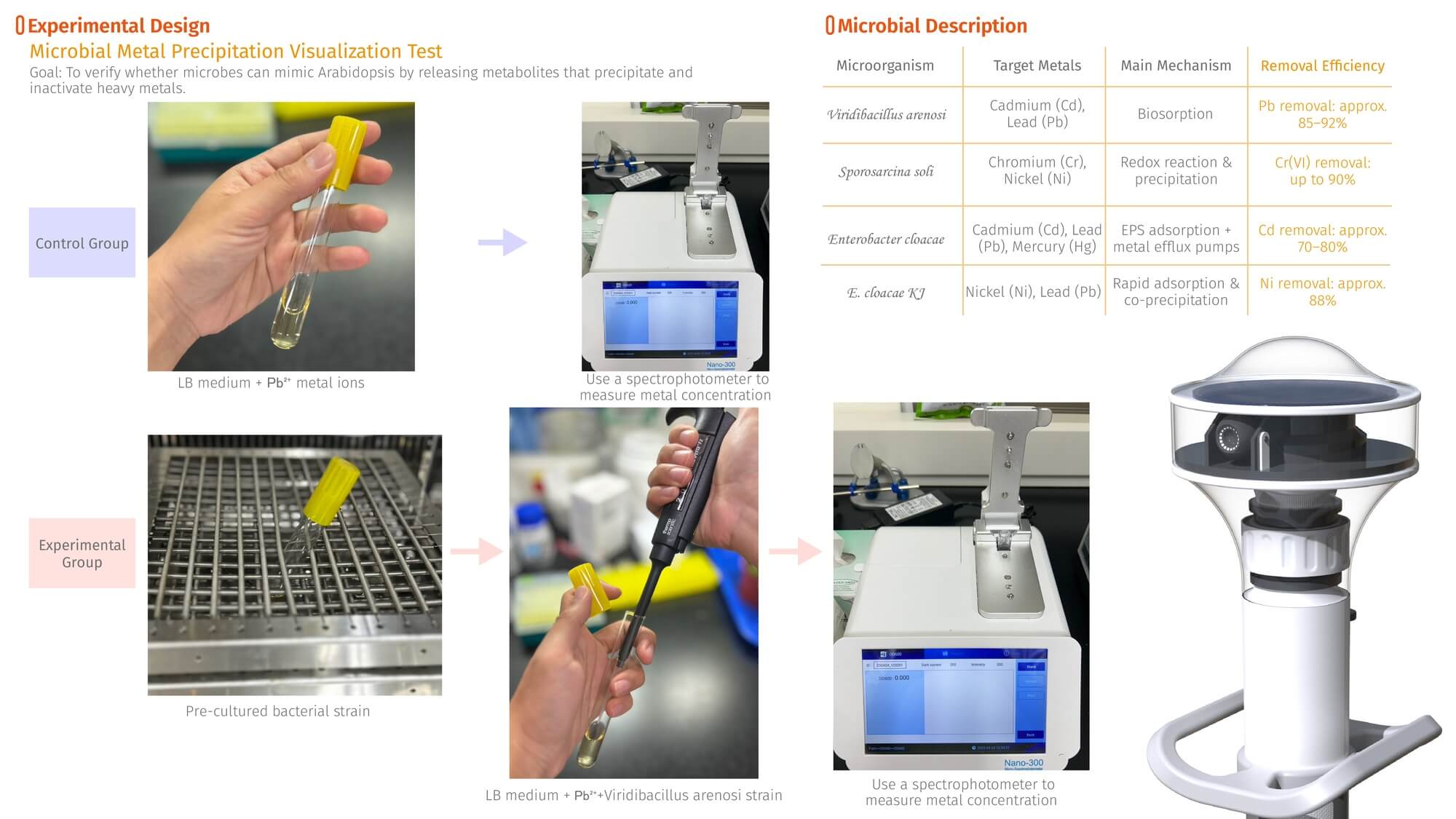
Experimental Design/Microbial Description
8.jpg
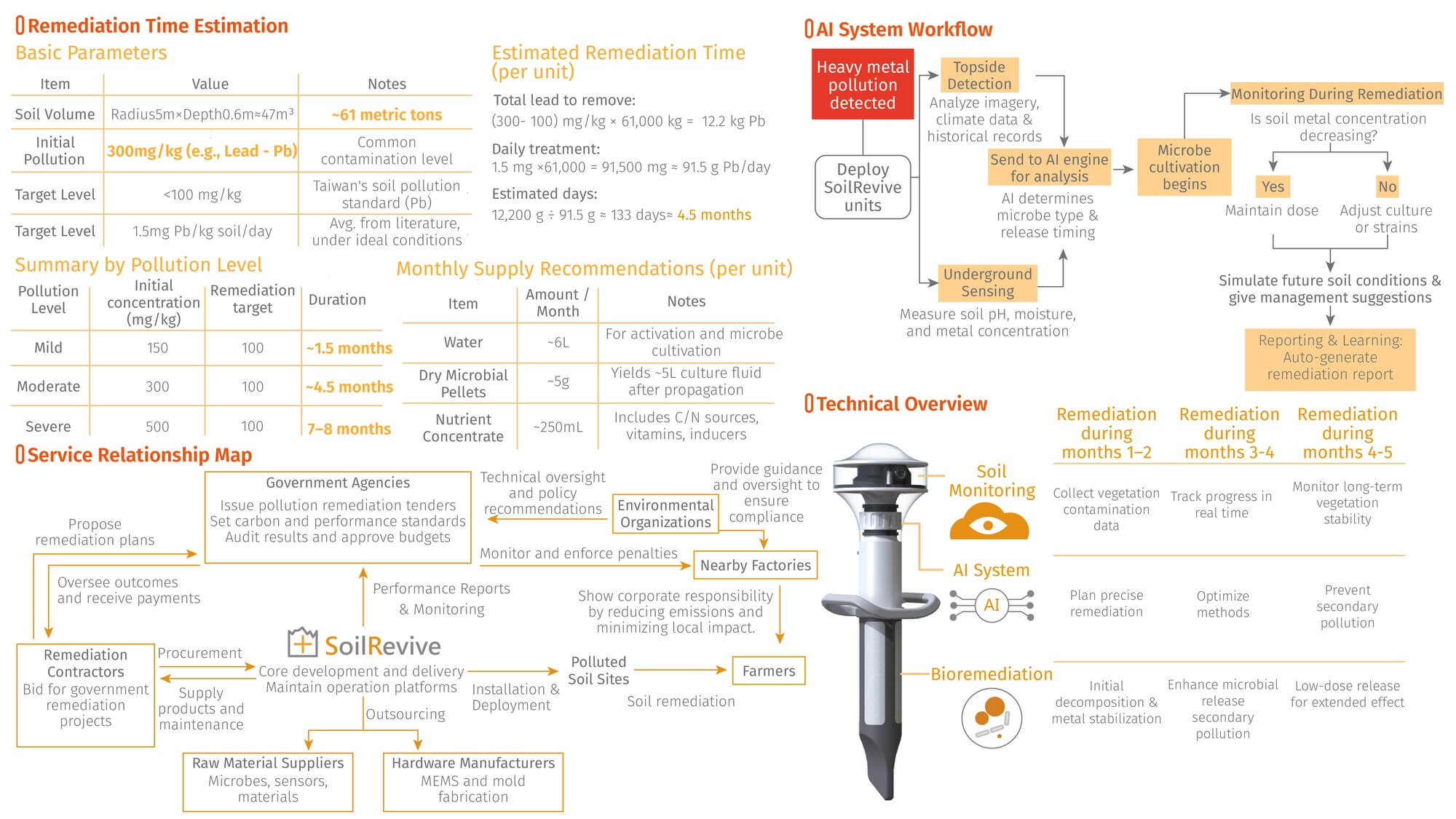
Remediation Time Estimation/AI System Workflow/Service Relationship Map/Technical Overview
9.jpg
Remediation Methods Comparison/Market Size/Expected Benefits
  • CHALLENGE
  • SOLUTION
  • IMPACT
  • MORE
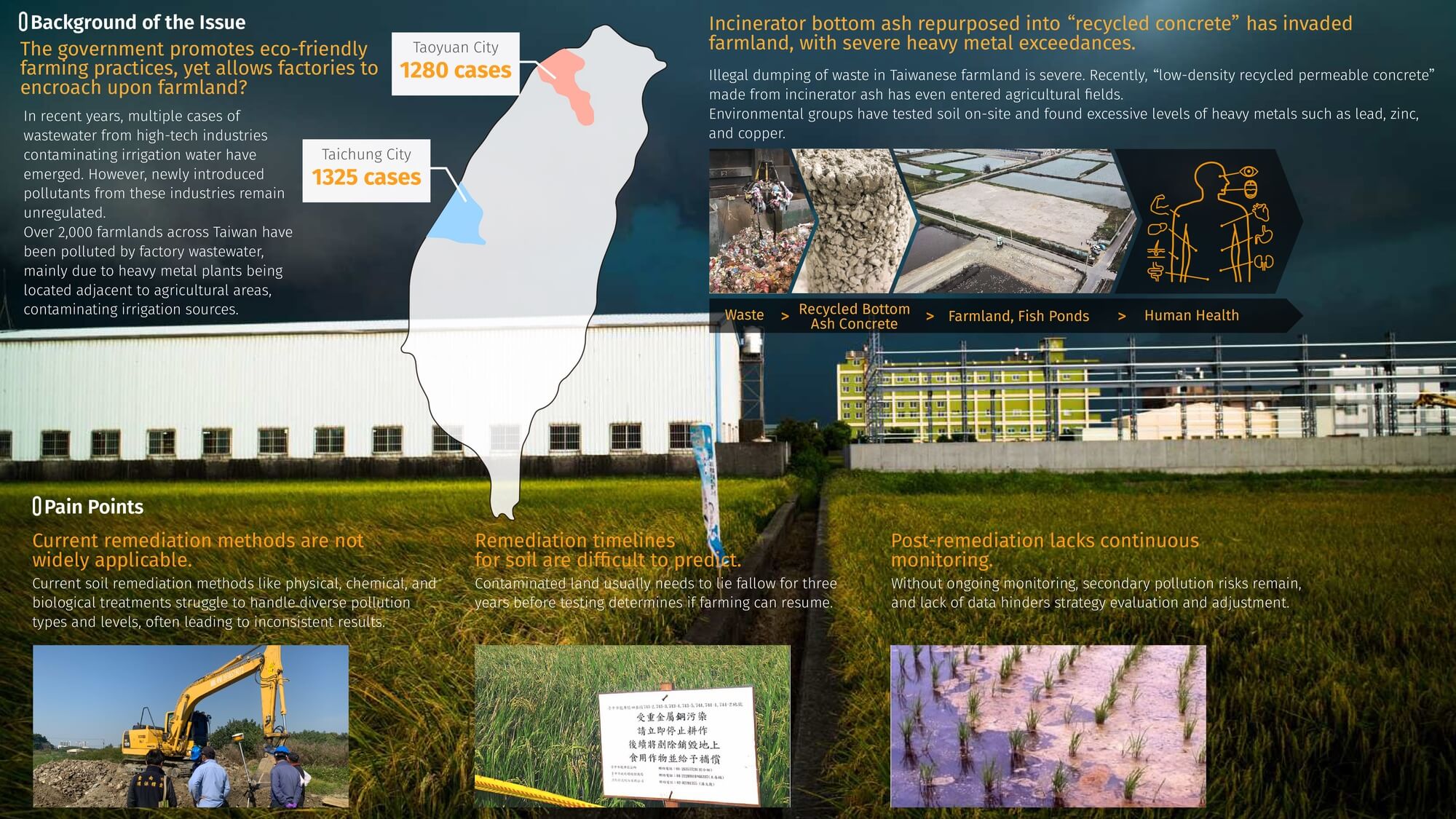
  • Over 2,000 farmlands across Taiwan are contaminated by industrial wastewater and illegally dumped waste, with heavy metals such as lead, zinc, and copper far exceeding safe thresholds. Existing remediation methods — excavation, chemical stabilization, phytoremediation — are costly, carbon-intensive, unpredictable in timeline, and incapable of handling multi-metal contamination simultaneously. Each ton of treated soil emits approximately 300 kg of CO₂ under traditional approaches. Critically, no existing solution provides continuous post-remediation monitoring, leaving secondary pollution risks unaddressed. The challenge was to design a system that is adaptive, low-interference, ecologically sound, and deployable without specialized technical expertise.

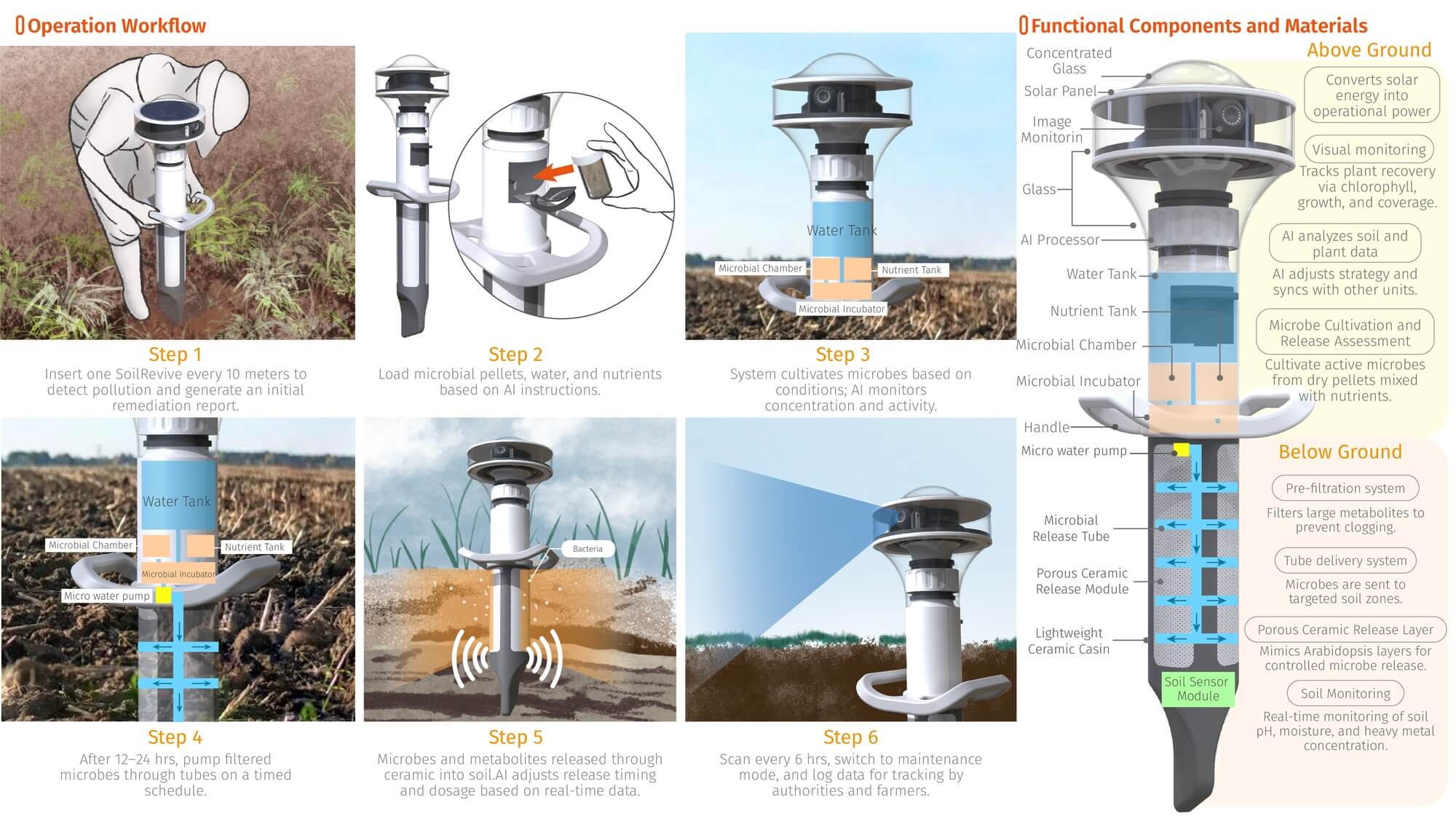
  • SoilRevive applies biomimicry through a Double Diamond process. Drawing from Arabidopsis thaliana's metabolite secretion and mycorrhizal network signaling, the device cultivates and releases targeted bacterial strains — including Viridibacillus arenosi and Sporosarcina soli — through a microporous ceramic layer into contaminated soil zones. An onboard AI processor analyzes real-time data from underground soil sensors (pH, moisture, heavy metal concentration) and an overhead camera tracking vegetation recovery, continuously adjusting microbial type, dosage, and timing. Units communicate with each other to coordinate remediation across a field. Laboratory tests validated lead removal rates of 85–92%, confirming the core mechanism prior to device integration.

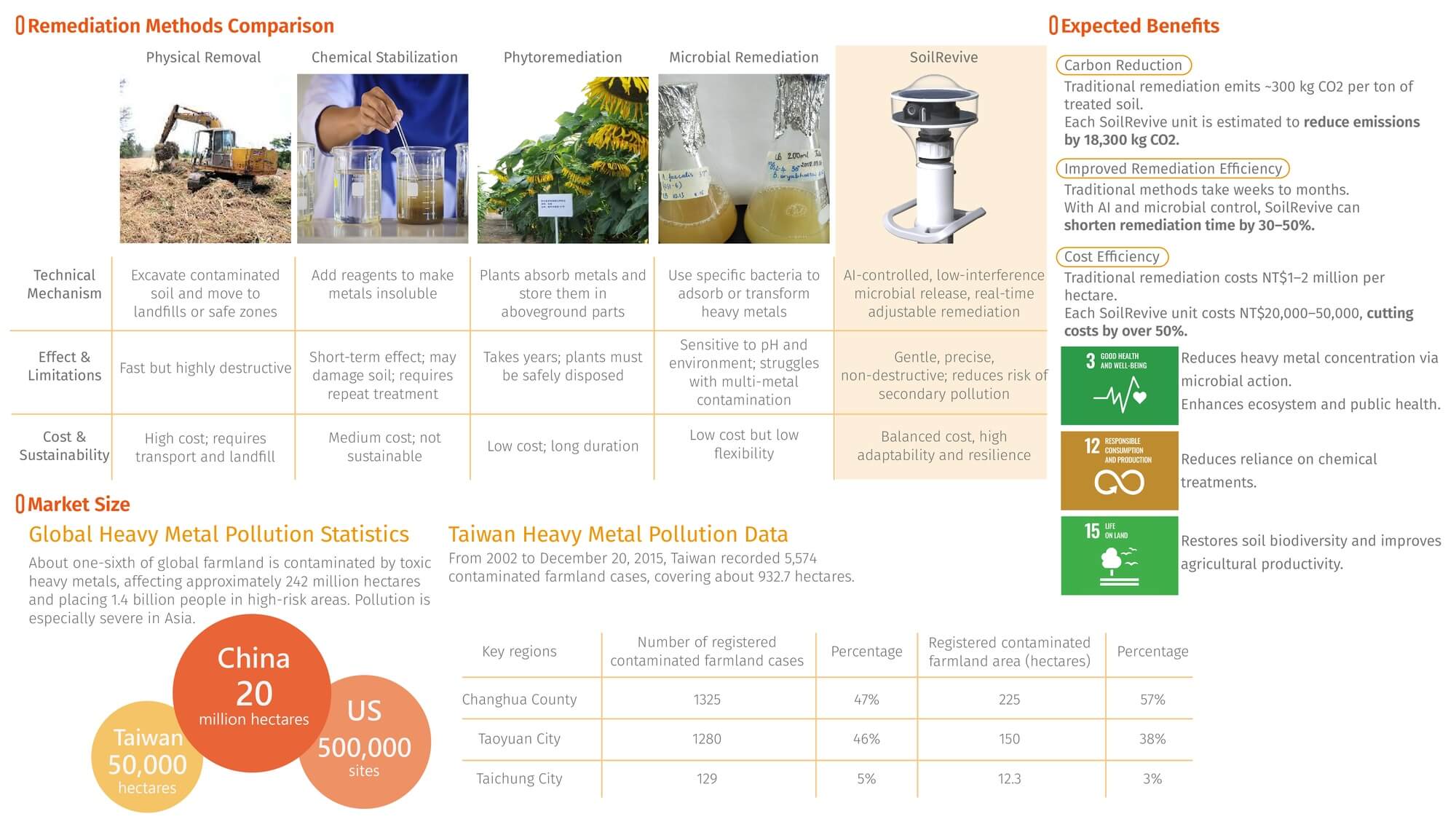
  • SoilRevive reduces remediation costs by over 50% compared to conventional methods (NT$20,000–50,000 per unit vs. NT$1–2 million per hectare) and cuts CO₂ emissions by an estimated 18,300 kg per unit. AI-controlled microbial release shortens remediation timelines by 30–50%, with moderate contamination (300 mg/kg Pb) treatable in approximately 4.5 months. Beyond efficiency, SoilRevive restores soil biodiversity, reduces reliance on chemical inputs, and generates transparent data trails for government auditing and farmer accountability — directly addressing SDG 3 (Good Health), SDG 12 (Responsible Consumption), and SDG 15 (Life on Land) across Asia's most at-risk agricultural regions.

  • 1. Dual Biomimetic Architecture — Simultaneously mimics Arabidopsis metabolite encapsulation (for targeted heavy metal conversion) and mycorrhizal network logic (for inter-unit data sharing and coordinated dosing), a combination not present in any existing remediation product.2. In-Situ Microbial Cultivation — Dry microbial pellets are activated on-site using onboard water and nutrient tanks, eliminating cold-chain logistics and enabling fresh, high-activity microbial cultures matched to detected contamination type.3. Closed-Loop AI Decision Engine — Continuously loops between underground sensing, vegetation imaging, microbial response data, and historical records to auto-adjust strategy — enabling remediation that improves over time rather than following a fixed protocol.4. Validated Experimental Basis — Microbial metal precipitation tests conducted with a spectrophotometer confirmed 85–92% lead removal efficacy for Viridibacillus arenosi, providing scientific credibility beyond conceptual design.5. Accessible Deployment Model — Designed for non-technical users: stake into soil every 10 meters, load three consumables per month (≈6L water, 5g microbial pellets, 250mL nutrient concentrate), and the system self-manages. No electromechanical expertise required.6. Scalable Service Ecosystem — Structured service relationship map connecting government agencies, remediation contractors, raw material suppliers, and farmers, positioning SoilRevive as infrastructure, not just a product.