Omnidirectional Wide-Angle Locator (OWL)

good-design-award_best-in-class_rgb_blk_logo
  • 2026

  • Concept Design

Designed In:

Australia

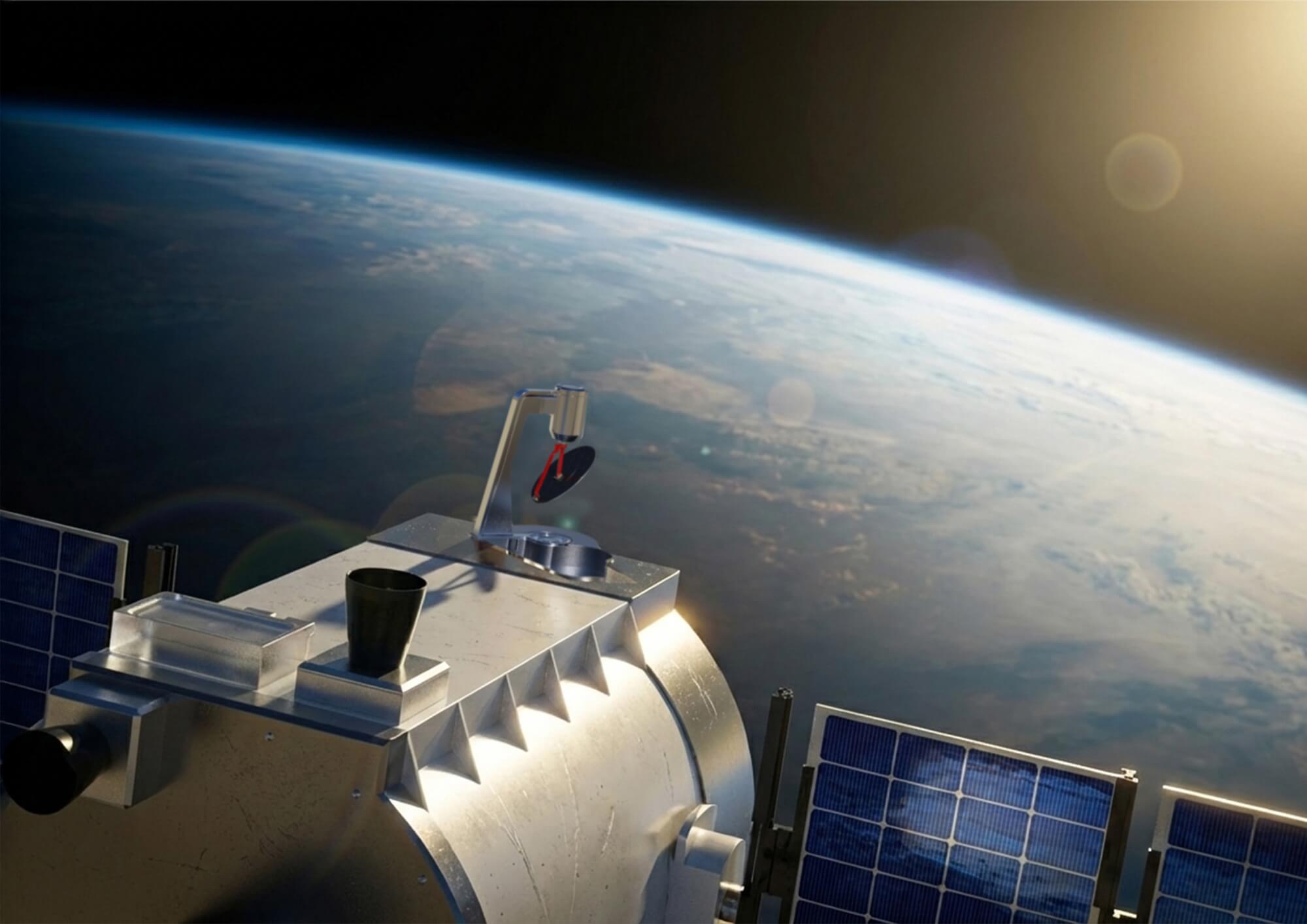
OWL is a fast, robust and lightweight optical system that transforms how spacecraft, satellites and lunar rovers see. Developed by Australian Astronomical Optics with Particle Design Studio, it uses an elliptical mirror and two small motors to rapidly redirect a camera or telescope without moving the host system.

view website
Buy online

2.jpg
3.jpg
4.jpg
5.jpg
6.jpg
7.jpg
  • CHALLENGE
  • SOLUTION
  • IMPACT
  • MORE
  • Almost every space-based camera is static. To look somewhere new, the entire spacecraft must move using thrusters, fuel and, on Hubble, a complex gyroscope system. Space hardware must be built light and tough to survive launch, vacuum, radiation and extreme temperatures, so engineers avoid moving parts. Earth-style gimbals are too heavy and mechanically complex. The design challenge, quite literally, was out of this world: create a light, strong, mechanically simple device that could survive launch, rapidly divert light to change a camera’s view, and work without maintenance for years in orbit, in deep space, on the Moon and Mars.

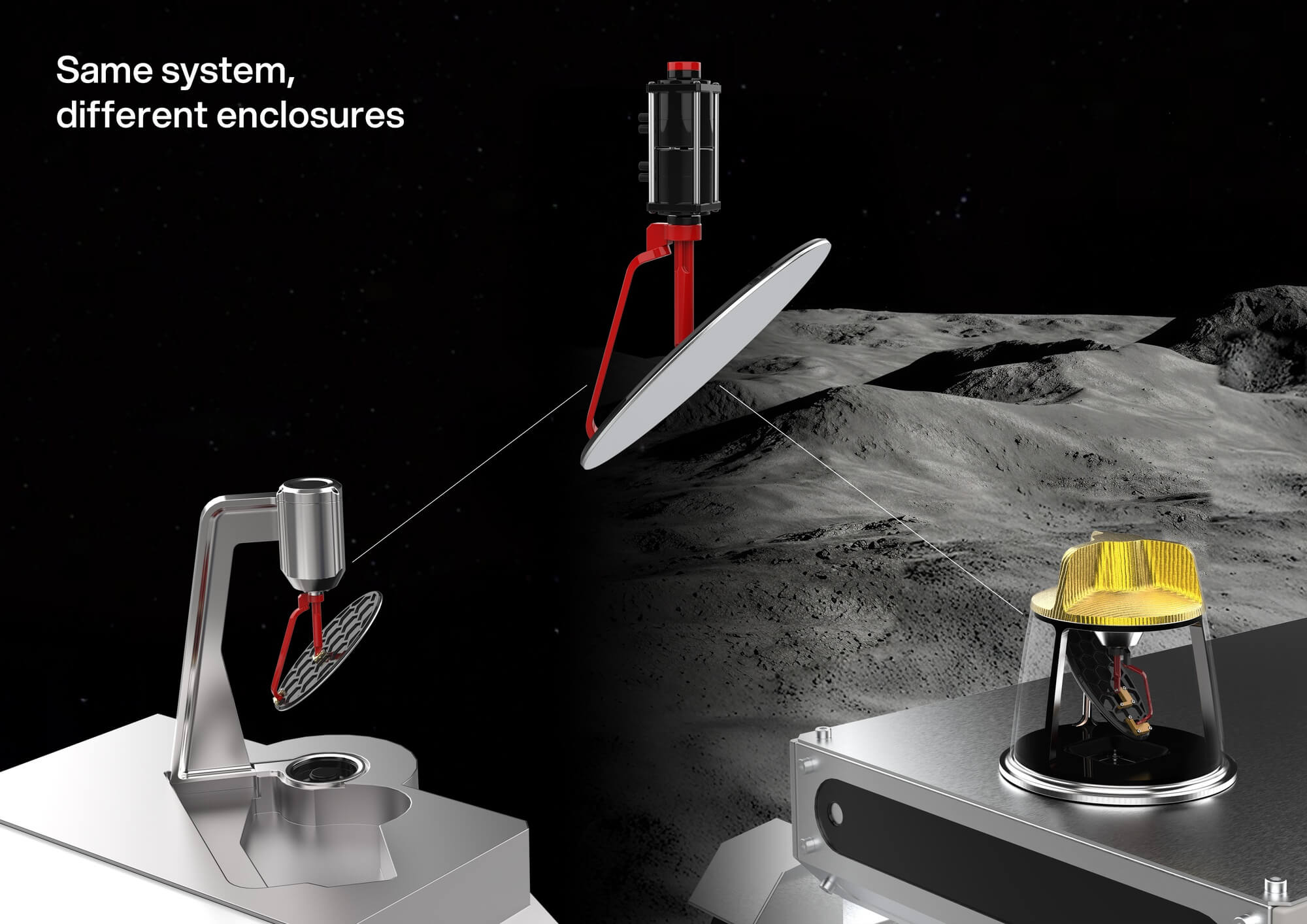
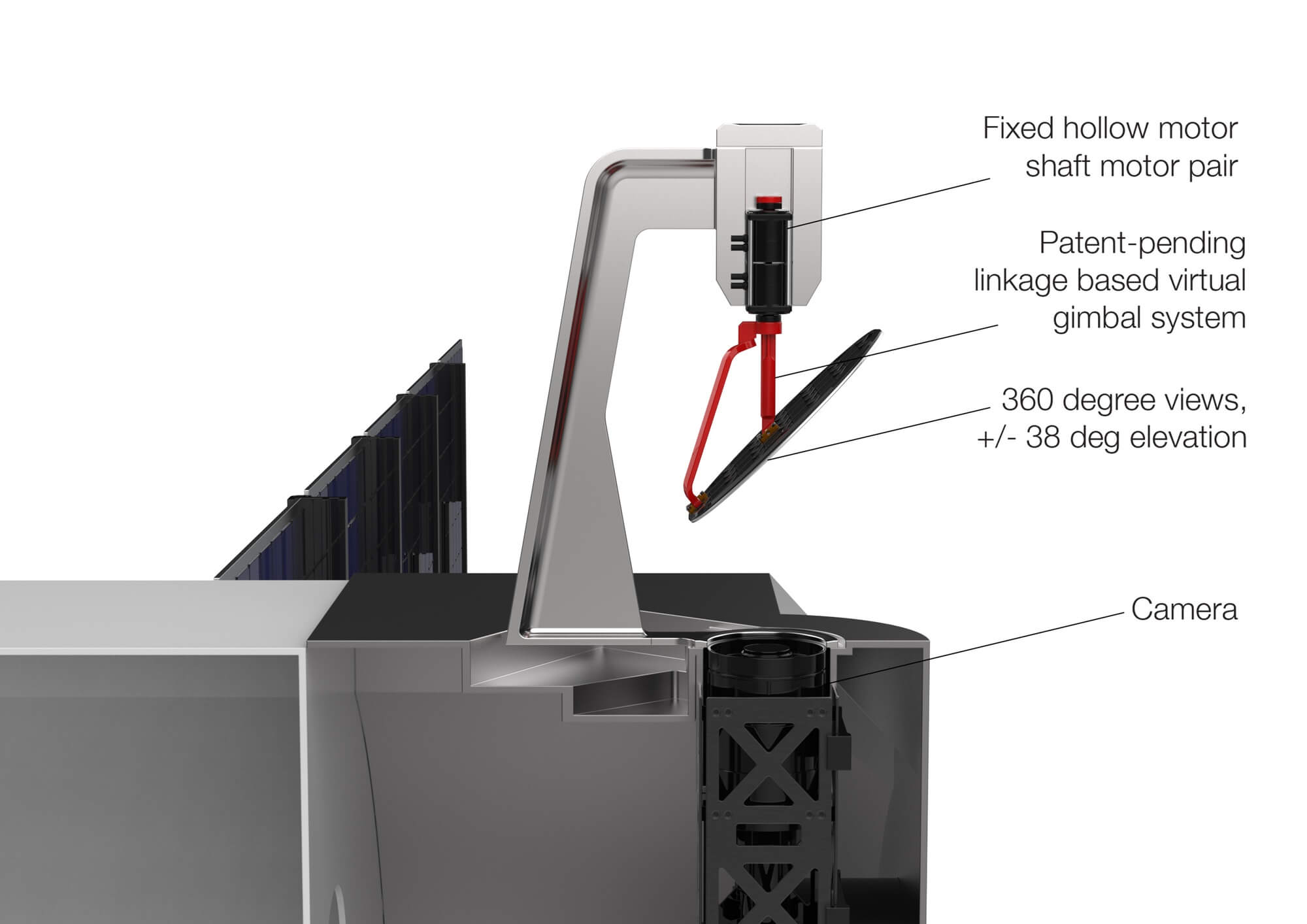
  • OWL (Omnidirectional Wide-angle Locator) is a spring-loaded device stowed inside the spacecraft for launch. When deployed, it flicks out and protrudes just 350mm.Weighing less than 500 grams, it is essentially an elliptical mirror guided by two small, motorised shafts. The camera or telescope stays safe inside the spacecraft, while the mirror redirects its field of view through 360° and ±38° elevation.A second variant sits behind protective panoramic window on lunar rovers. Design contributions from Particle Design Studio refined the linkage geometry, packaging and visual language into a coherent, deployable product across both configurations.

  • OWL is a $500,000 device doing a $4 million job.Commercially, it allows satellites to image other spacecraft and space debris without costly, fuel-consuming manoeuvres. Environmentally, it reduces propellant consumption, extends mission life and supports space debris monitoring, contributing to a more sustainable orbital environment. Societally, it enables safer space operations and extends the performance of every imaging mission, from Earth observation satellites to lunar rovers and future deep-space platforms.OWL demonstrates how industrial design can bridge complex scientific systems and real-world implementation, turning laboratory capability into practical devices that combine the best of science, engineering and design.

  • OWL’s product architecture is structured around optical performance, with a modular enclosure that balances structural rigidity, weight and manufacturability across both orbital and planetary missions. Its patent-pending virtual gimbal redirects a mirror rather than the camera, telescope or host platform, delivering a 360° field of view and ±38° elevation from a fixed-body mount. A compact fixed hollow-shaft motor pair drives the linkage with minimal moving mass, while an elliptical mirror is matched precisely to the camera or telescope’s field of view rather than defaulting to a circular form.The spacecraft variant:• Industrial aluminium arm, recessed for a streamlined profile during launch, is spring-loaded for deployment after launch• Visible fastening details integrated as external bosses into a circular housing for the motor pair• Chamfered body leads into the linkage mirror systemThe rover variant:• Internal structural pillars flow into a recessed external top• Machined aluminium body meets a gold head unit covered in Multi-Layer Insulation• A curved transparent window prevents dust ingress and allows near-unobstructed viewing• Contoured form reduces weight for the space context• Red accents on linkages highlight the gimbal system• Three-fold symmetrical formThe core technologies are patent-pending.