HX – Adaptive Handcycle Trainer

good-design-award_winner_rgb_blk_logo
  • 2026

  • Concept Design

Designed In:

Australia

HX is a modular, adaptive handcycle trainer designed to increase cycling participation for people with a disability. Its universal, adjustable architecture supports wheelchair-seated and recumbent configurations, aligning with handcycling classes H1–H4. HX facilitates accessible participation in e-sports communities and competitive pathways by integrating with commercial virtual cycling platforms.
view website

2.jpg
3.jpg
4.jpg
5.jpg
6.jpg
7.jpg
8.jpg
9.jpg
  • CHALLENGE
  • SOLUTION
  • IMPACT
  • MORE
  • Sports participation is an important health promoting activity for people with a disability. Cycling, in particular, offers cardiovascular, social, and psychological benefits. However, participation requires specialised equipment that is often inaccessible due to cost, availability and access to suitable environments. Fear of judgement, lack of support, and perceived lack of ability further prevent participation. Virtual cycling (stationery trainers connected to interactive software environments) can overcome barriers by enabling safe and comfortable participation in structured training programs and online communities. Despite mainstream adoption of virtual cycling, hardware providers do not formally support handcycling configurations, further excluding people with disabilities.

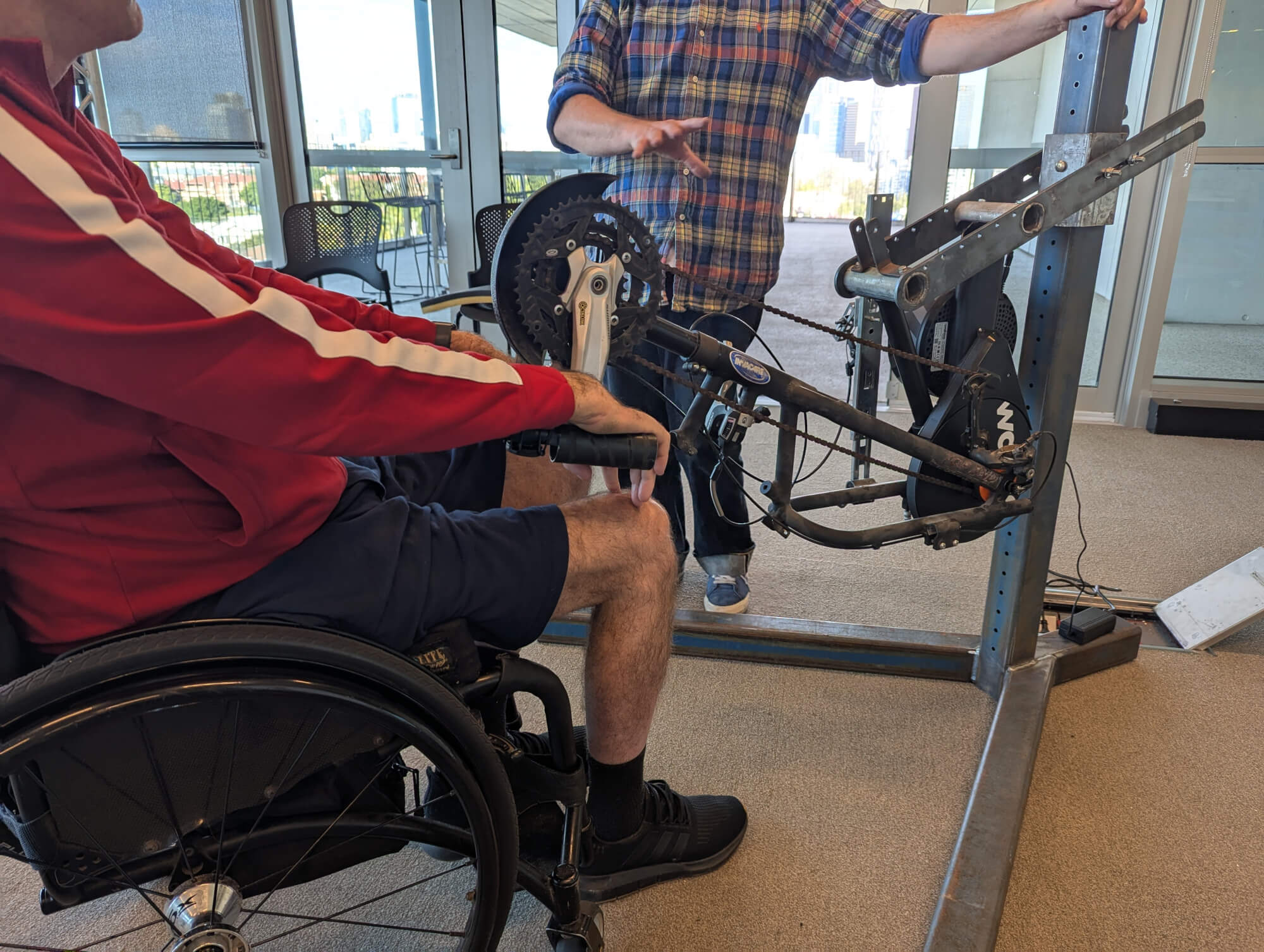
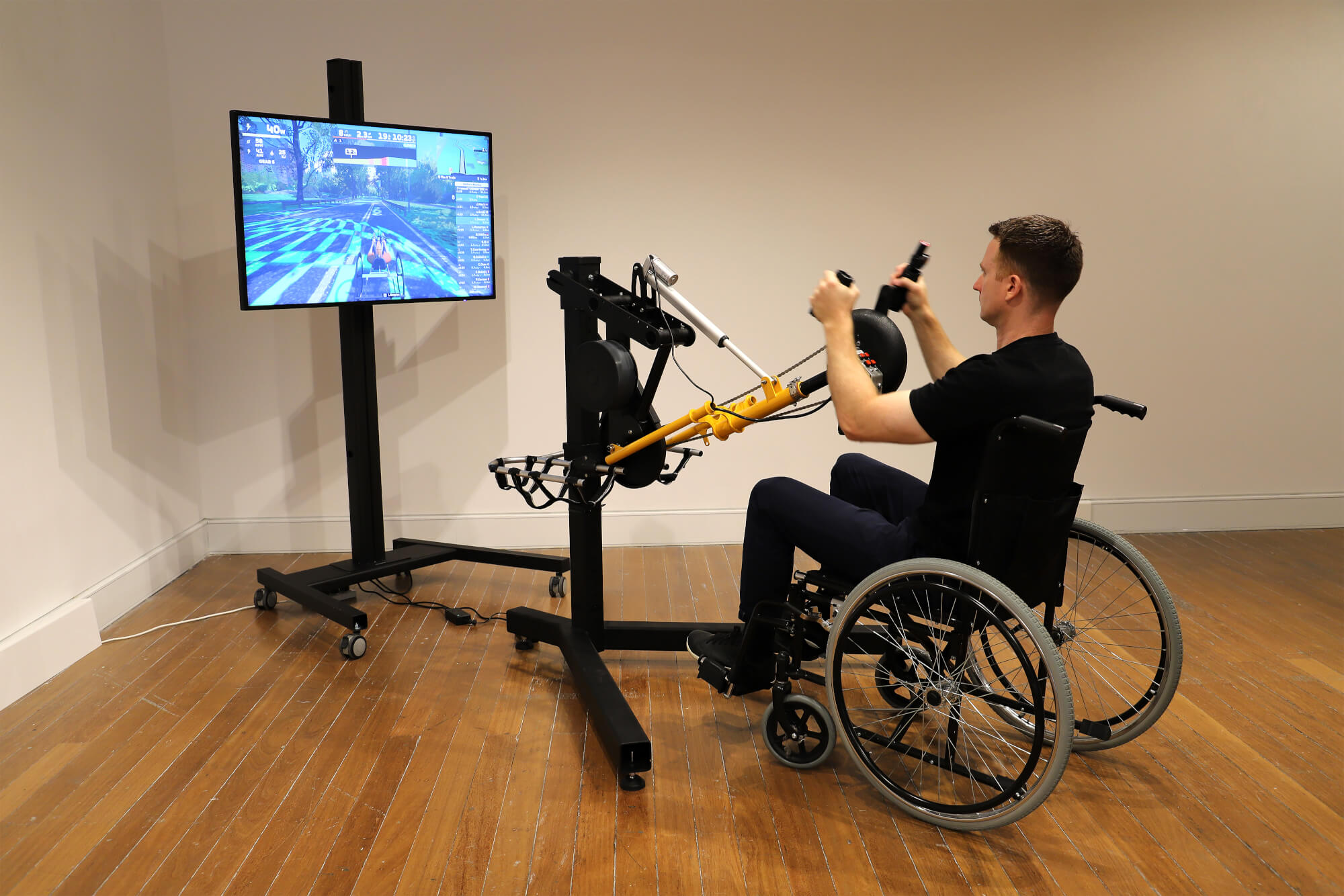
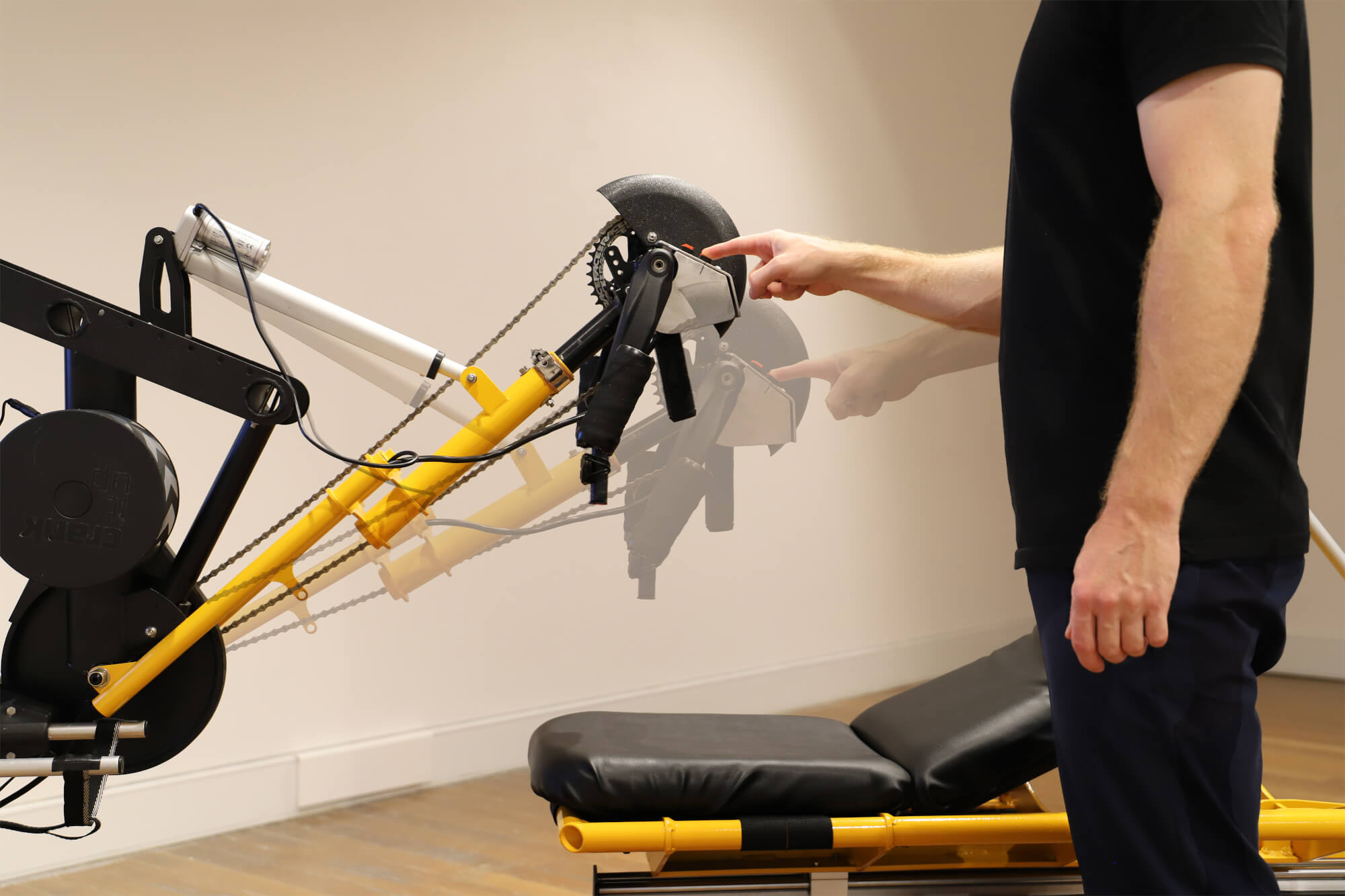
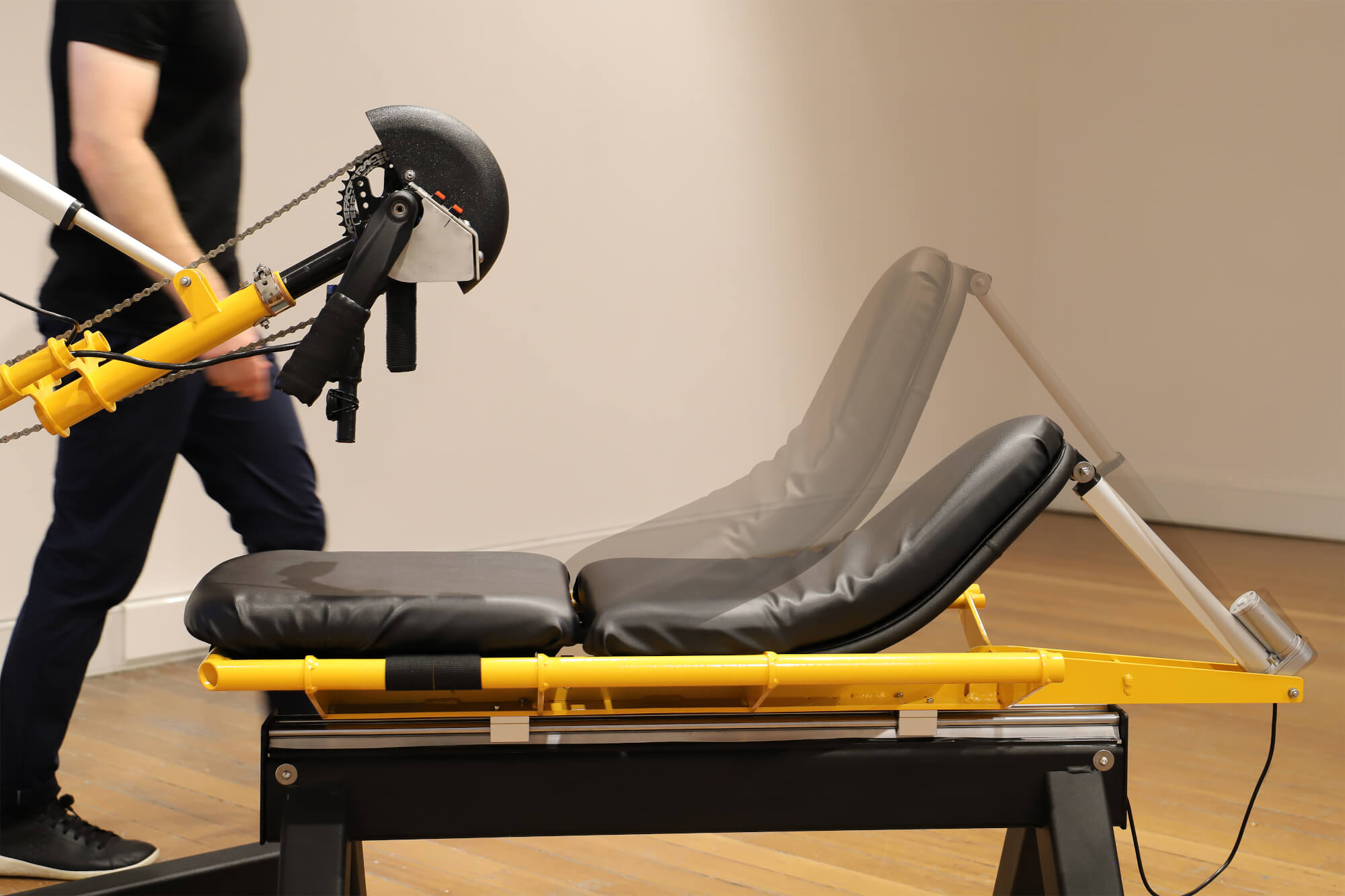
  • HX is a modular adaptive handcycle trainer compatible with commercial virtual cycling hardware (Wahoo Kickr Core) and software (e.g., Zwift, Rouvy), enabling participation in online group-based cycling experiences and communities. Wheelchair-seated and recumbent positions support people with physical disabilities affecting trunk, leg and hand mobility (handcycling classes H1–H4). Adjustable fork angle, linear seat position, seat angle, and linear footrest position allows the HX to adapt ergonomically to people with different impairments and body dimensions. Deployment in cycle centres, rehabilitation centres, and gyms can lower entry barriers, foster social connection, and provide parity of experience for people with a disability.

  • HX addresses a significant physical activity gap for people with a disability, who are up to 62% less likely to meet health guidelines than people without a disability. Enabling inclusive cycling participation across a spectrum of physical abilities responds to persistent barriers to sports participation, including structural inaccessibility, social and psychological exclusion. Deployment in mixed use settings (gyms, cycle centres, rehabilitation centres) facilitates an inclusive ecosystem, parity of experience, and promotes community building through shared virtual experiences, mitigating psychological barriers like fear of judgment. Aligning recreational access with competitive handcycling requirements promotes grassroots participation and establishes clearer competitive pathways.

  • The HX feature set focuses on universal design principles to mitigate structural and physical barriers to sports participation. Central to the design is a modular bifurcation comprising an independent drivetrain assembly and seat assembly. This configuration allows wheelchair users to engage with the drivetrain assembly while seated in their wheelchair, without transferring, addressing a primary barrier for individuals with limited trunk stability or significant physical impairment. Electric-assist adjustments to fork and seat angles alongside manual linear adjustments to seating and footrest positions ensures ergonomic body positioning and adherence to H1-H4 handcycling configurations. Such adaptability accommodates diverse body dimensions, functional requirements, and facilitates parity of experience for people with a disability.Compatibility with commercial virtual cycling hardware (Wahoo Kickr Core) and software (e.g., Zwift, Rouvy) leverages mass-produced consumer technology rather than proprietary platforms, which reduces the prohibitive costs typically associated with adaptive sports equipment. This integration enables entry into virtual cycling communities and competitive e-sports, transforming the HX trainer from a standalone device into an entry point to a broader, inclusive sporting ecosystem.