CoMove

good-design-award_winner_rgb_blk_logo
  • 2026

  • Concept Design

Designed By:

Commissioned By:

Yifei Chen

Designed In:

United States of America

CoMove is a speculative robotaxi ride-share ecosystem that transforms shared transit into meaningful social connection for Gen Z. Designed by Yifei Chen, the platform uses AI-driven matching to pair riders by shared interests and social comfort, making every journey an opportunity for organic, community-building human connection.
view website

2.jpg
3.jpg
4.jpg
5.jpg
6.jpg
7.jpg
8.jpg
9.jpg
  • CHALLENGE
  • SOLUTION
  • IMPACT
  • MORE
  • Gen Z is driving less, rejecting car ownership, and gravitating toward shared mobility, yet existing options force an uncomfortable tradeoff: public transit feels unsafe and socially alienating, while private vehicles are financially and environmentally misaligned with their values. Meanwhile, a U.S. Surgeon General report found people aged 15–24 have lost over 1,000 hours of in-person social time per year across two decades. CoMove responds to this intersection: how might shared mobility be redesigned not just for efficiency, but to actively support the human need for connection, belonging, and community in everyday urban life?

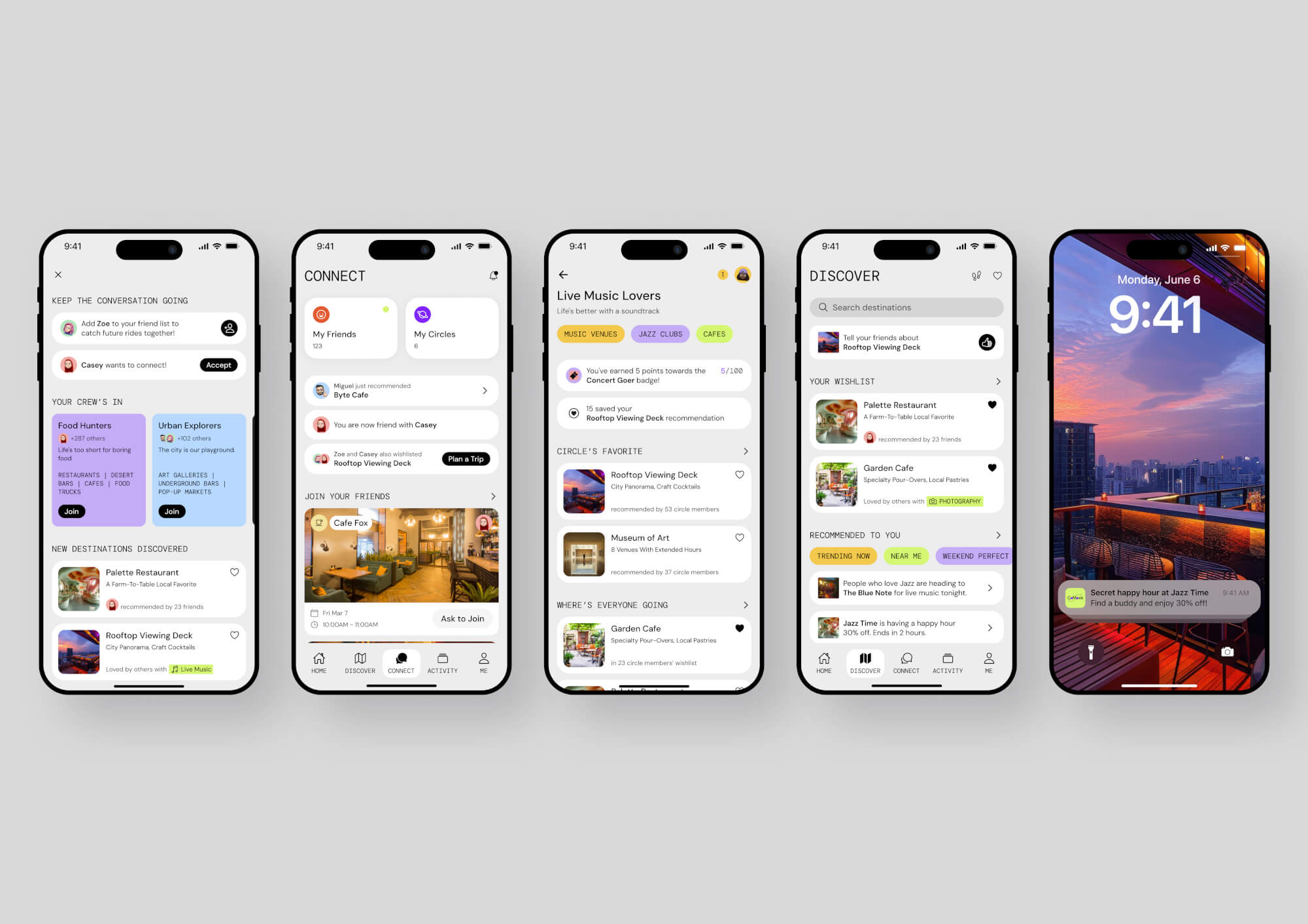
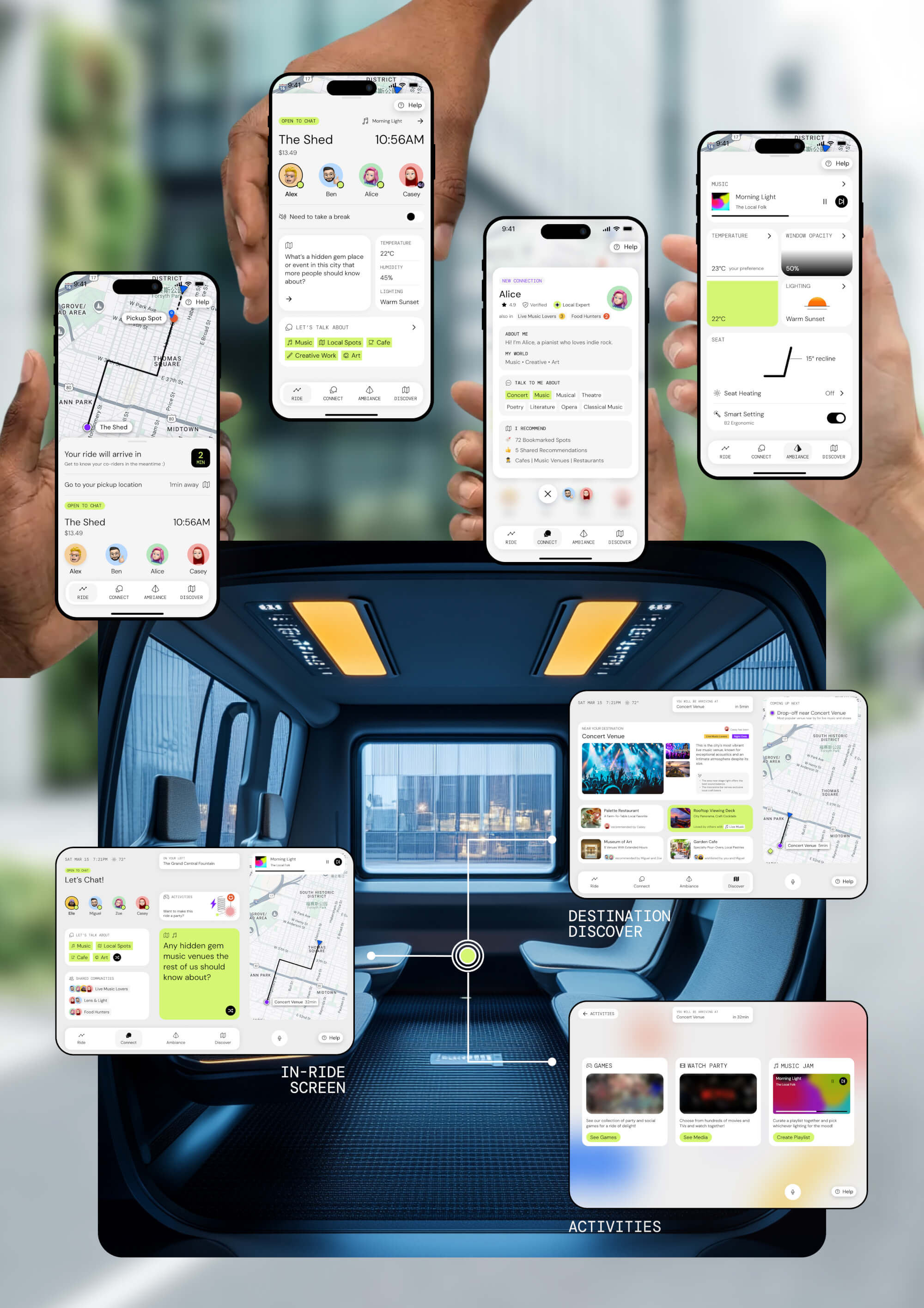
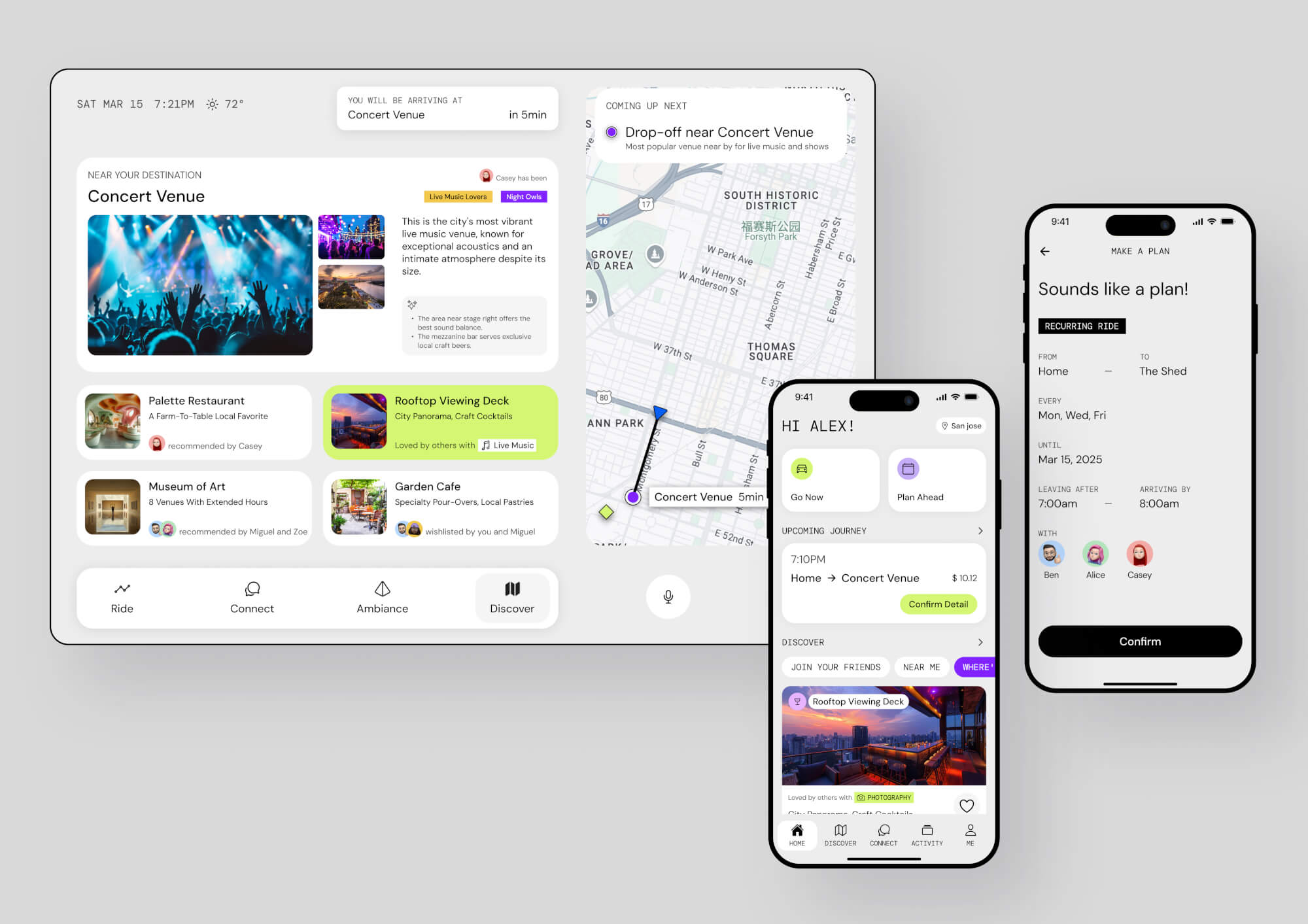
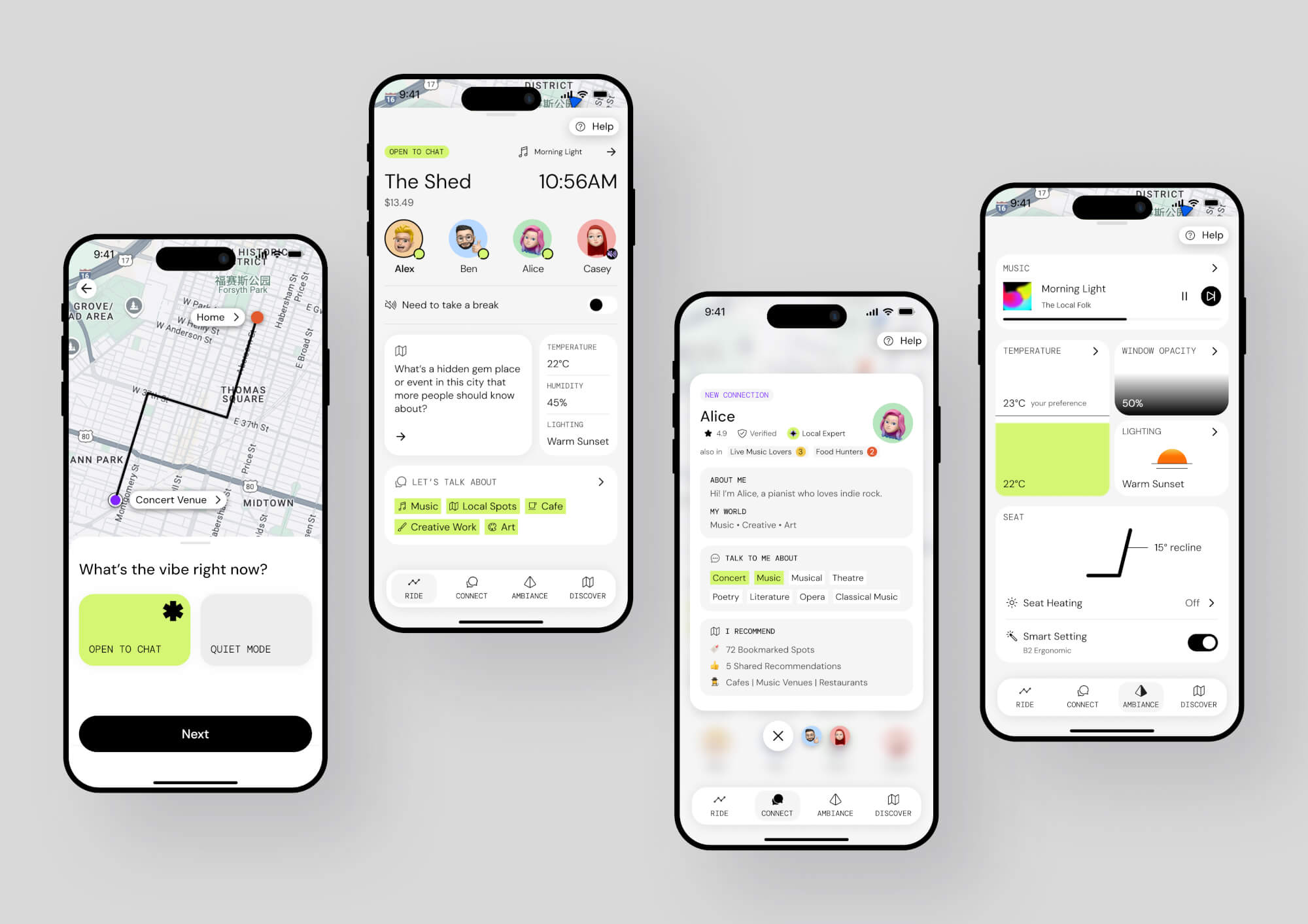
  • CoMove is a robotaxi ride-share app that matches riders by shared interests and social comfort, not just route. Anchoring the design at Maslow's "love and belonging" level reframed transit as social infrastructure. The solution spans the full ride lifecycle: onboarding captures boundaries; booking sets per-ride social intent; pre-ride briefings ease first-meeting anxiety; in-vehicle shared screens surface common ground organically; post-ride prompts extend connection into community. The defining design challenge — making connection feel optional yet natural — was solved by building a system where the interface itself communicates social norms, so riders are no asked to negotiate them directly.

  • CoMove directly addresses one of the most pressing social challenges facing younger generations — the epidemic of loneliness — by embedding meaningful connection into a daily necessity. By incentivising shared autonomous transit over private car ownership, it simultaneously advances environmental sustainability, reducing per-capita emissions and urban congestion. Societally, it expands access to quality mobility experiences regardless of economic background, while generating local economic activity through destination discovery. Validated with strong usability and desirability scores across international participants, and recognised by major design awards, CoMove signals a tangible, human-centered vision for the future of urban mobility.

  • Context-Aware Social Matching CoMove's AI pairs riders across shared interests, conversation style, comfort level, and social network proximity, going beyond route efficiency to create genuinely compatible travel groups.Adaptive Social Modes Users set social intent ride-by-ride, from "Open to Chat" to "Quiet Mode." Social preference is treated as a context-dependent spectrum, never a fixed trait.Consent-First Onboarding Onboarding captures interests, conversation style, and comfort boundaries for both personalisation and for making social interaction legible and consent-based from the start.Full Ride Lifecycle Design CoMove spans five touchpoints — onboarding, booking, pre-ride, in-ride, and post-ride — recognising that meaningful connection doesn't begin at boarding or end at drop-off.Subtle In-Ride Facilitation An in-vehicle shared screen surfaces common ground and destination discovery without scripting behaviour or demanding attention, letting digital facilitation support rather than replace physical presence.Community Architecture Interest-based Circles and place-based discovery extend relationships beyond individual rides, turning transit into ongoing local belonging.Safety as Foundation Verified identities, trust scoring, protective matching, and location privacy ensure the platform earns trust before fostering connection.Brand as Interaction System The visual identity functions as part of the UX, communicating social norms and making boundaries immediately readable.