A Collection of Singapore’s Fading Traditional Crafts and Trades

good-design-award_winner_rgb_blk_logo
  • 2026

  • Communication
    Print and Packaging

Designed In:

Singapore

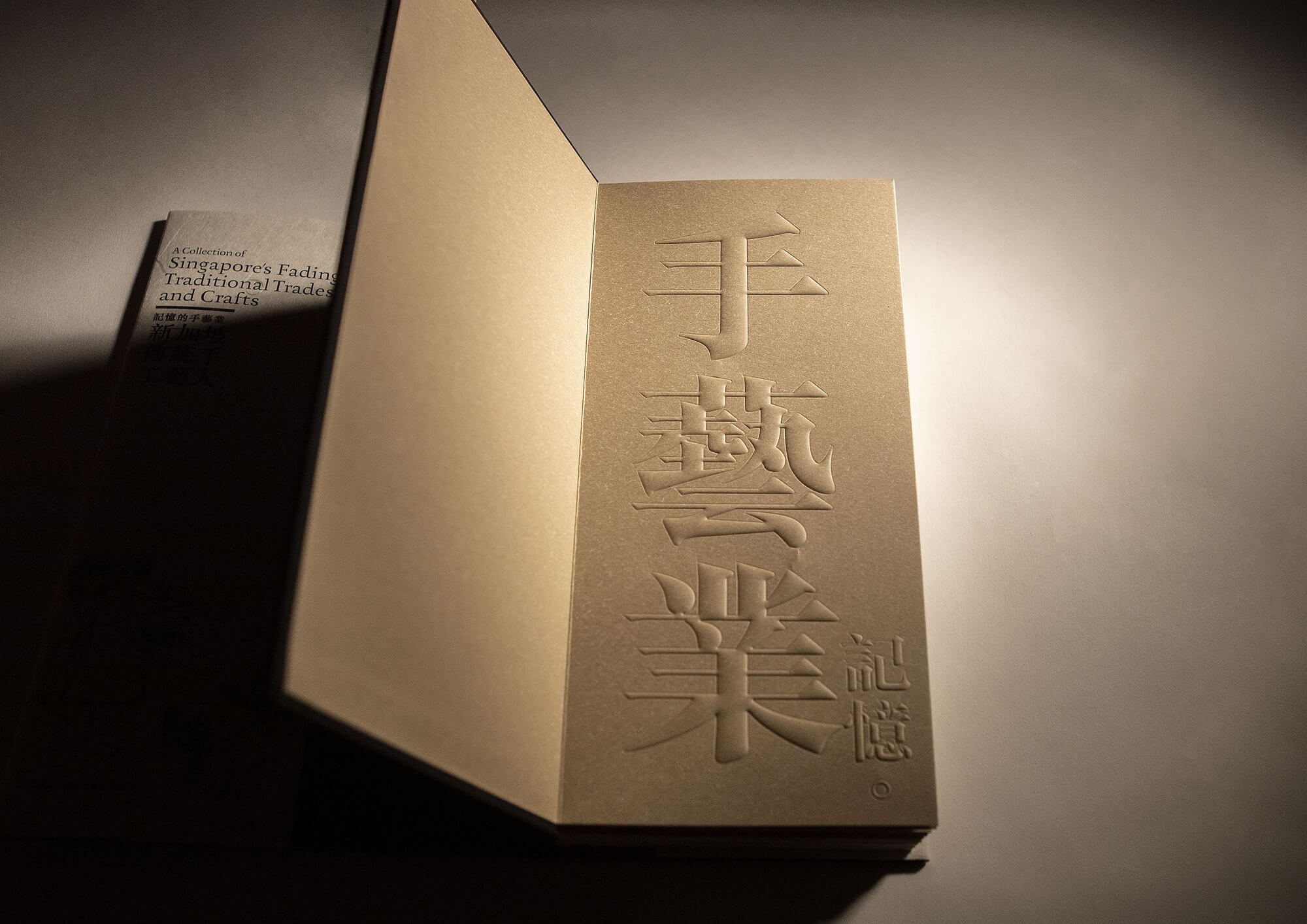
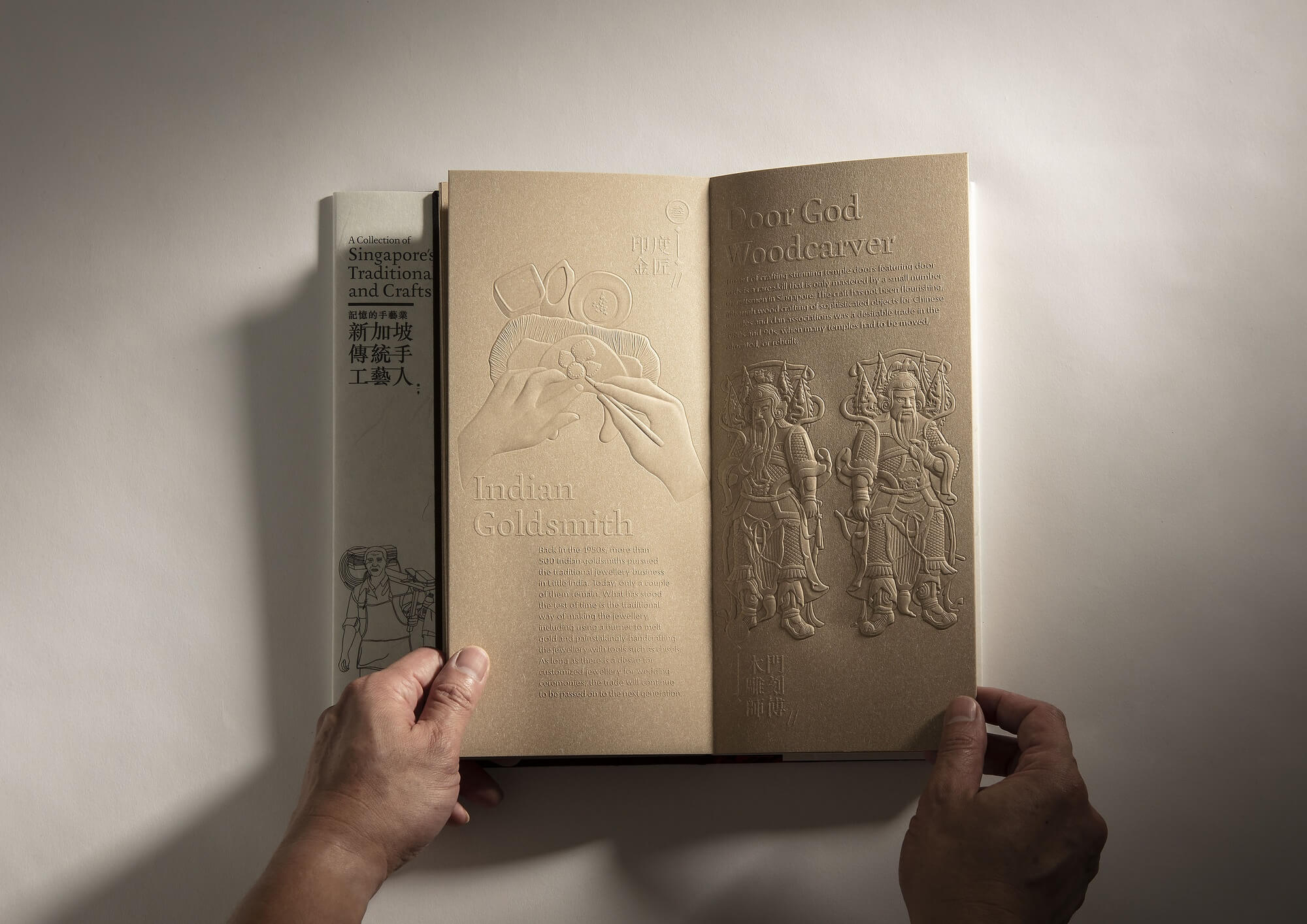
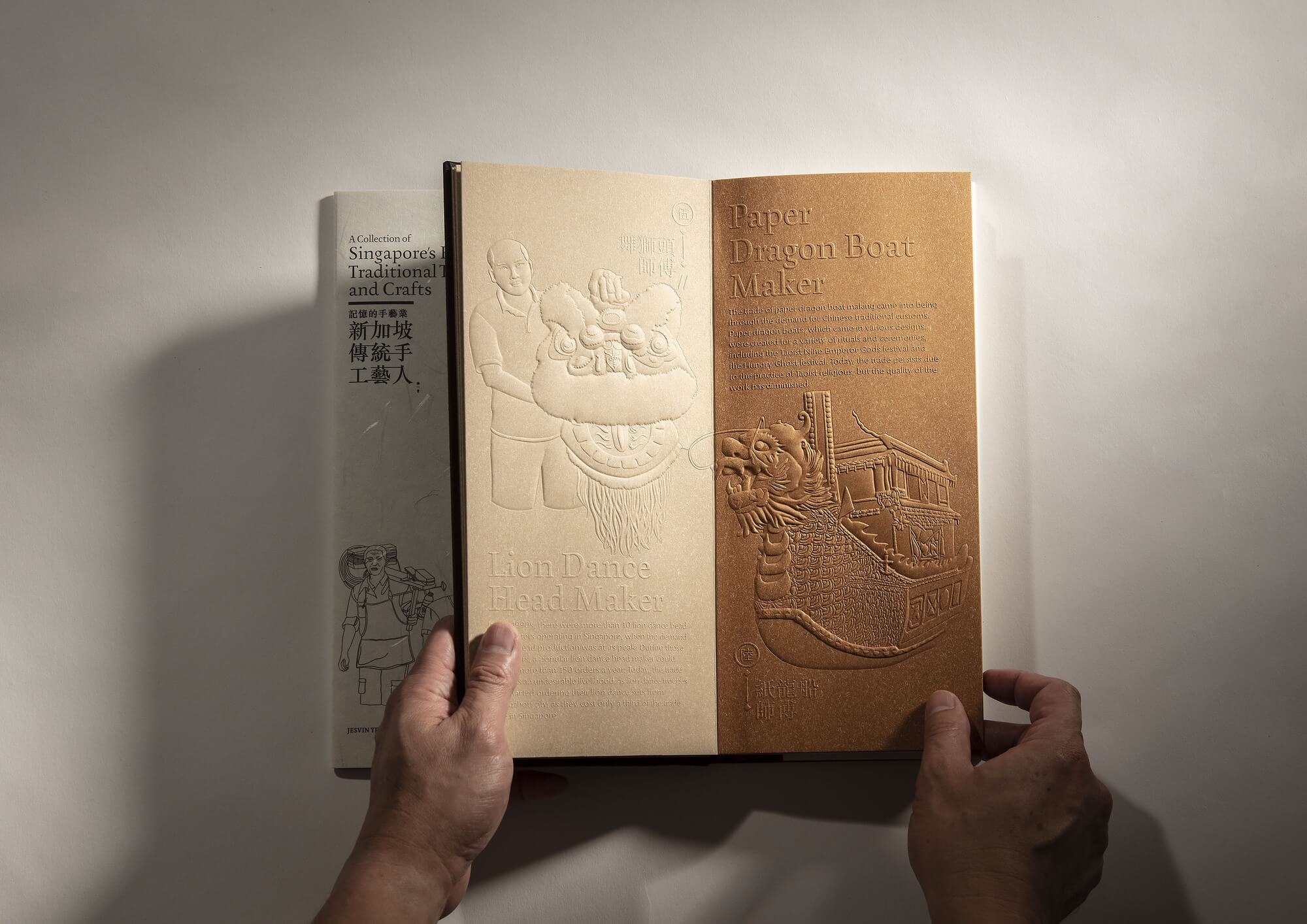
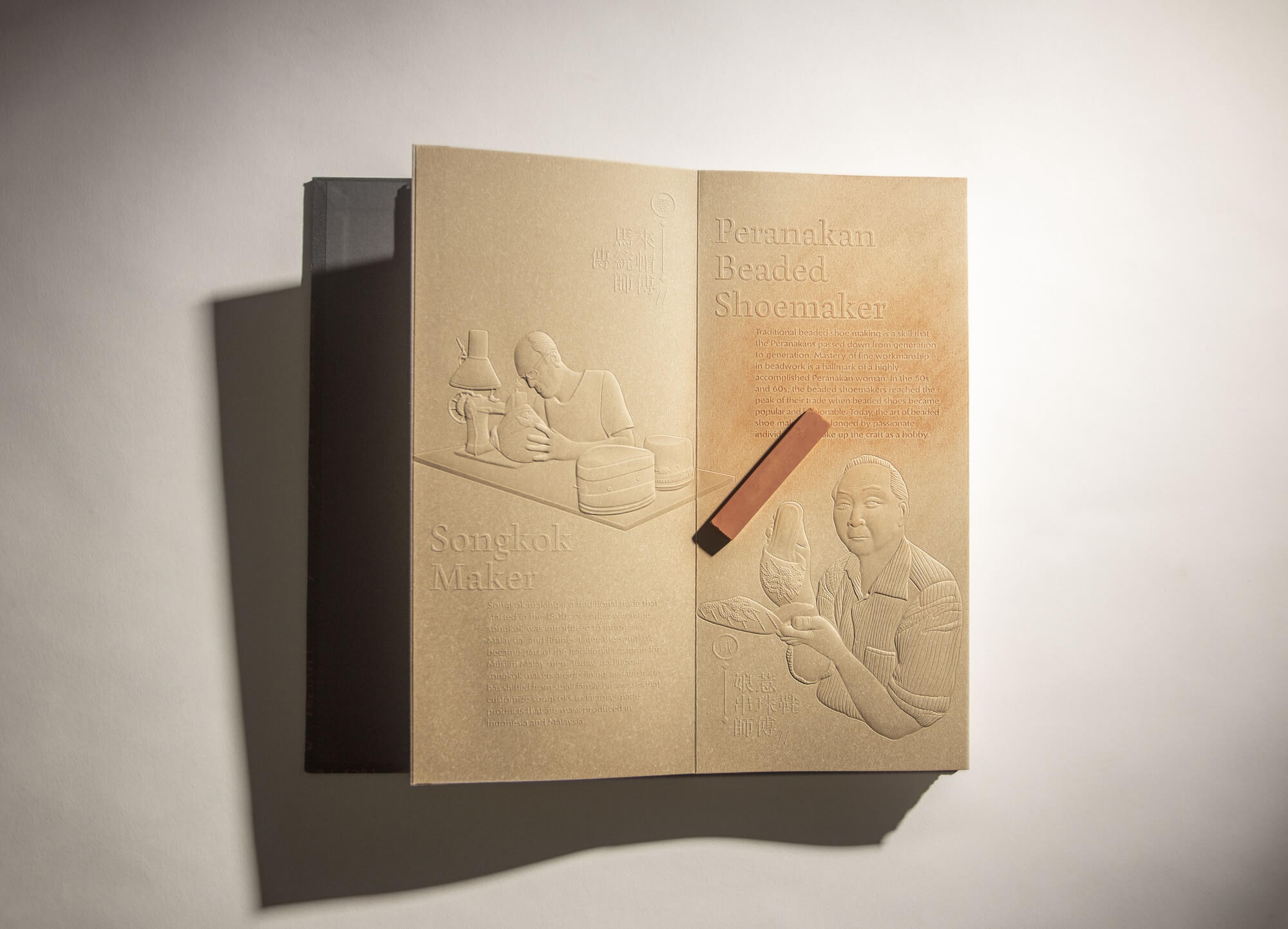
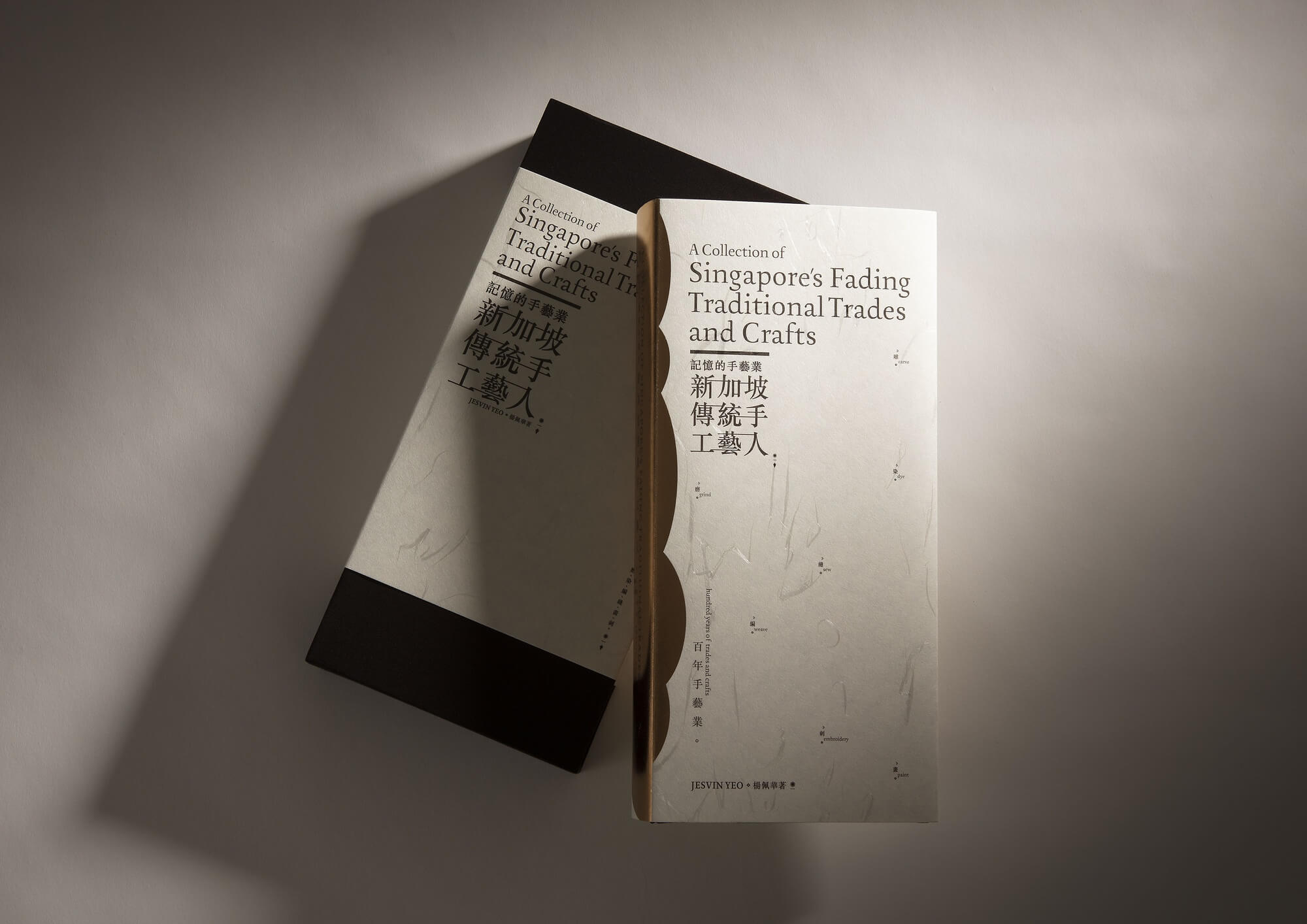
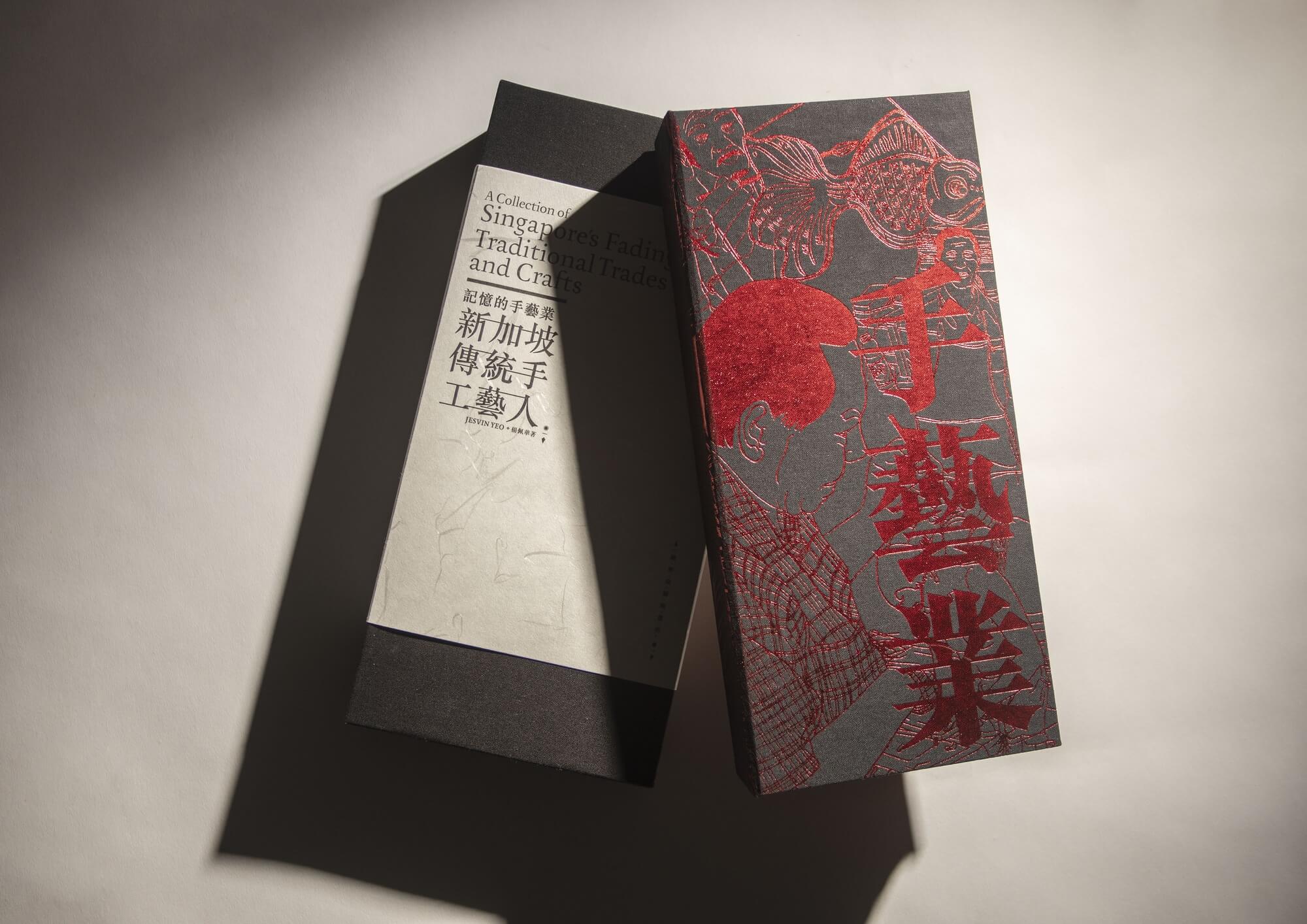
Singapore’s traditional crafts, once the heartbeat of its streets, were carried by migrants and shaped national identity. Today, these trades are fading, their stories risk being forgotten. This interactive embossed book invites designers and students to uncover it with pastel chalk, preserving and reimagining a shared fragile cultural legacy.
view website
Buy online

2.jpg
3.jpg
4.jpg
5.jpg
6.jpg
7.jpg
8.jpg
9.jpg
  • CHALLENGE
  • SOLUTION
  • IMPACT
  • MORE
  • The project responds to the urgent disappearance of Singapore’s traditional crafts, many fading without documentation or successors. It faced significant challenges, including limited access to artisans, fragmented historical records, and the difficulty of translating intangible cultural heritage into a tangible, engaging format. Material and production constraints were critical, particularly 3D embossing, which required rare, highly skilled craftsmanship. Multiple failed production attempts highlighted the technical complexity and high standards required. Balancing cultural sensitivity with contemporary design also posed a challenge, ensuring traditions were respectfully represented while remaining relevant and accessible to modern audiences.

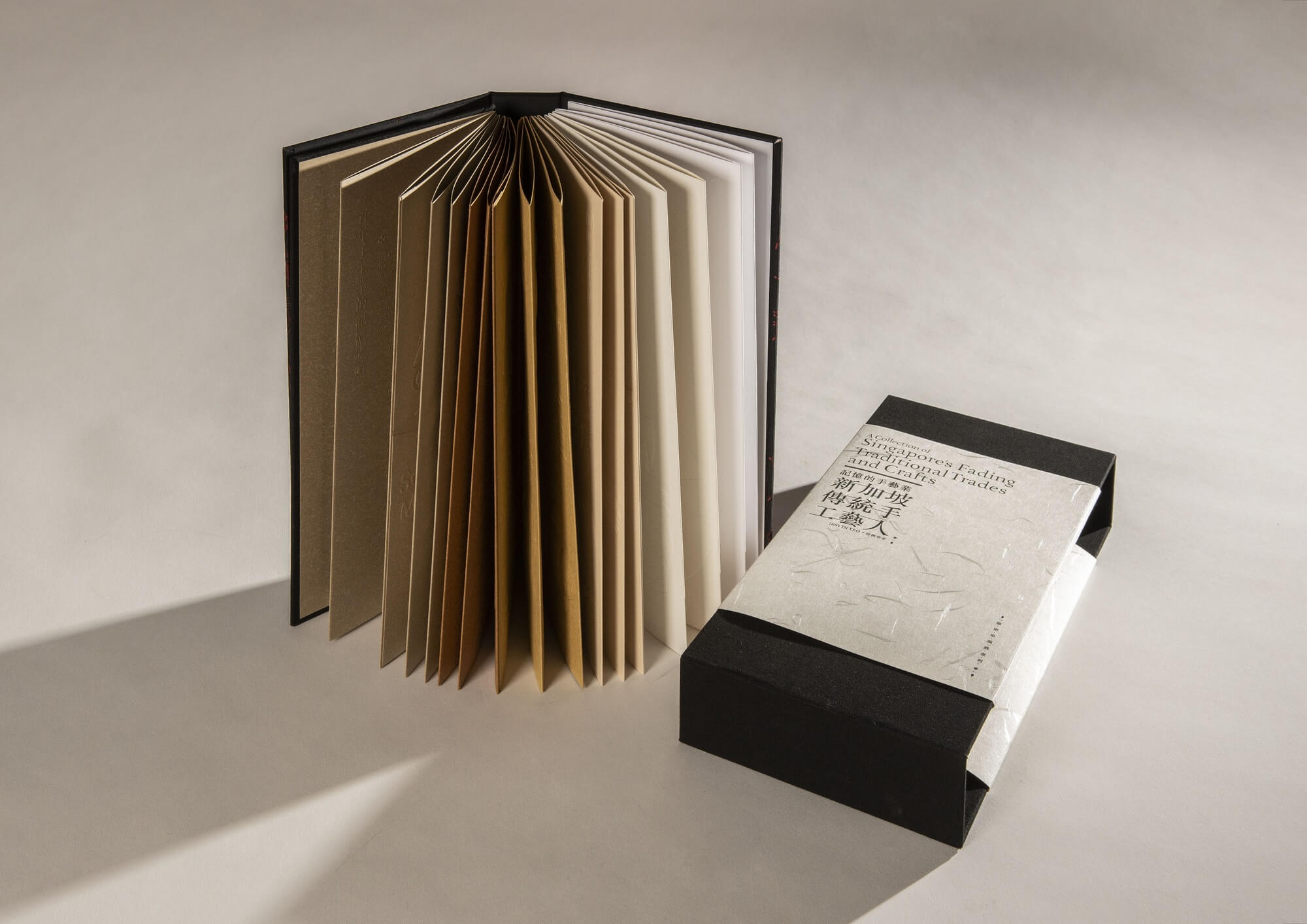
  • The process began with in-depth research into vanishing crafts, followed by early concepts exploring how absence could be physically expressed. A key breakthrough was full embossing to symbolise loss, concealing content than presenting it. Pastel chalk was included to emphasise human responsibility in preserving these crafts. Production proved critical, after failed attempts with the first supplier, the team pivoted to a second, extending the timeline to two years to achieve precision. Through iterative refinement, the final book invites readers to uncover hidden content by hand, transforming passive reading into an active act of preservation and engagement with fading cultural heritage.

  • The project delivers strong societal impact by preserving and reactivating awareness of Singapore’s fading traditional crafts, transforming audiences from passive readers into active participants in cultural conservation. Its significance is recognised internationally, with the book held by the Rare Book and Manuscript Library, Columbia University. It fosters education and intergenerational appreciation, particularly among designers and youth. Environmentally, the book promotes longevity and mindful engagement, encouraging value over disposability through its tactile, reusable format. Commercially, it demonstrates the power of design-driven storytelling as a niche publication model, opening opportunities for cultural products that merge heritage with innovation.

  • 1) Book design as both subject and medium. The project positions book design itself as a fading craft. Beyond documenting traditional trades, it critically explores the future of the book, integrating traditional formats with experimental structures, tactile interactions, and contemporary techniques. As the outcome of extensive design exploration, it pushes the boundaries of graphic design while inviting future designers to engage with, reinterpret, and sustain both craft and bookmaking traditions.2) Embossing as concept, not decoration. The book is fully embossed, turning absence into a visual and tactile language. By concealing rather than presenting content, it embodies the loss of traditional crafts, making disappearance physically felt rather than merely observed.3) Interactive discovery through chalk. A pastel chalk invites readers to actively reveal hidden content, turning reading into participation. This gesture underscores a central message: preservation is not passive, it depends on human action, care, and engagement. Only we human can do it.4) Turning archive into experience. Rather than a static record, the book becomes an evolving, personal encounter. Each reader uncovers the crafts differently, fostering deeper emotional connection and transforming archival documentation into a meaningful act of rediscovery.