Sydney Children’s Hospital Placemaking & Environmental Graphics

best-in-discipline
  • 2026

  • Communication
    Branding and Identity

Commissioned By:

Frost*collective

Designed In:

Australia

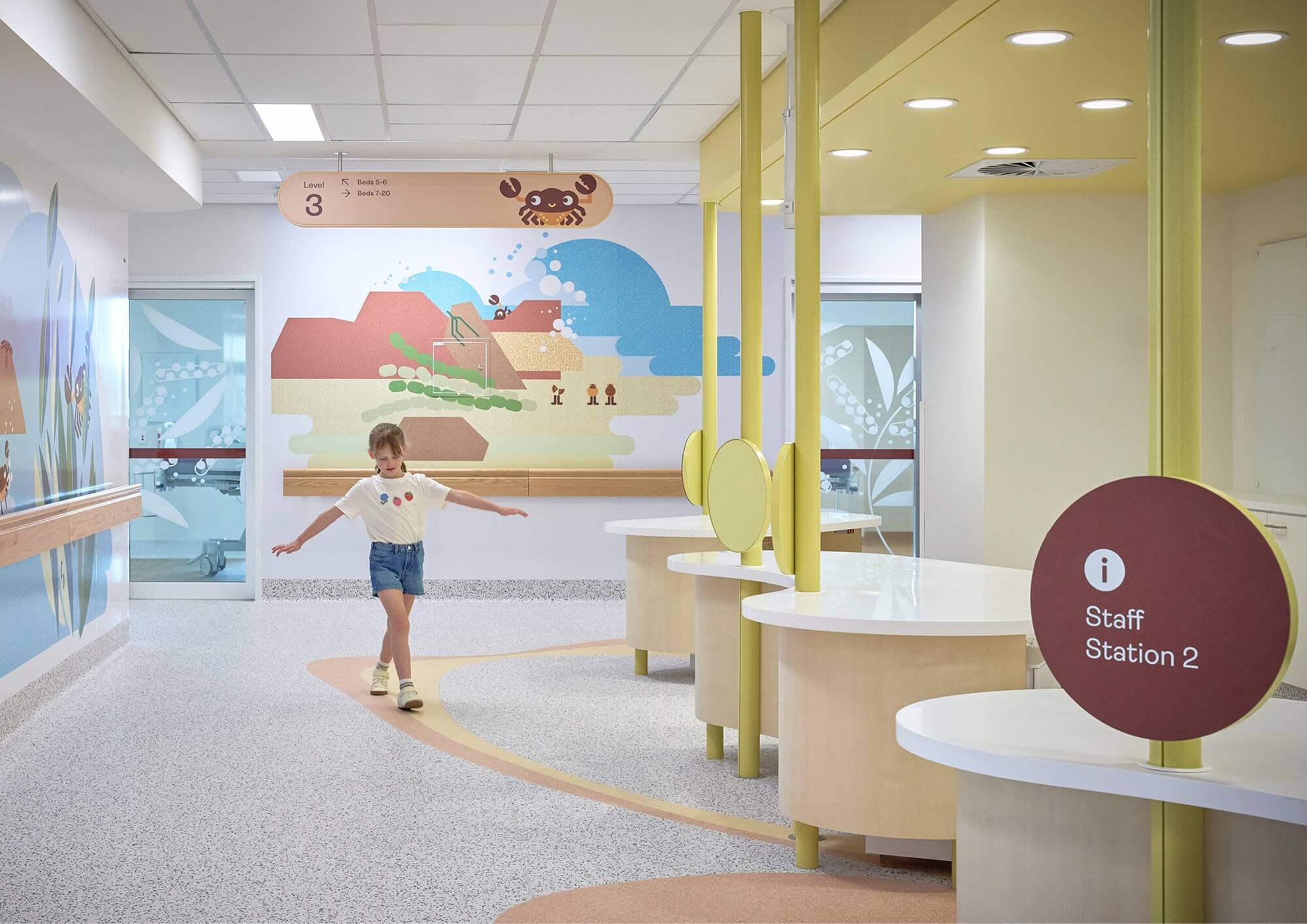
Sydney Children’s Hospital Randwick is a comprehensive wayfinding and environmental graphics system designed to support navigation, wellbeing and confidence within a complex paediatric healthcare environment. Created for children, families, carers and staff, the system combines clear information hierarchy with storytelling to deliver intuitive, reassuring and emotionally engaging journeys.
view website

2.jpg
Toby Peet
3.jpg
Toby Peet
4.jpg
5.jpg
6.jpg
Toby Peet
7.jpg
Toby Peet
8.jpg
Toby Peet
  • CHALLENGE
  • SOLUTION
  • IMPACT
  • MORE
  • Wayfinding in a major paediatric hospital must do more than direct. It must operate with clinical precision while responding to heightened emotional states. Visitors often arrive under stress, unfamiliar with the building and wider precinct. The 12-storey hospital accommodates diverse users, overlapping functions and strict operational requirements. The challenge was to reduce cognitive load, support multiple journeys and meet accessibility needs across all ages and abilities. Traditional alphanumeric systems alone were insufficient. The brief required a solution that balanced clarity with empathy, integrated with the architecture, and created a sense of reassurance and familiarity for children without compromising operational efficiency.

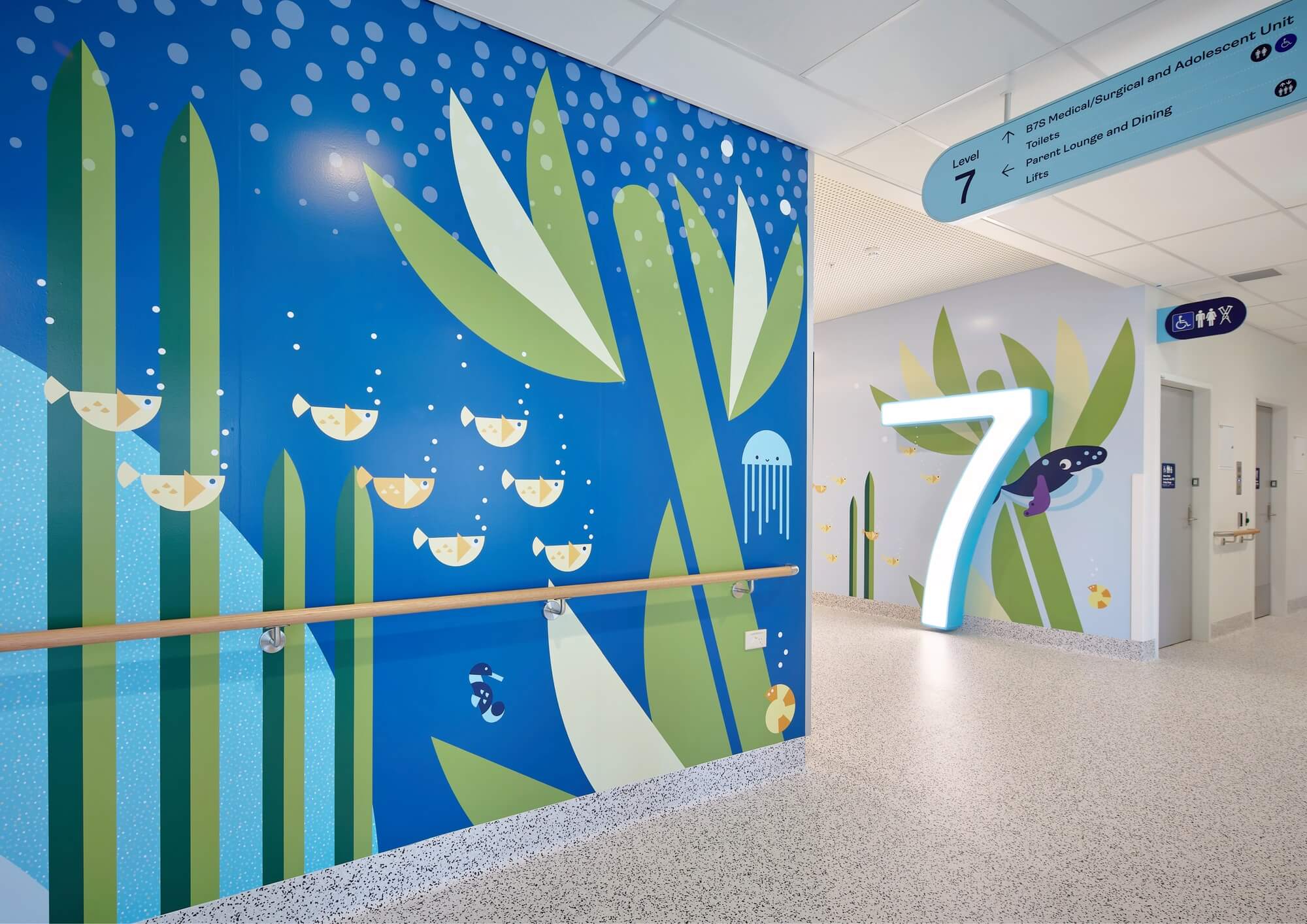
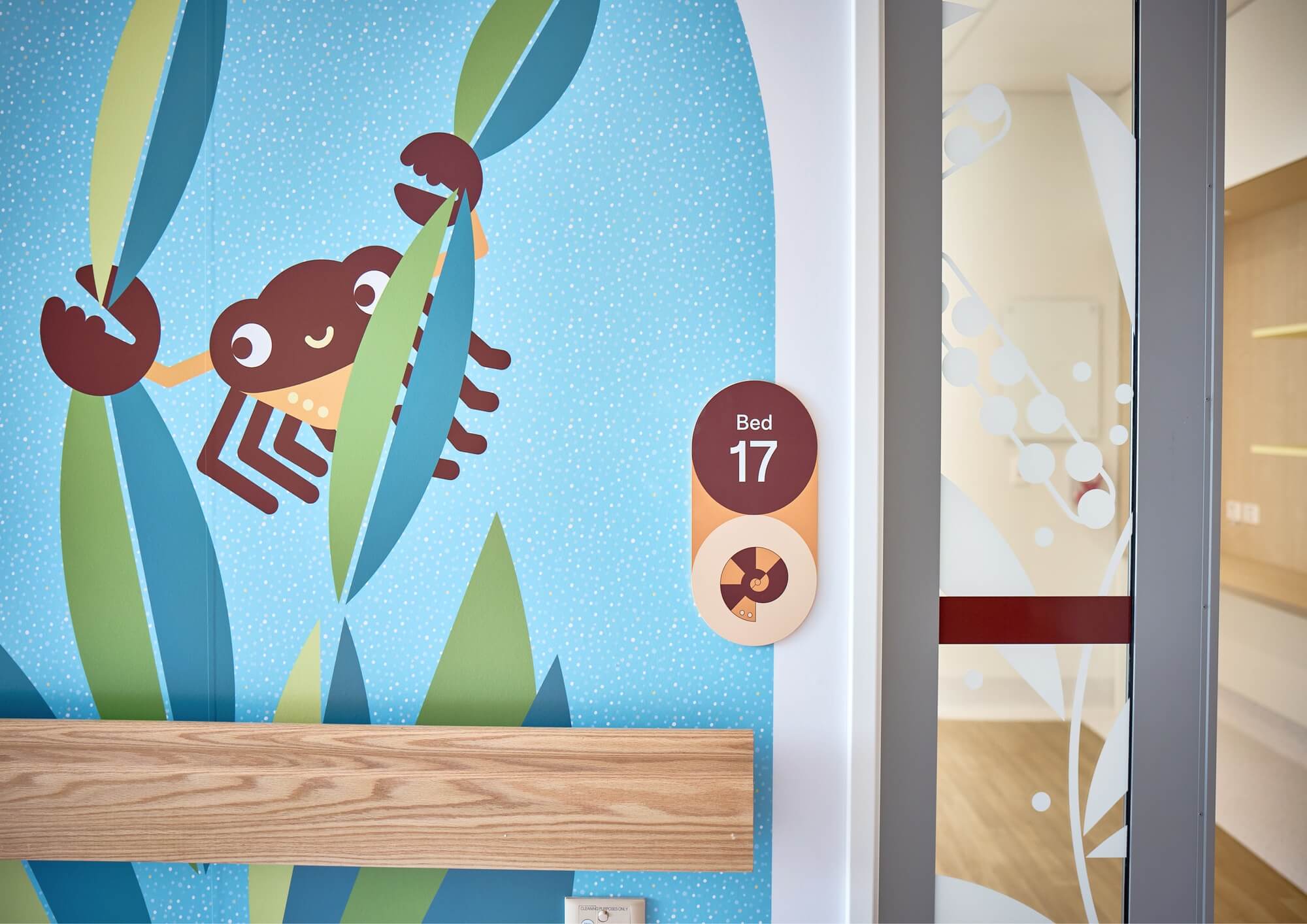
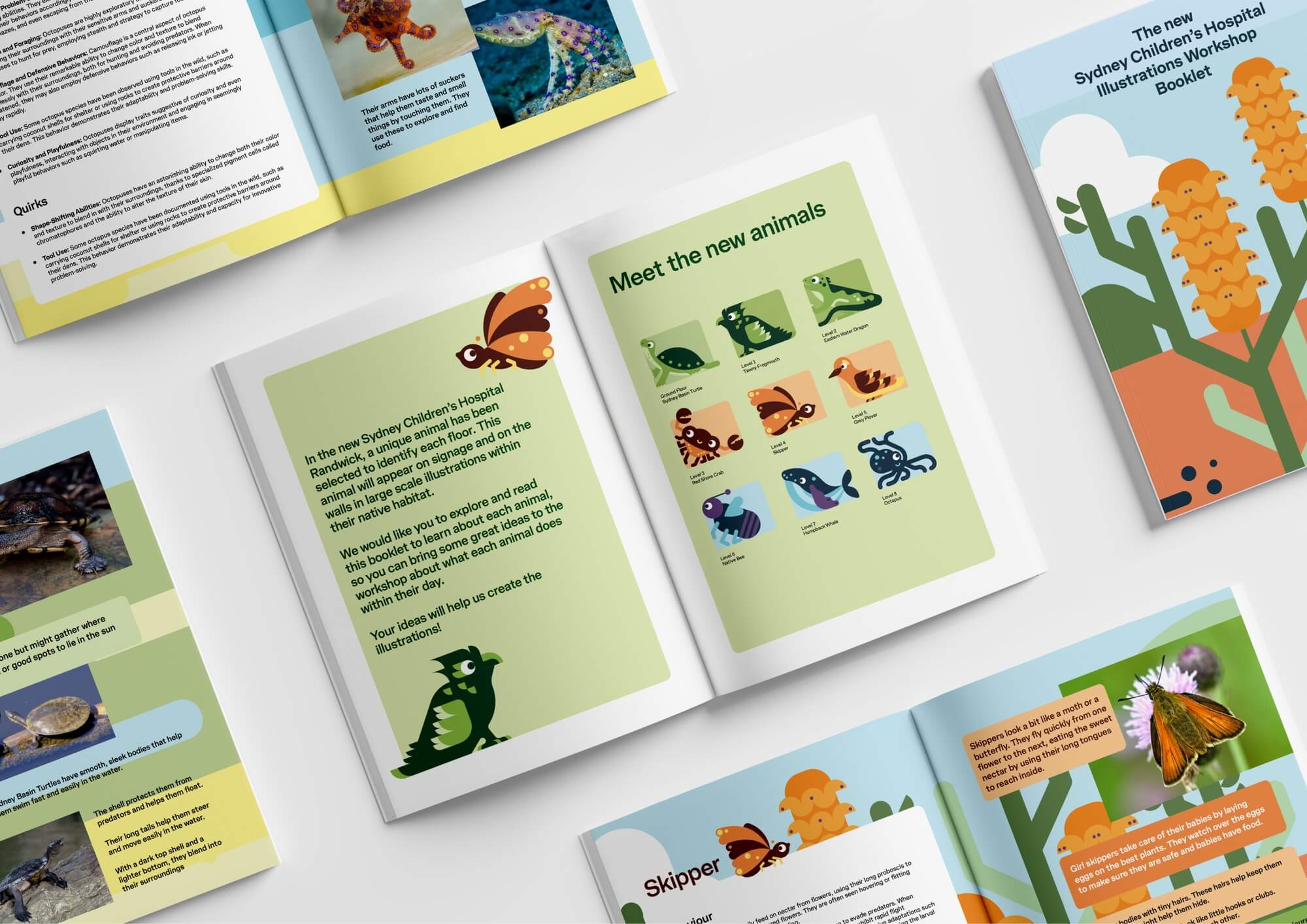
  • The solution combines a rigorous information hierarchy with a distinctly paediatric lens. The hospital is organised into three environmental zones, Sand Dunes, Sea Cliffs and Wetlands, with each level anchored by a “hero” animal guiding navigation. These animals create memorable landmarks that help children and families orient themselves quickly, while supporting staff with clear directional messaging. A placemaking and environmental graphics strategy further enriched the hospital experience. The objective: create moments to distract, discover and delight through meaningful illustration, fostering a sense of place children could relate to, families could trust and staff could rely on throughout the building.

  • The impact is immediate and human. Visitors report greater confidence navigating the hospital, with reduced reliance on staff for directions. Children engage with the system, transforming navigation from a source of anxiety into an experience of familiarity and pride. Through a deeply collaborative and culturally grounded process, the design helps connect people to nature, place and community, transforming a complex medical facility into a welcoming and memorable environment. By combining clarity, accessibility and storytelling, the project demonstrates how design can contribute to wellbeing, improve healthcare experiences and support better outcomes for patients, families and staff.

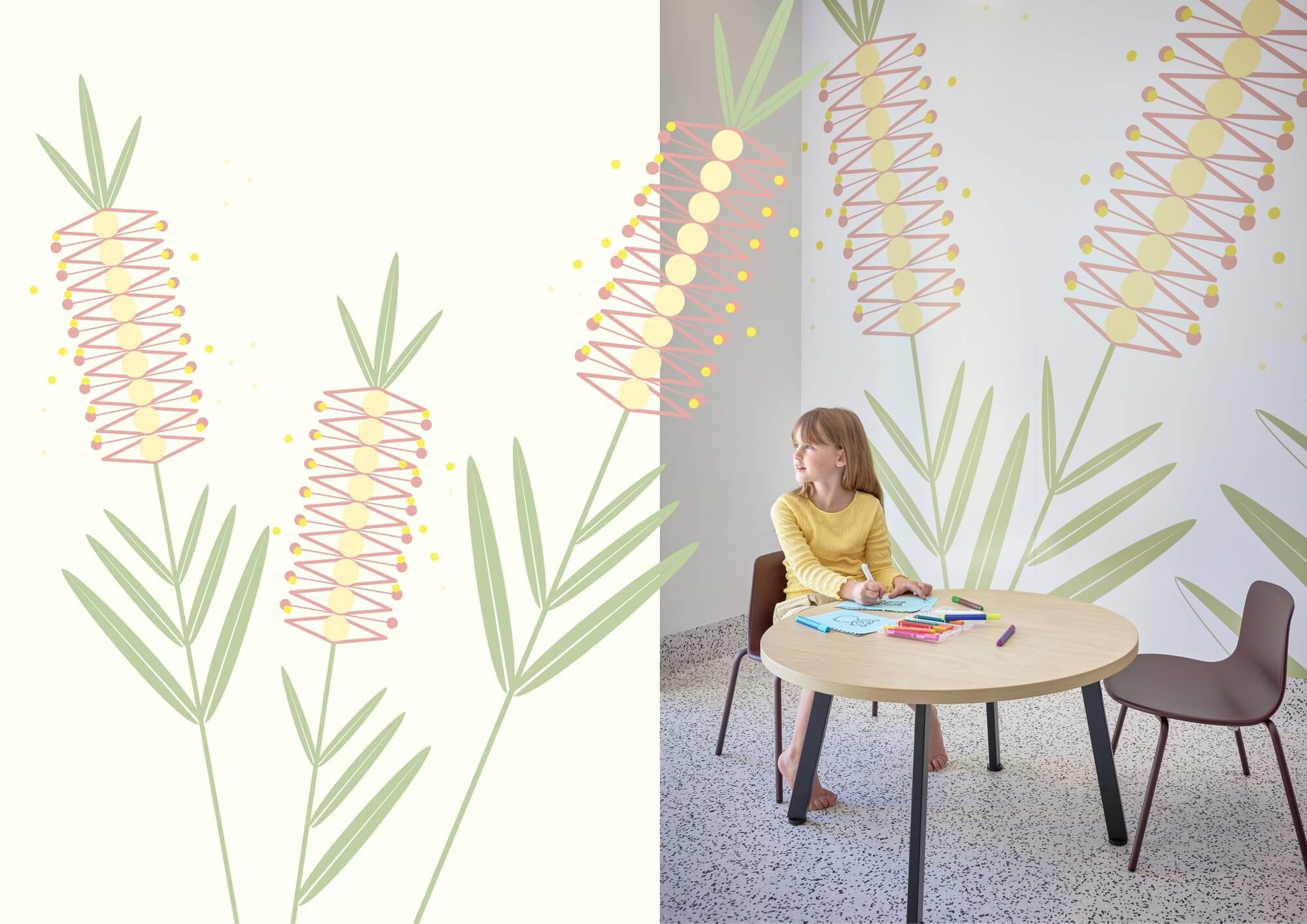
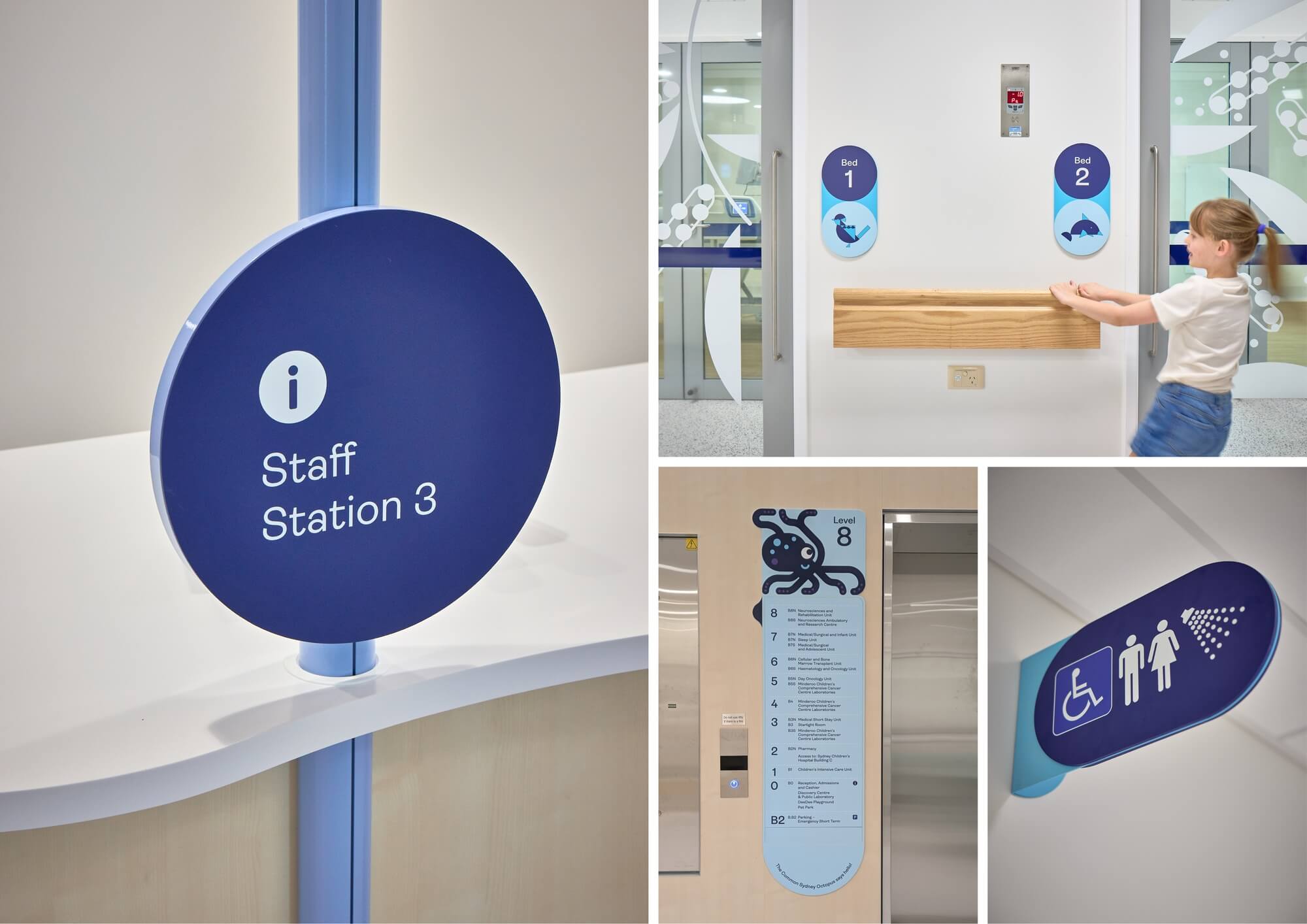
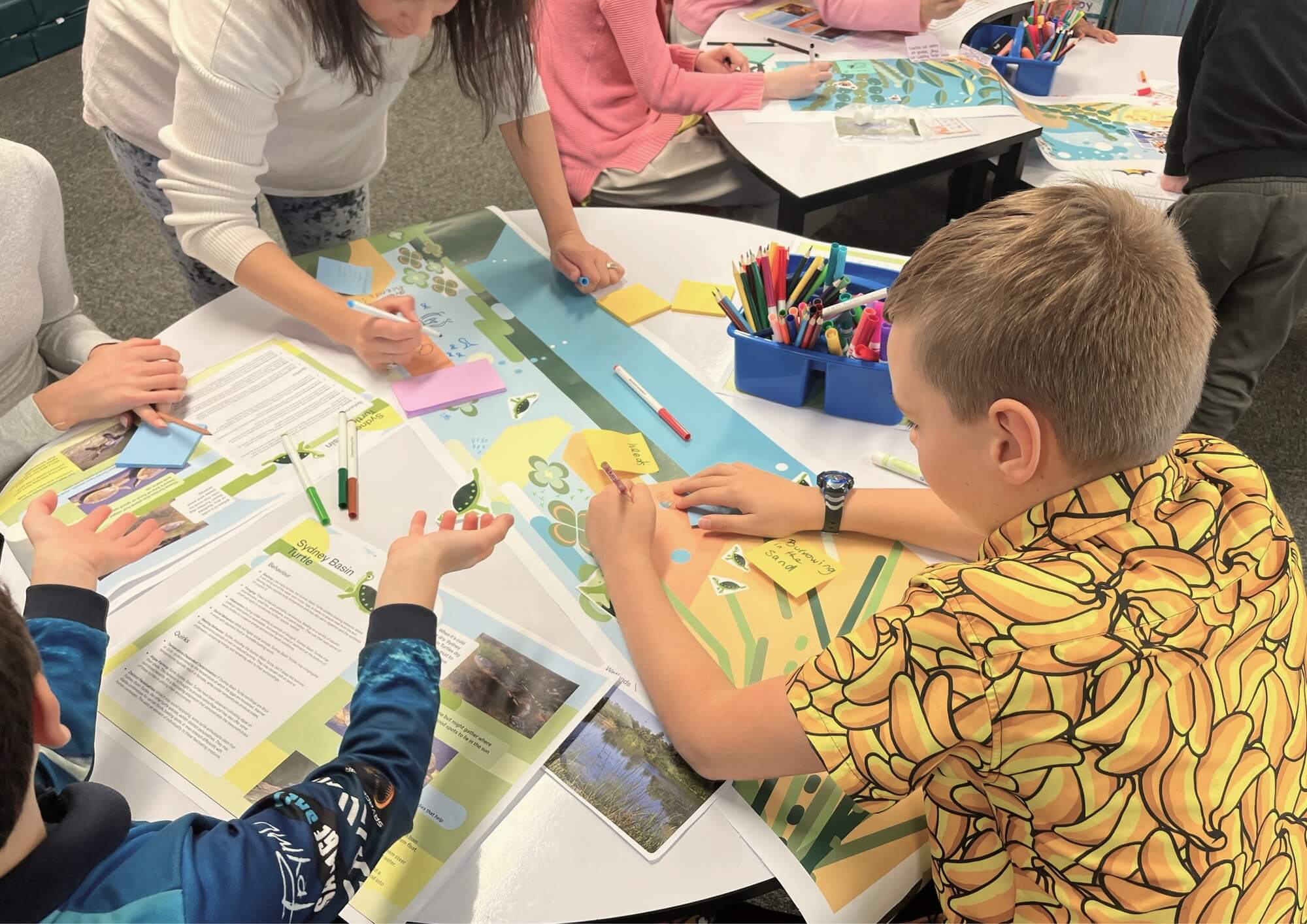
  • The project integrates wayfinding, branding and placemaking into a single, cohesive system. A clear information hierarchy underpins navigation, supported by zoning, colour and consistent typography. The introduction of “hero animals” provides memorable, emotionally resonant cues that help children identify and recall destinations. Environmental graphics extend beyond decoration, forming part of the navigation system. Native flora and habitats are illustrated through layered geometric forms, creating moments of distraction, discovery and connection to place. The system was developed through a deeply collaborative process. Workshops with the Sydney Children’s Hospital School enabled children to create stories that informed the final design, fostering a sense of ownership and pride in the project from the get-go. Local First Nations language is integrated at key destinations signage, enriching the identity of the hospital and embedding cultural meaning into the experience. Signage placement was carefully aligned with sightlines, movement patterns and clinical workflows. Typography, contrast and scale were tested to ensure accessibility across ages, abilities and distances. A modular design approach ensures flexibility, allowing the system to evolve over time without compromising clarity or consistency.