Agriculture Design System: Department of Agriculture, Fisheries and Forestry

good-design-award_winner_rgb_blk_logo

The Agriculture Design System (AgDS) is an open-source design system created for the Australian Government Department of Agriculture, Fisheries and Forestry. It provides designers and developers with components, templates and guidance to build consistent, accessible digital services. AgDS now supports multiple teams delivering government services.
view website

2.jpg
3.jpg
4.jpg
5.jpg
6.jpg
  • CHALLENGE
  • SOLUTION
  • IMPACT
  • MORE
  • The Department of Agriculture, Fisheries and Forestry (DAFF) needed to rapidly deliver new digital services while ensuring consistency, accessibility and usability across multiple teams and products.Prior to AgDS, teams worked independently, leading to duplicated effort, inconsistent user experiences, longer development time and low accessibility compliance. The challenge was to create a shared design system that could scale across the department while meeting strict Australian Government accessibility and security requirements. It also needed to support collaboration between designers and developers and work across multiple product teams with varying needs, timelines and levels of digital maturity.

  • AgDS was developed as a shared foundation for designing and building digital services. The team established a cross-disciplinary approach where designers and developers collaborated to create accessible, production-ready components supported by clear guidance and documentation.The system launched initially to support the Export Service, with early components tested and refined through real product delivery. Key milestones included establishing a React component library, a parallel Figma design library, and accessible templates and patterns. Ongoing feedback from product teams shaped the system’s evolution, helping overcome adoption challenges and ensuring the system remained practical, scalable and aligned with real delivery needs.

  • AgDS has improved the speed, consistency and accessibility of digital service delivery. By providing reusable components, templates and guidance, it reduces duplicated effort and enables teams.AgDS prioritises accessibility, helping ensure inclusive experiences. It has fostered a stronger design and development community, encouraging collaboration and shared ownership. The result is more consistent, user-centred government services delivered efficiently.The design system has been audited and achieved a certificate of conformance for WCAG 2.1 AA. We have conducted multiple rounds of user research studies with users who have accessibility needs, First Nations users and Culturally and Linguistically Diverse (CALD) users.

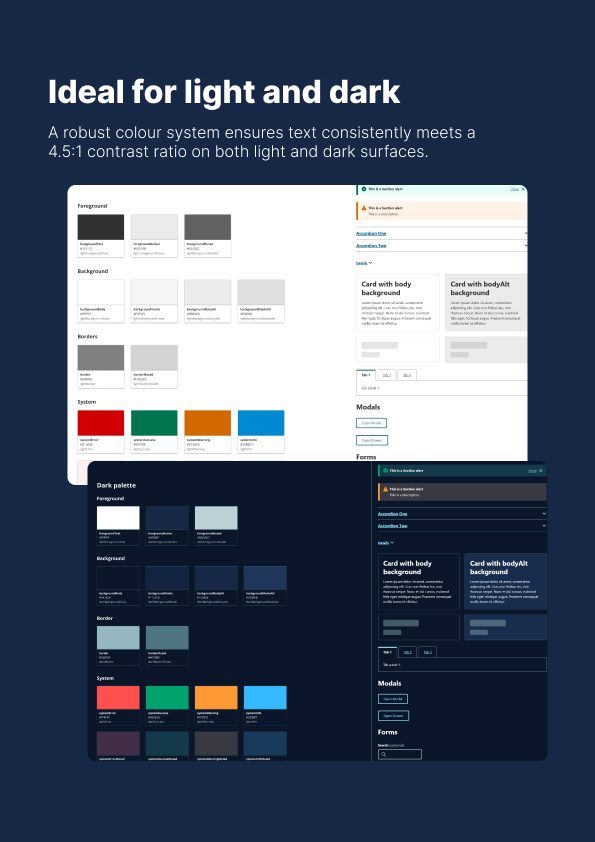
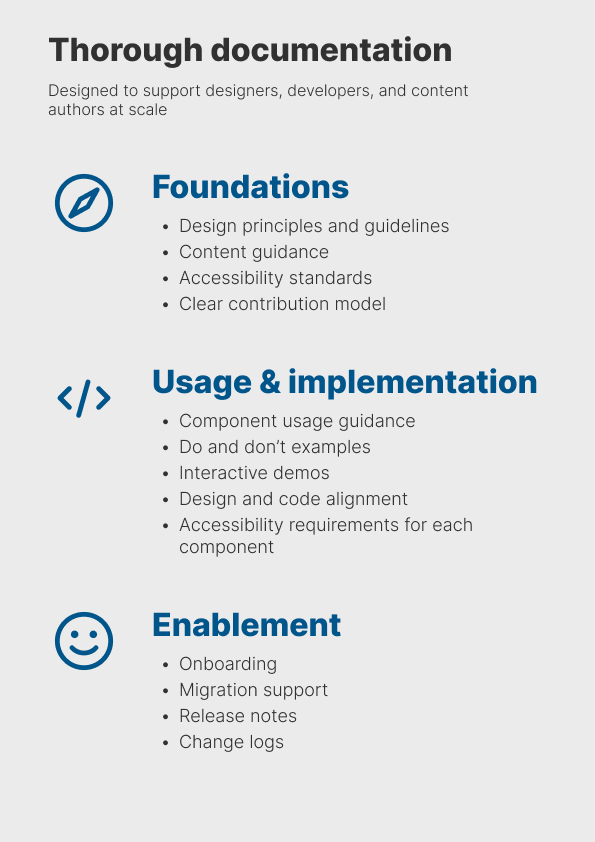
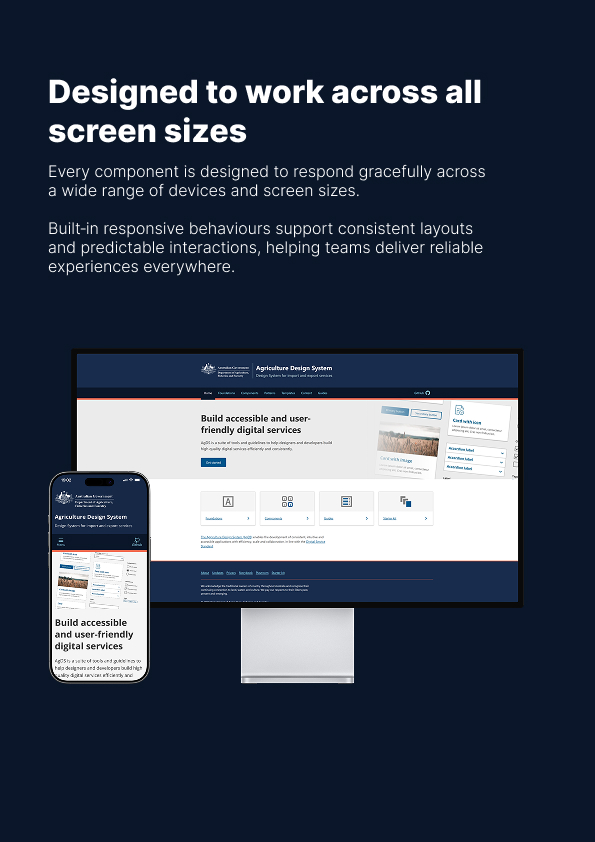
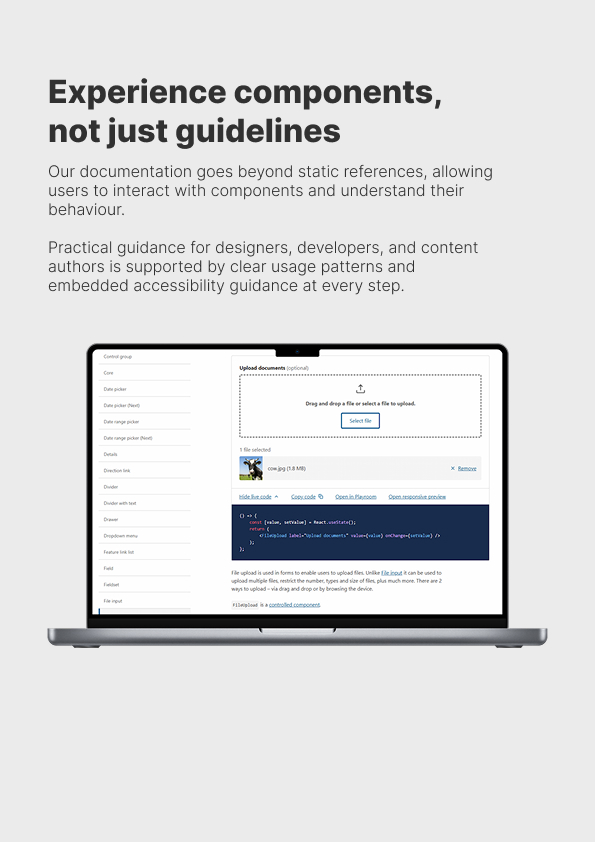
  • The Agriculture Design System provides a comprehensive toolkit that enables teams at DAFF and across government to design and build consistent, accessible digital services.Key features include:1. a production ready React library for developers2. a Figma design library, ensuring for designers - with exact alignment to developer's React library. 3. a comprehensive documentation website - https://design-system.agriculture.gov.au - that guide teams in applying the system consistently4. interactive tools, including live code previews on the website that design system consumers can use5. a design gallery that allows designers to easily self-serve components and templates - even with low figma knowledge6. guidance on writing clear and consistent contentAccessibility is embedded throughout the system, with components designed and tested to meet WCAG 2.2 AA requirements. This helps product teams deliver inclusive services without needing to solve accessibility challenges independently.AgDS also supports collaboration through a strong community model. Designers and developers contribute feedback, participate in regular support sessions and share learnings across teams. This governance approach ensures the system evolves in response to real product needs while maintaining consistency and quality.All of these features enable faster delivery, improved accessibility and a consistent user experience.