Transformative Repair

good-design-award_winner_rgb_blk_logo
  • 2026

  • Communication
    Print and Packaging

Commissioned By:

Guy Keulemans

Designed In:

Australia

The book is both a scholarly argument and a practical guide, charting how skilled professionals can redirect material expertise toward reviving damaged or obsolete objects—furniture, textiles, electronics, and homewares. Challenging the linear economy of disposal and replacement, it proposes an alternative culture grounded in conservation, care, and creative transformation.

view website
Buy online

2.jpg
3.jpg
4.jpg
5.jpg
6.jpg
7.jpg
8.jpg
  • CHALLENGE
  • SOLUTION
  • IMPACT
  • The world is in a waste crisis. Each year Australia alone generates 75 million tonnes of waste—much of it broken goods that are repairable, but discarded anyway. Transformative Repair argues that designers and craftspeople are uniquely positioned to respond: not by bringing objects back to their original condition, but by reimagining them entirely. We wanted the book to be visually rich with the diverse creative outcomes of the book's projects, with the appeal to a broad public and present transformative repair as both a viable model and necessary cultural shift toward a more sustainable design economy.

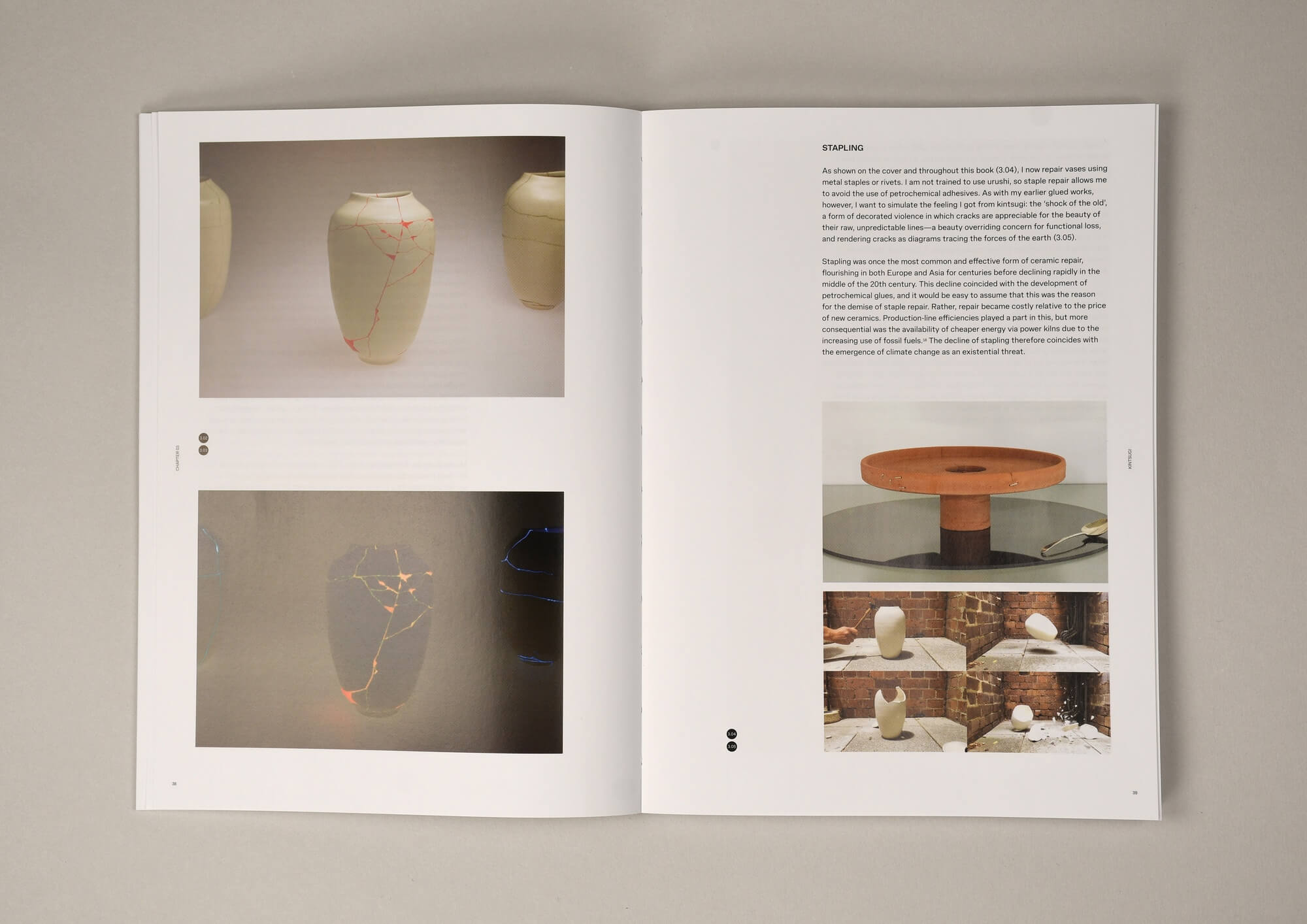
  • In response to repair practices, which often require products to be reverse-engineered and deconstructed, the book’s design expresses transparency in both form and structure. Its open-sewn binding exposes the threads holding the publication together, while black dots printed across the backs of each section construct the words “transformative repair” along the spine. Lightweight interior paper further reinforces this concept, revealing before-and-after images arranged across full spreads to communicate processes of creative transformation. Together, these design elements position the book itself as an embodiment of transformative repair: materially expressive, carefully constructed, and visually communicating repair as both process and cultural proposition.

  • We rarely repair or reuse objects today, instead replacing them with newer and supposedly better versions. As a result, both the significance of objects and the craft of repair have diminished in contemporary culture. Through partnerships with leading creative institutions including JamFactory and Australian Design Centre, the project seeks to restore the value of repair by building networks of practitioners interested in creative transformation and connecting them with consumer-conscious communities seeking alternative models of production and consumption. The book therefore functions as a guide to knowledge, combining contemporary scholarly frameworks in sustainable design with practical examples of repair in practice.