Vanuatu National Warning System: A Sovereign Digital Lifeline

good-design-award_best-in-class_rgb_blk_logo
  • 2026

  • Service
    Public Sector Services

Designed By:

The Vanuatu National Warning System is a sovereign digital ecosystem protecting 314,000 citizens across 83 islands. Designed for the world’s most disaster-prone nation, it bridges modern meteorology with Indigenous wisdom, delivering near-instant, life-saving alerts where legacy infrastructure traditionally fails during the extreme climate events that define the region.
view website

2.jpg
3.jpg
4.jpg
5.jpg
6.jpg
7.jpg
8.jpg
9.jpg
  • CHALLENGE
  • SOLUTION
  • IMPACT
  • MORE
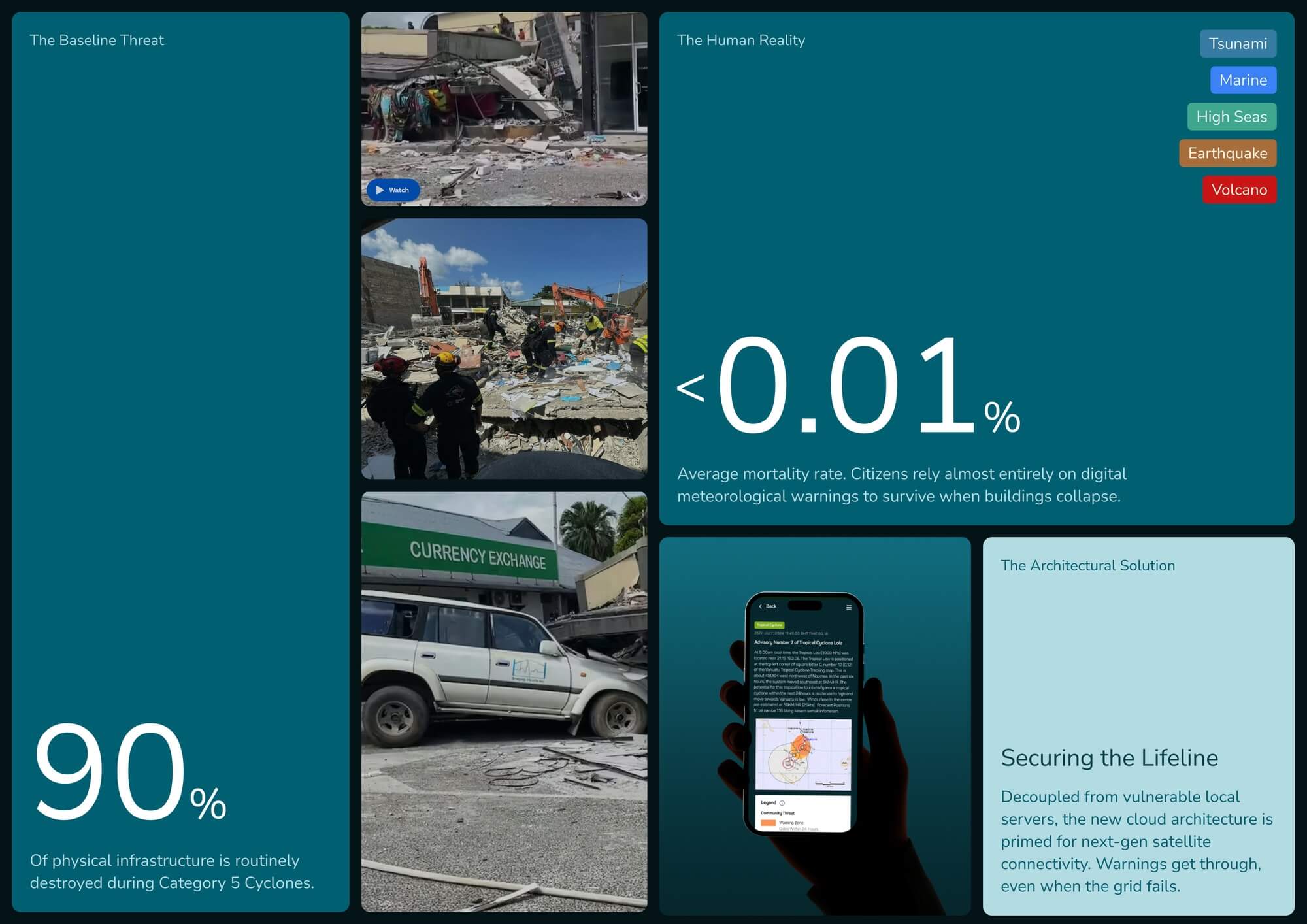
  • Vanuatu faces extreme vulnerability; cyclones routinely destroy cellular grids, and legacy SMS alerts suffered lethal 3-6 hour delays. Previous multimillion-dollar foreign aid projects often ignored local realities: 80% subsistence populations, linguistic diversity, and deep-seated Traditional Knowledge. The challenge was to engineer a resilient, low-bandwidth, and culturally inclusive service on a micro-budget. We needed a system that remained functional during total grid collapse, bypassed telecom bottlenecks, and earned national trust in a country where English and French technical warnings often alienated the grassroots population. We had to solve for "The Edge" where connectivity is a luxury.

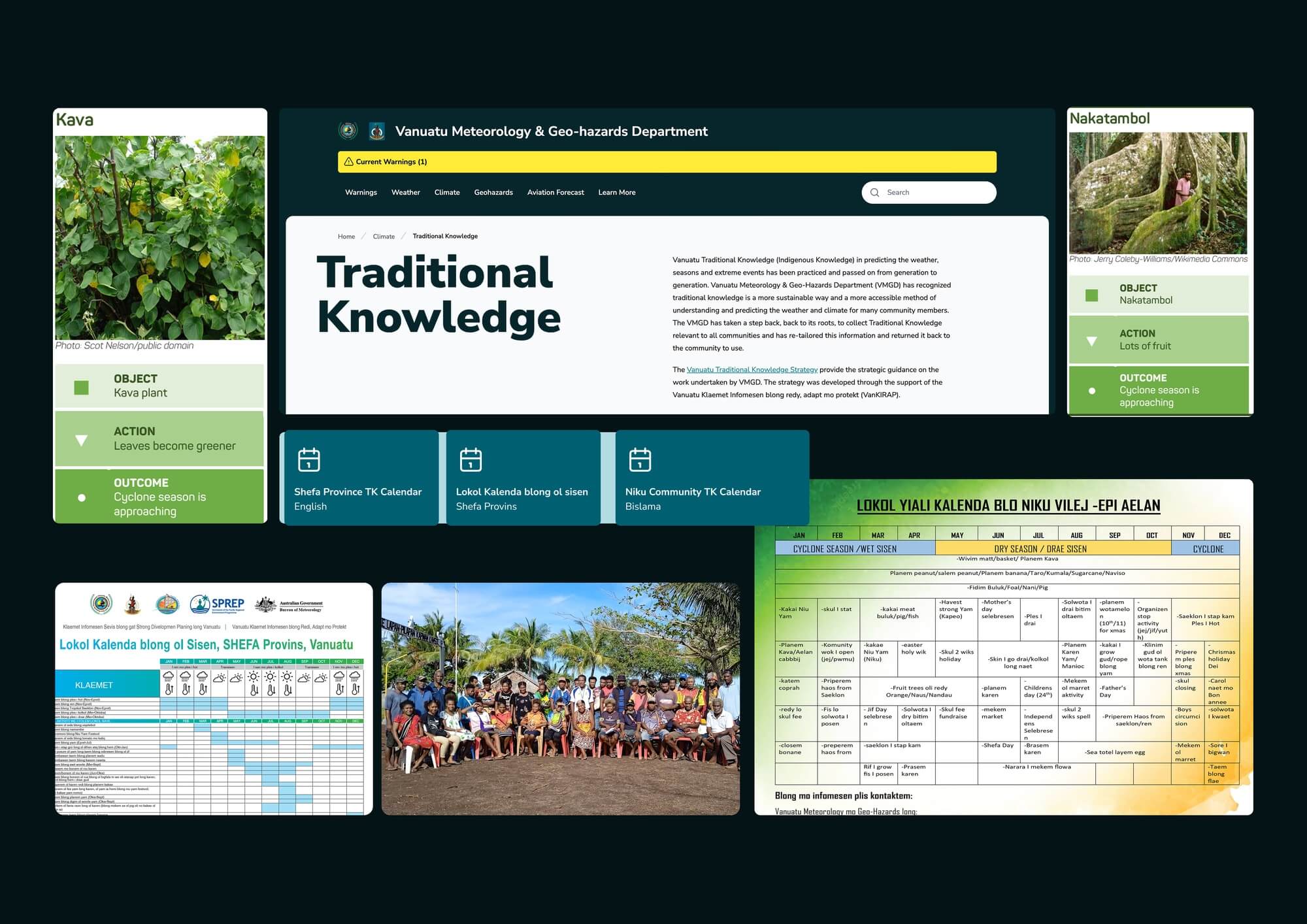
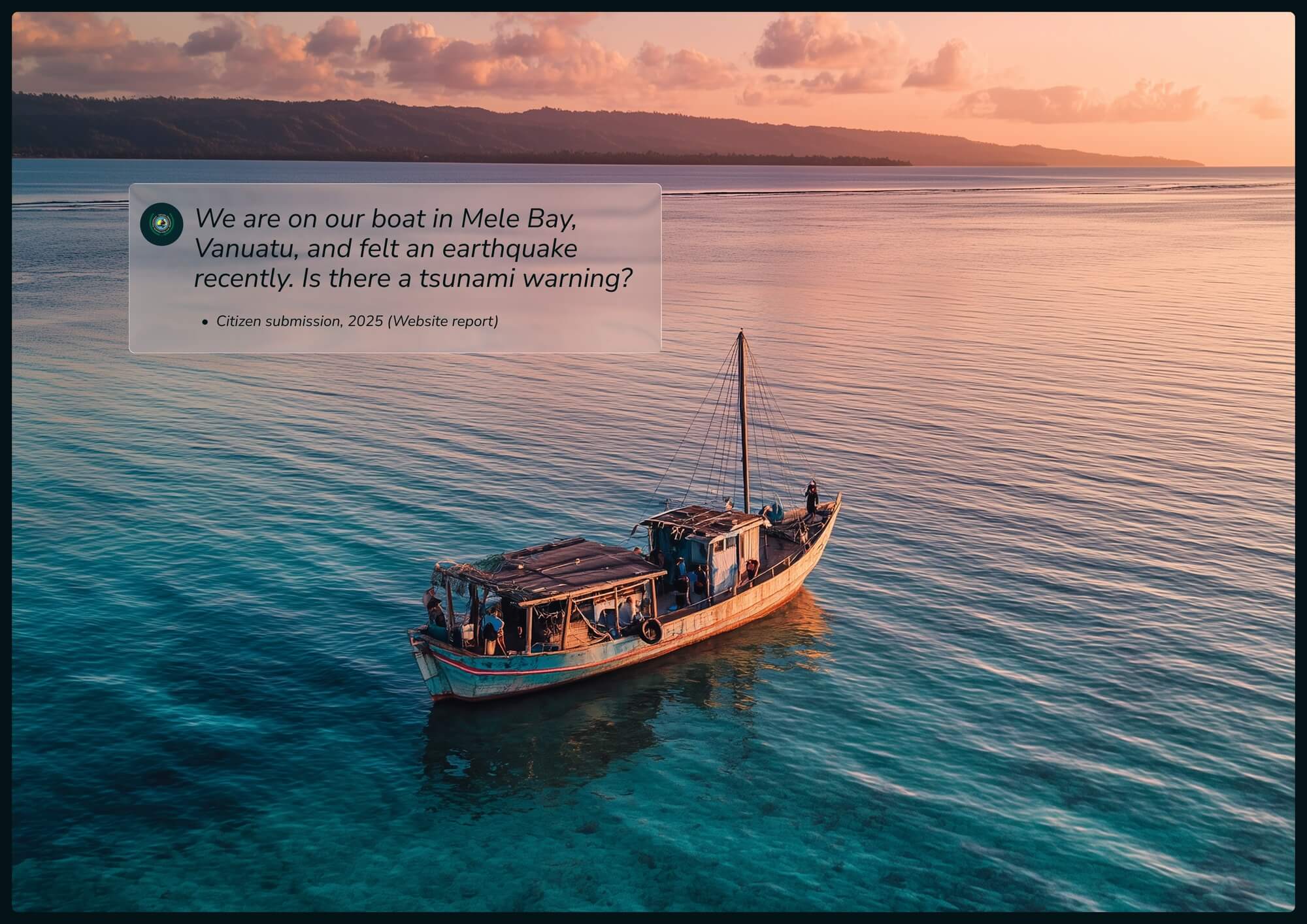
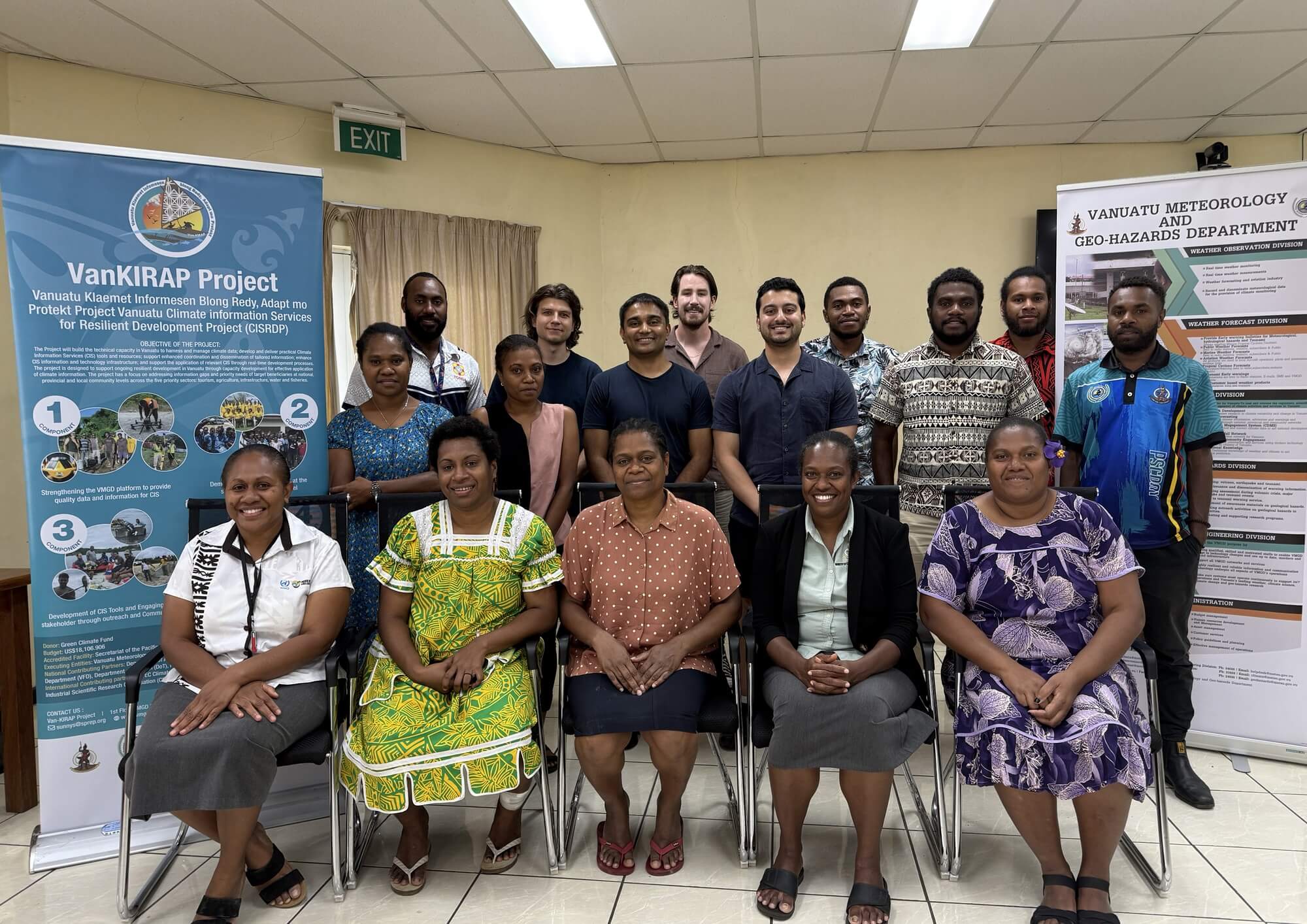
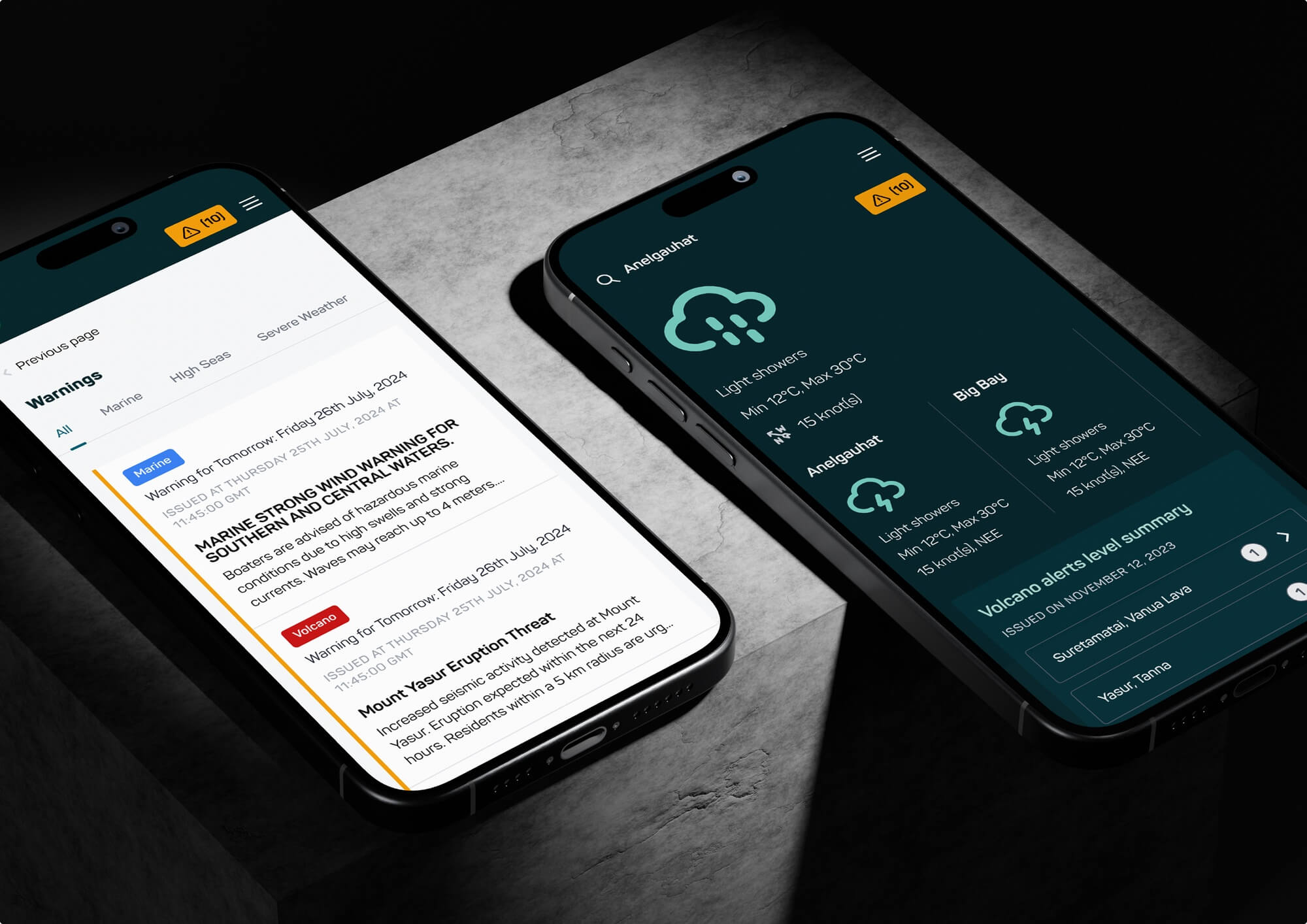
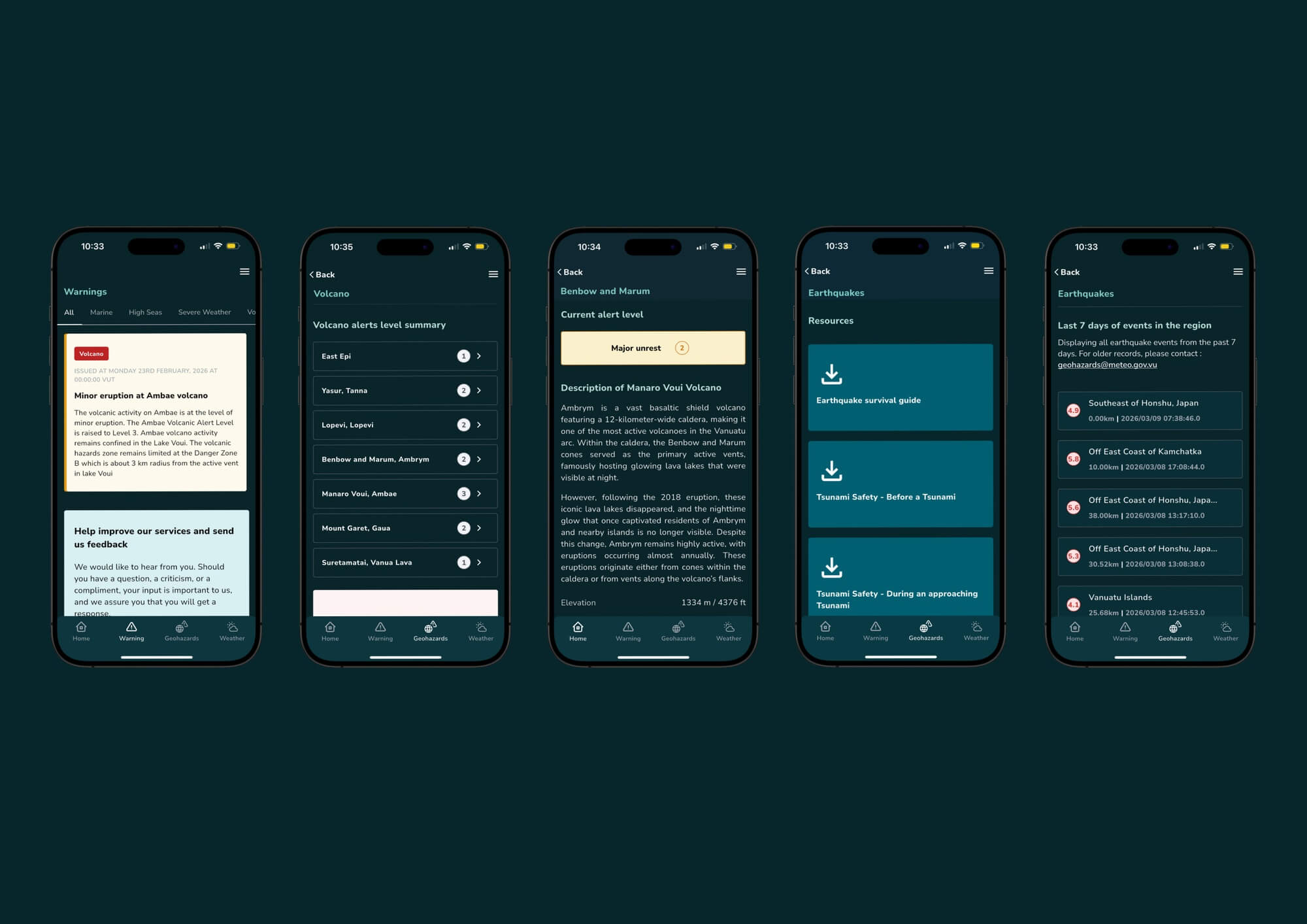
  • We bypassed legacy infrastructure by engineering a cloud-native service featuring near-instant push notifications and silent, local caching of survival information for offline use. To ensure sovereignty, we provisioned the local IT team with AI tools for long-term maintenance. The UI integrates live C-band radar, volcano drumplots, and AWS feeds, yet remains accessible through Bislama integration. A landmark shift was the 'Felt Report'. A two-way citizen sensor network turning users into active participants. This fusion of ancestral indicators with high-fidelity data ensures the service is technically superior, culturally resonant, and built for the specific constraints of the Pacific.

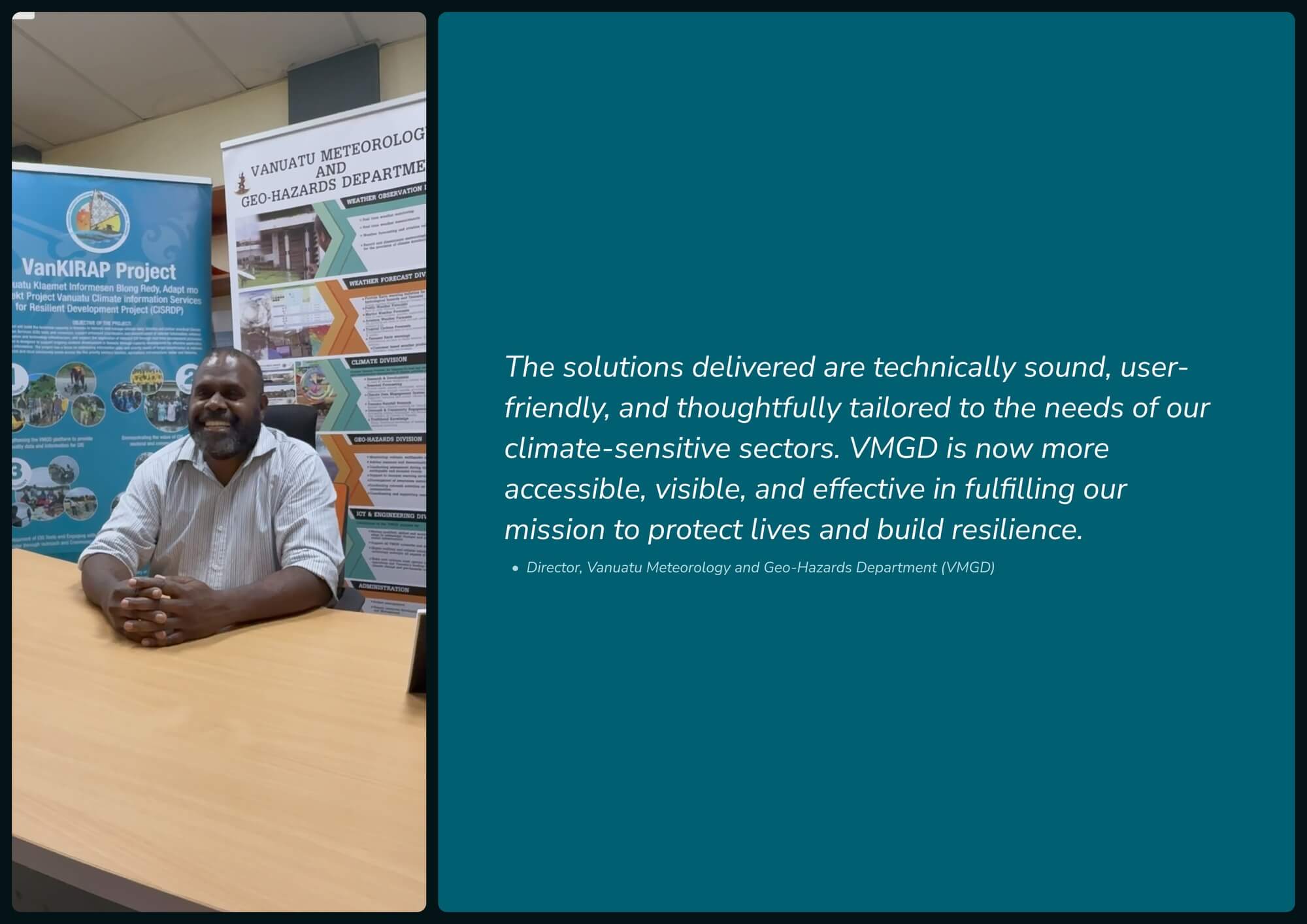
  • Within one year, 74,000 citizens (25% of the population) adopted the platform. It successfully outperformed legacy SMS during Cyclone Urmil, delivering warnings in seconds. Beyond public safety, it is now a vital regional data backbone: the WHO uses it for disease early-warning funds, while the Peace Corps and ADB rely on its logs for water infrastructure planning. Academic validation came via The Lancet, which credited the system’s design for Vanuatu’s "surprisingly low" disaster mortality rates. Societally, it empowers digital sovereignty, proving lean innovation can outperform massive external aid budgets while saving lives in the "deep blue."

  • Offline-First Resilience: Survival guides and hazard maps are silently cached to users' devices, ensuring life-saving information is accessible even when the national cellular grid is destroyed.'Felt Report' Network: A two-way communication channel transforming 300,000 citizens into a national sensor grid. This allows for real-time verification of tsunami risks and earthquake intensity in remote areas like Ambae.Cultural & Linguistic Inclusivity: The first technical service to prioritize Bislama alongside English and French, while integrating Indigenous Traditional Knowledge (TK) indicators directly into the forecast UI.Scientific Depth & Data Sovereignty: Real-time integration of live volcano drumplots, AWS observations, and climate products. By provisioning local teams with AI-assisted coding tools, we ensured the nation owns and evolves its own infrastructure.Inter-Agency Utility: Documented outreach/use from international bodies (WHO, ADB, Peace Corps) proves the platform’s value as a foundational data tool for regional development and health security for global, joint initiatives.Performance Benchmarking: Successfully replaces the traditional 3-6 hour latency seen in standard telecom broadcasts with near-instant, high-priority push notifications, providing a critical lead-time advantage in fast-moving disaster scenarios.