Inclusive by Design: LGBTIQA+ Spaces for NSW Public Hospitals

good-design-award_winner_rgb_blk_logo
  • 2026

  • Design Strategy

Designed By:

Commissioned By:

NSW Health Infrastructure

Designed In:

Australia

NSW public hospitals are not designed with LGBTIQA+ communities in mind. In partnership with NSW Health Infrastructure, Today co-designed a handbook, including a future vision, principles, and spatial design requirements across five archetypal healthcare spaces to guide how the built environment can support LGBTIQA+ health outcomes.

view website

2.jpg
3.jpg
4.jpg
5.jpg
6.jpg
  • CHALLENGE
  • SOLUTION
  • IMPACT
  • MORE
  • LGBTIQA+ people, particularly those who are transgender and gender diverse, arrive at public hospitals already managing heightened risk, then encounter spaces that compound it. Fixed seating removes choice. Amenities fail to affirm identity. Wayfinding offers no indication of inclusive services. Sensory conditions accelerate distress. For many participants, these conditions were enough to delay or avoid care altogether.Service-level improvements to LGBTIQA+ healthcare were underway across NSW, but the built environment had not been part of the conversation. No community evidence base existed connecting spatial design to LGBTIQA+ health outcomes. This project was commissioned to fill that gap.

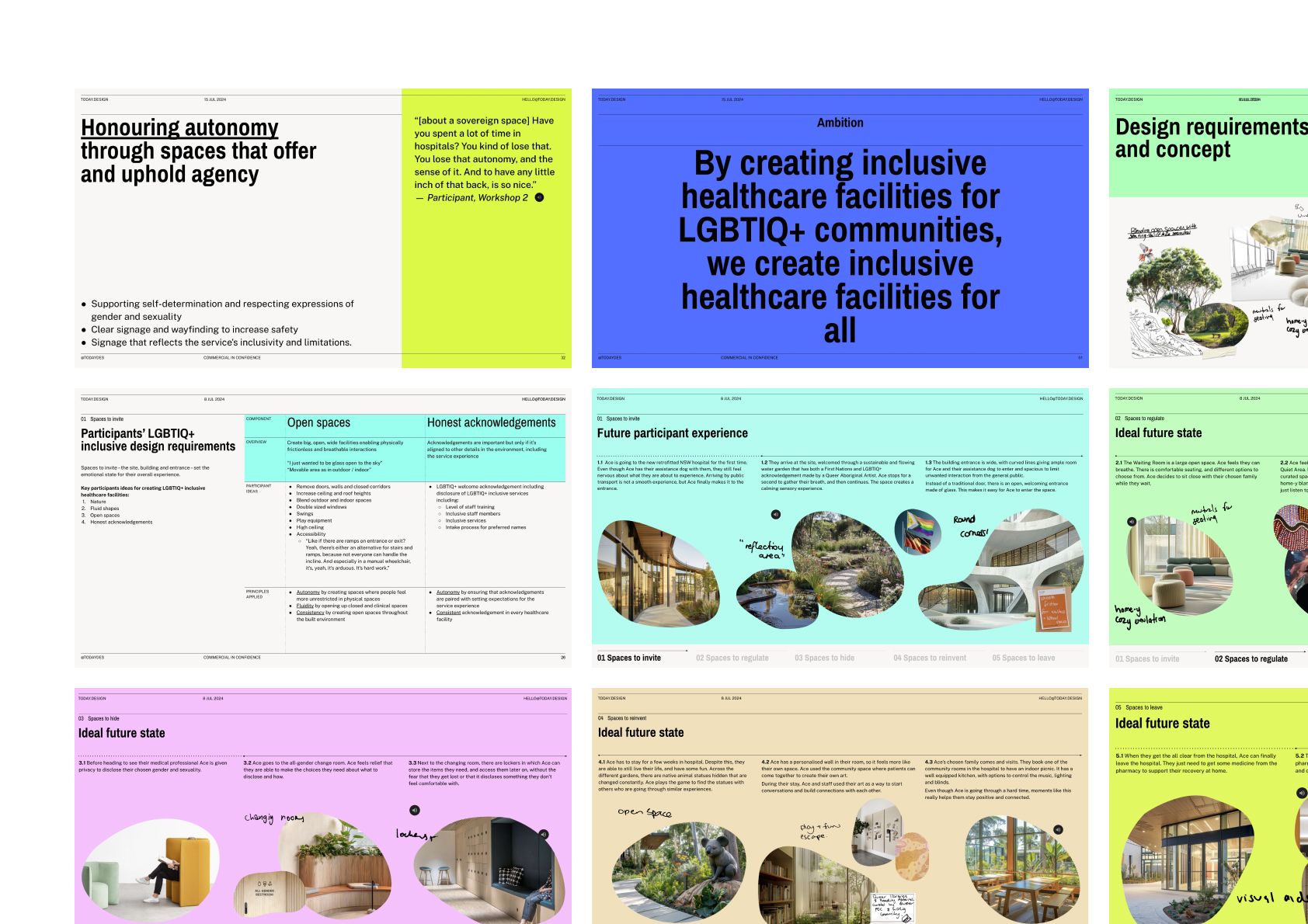
  • Led by a lived experience designer, the project combined a comprehensive literature review—grounding the work in global best practice and a clear hypothesis about inclusive healthcare spaces—with co-design workshops with deeply intersectional LGBTIQA+ community members. Using futures thinking and generative making, the team reimagined healthcare facilities as dignified and restorative, centring design around what's possible over current pain points.The result: a handbook containing a shared vision, three design principles, and spatial design requirements across five archetypal healthcare spaces, delivered to NSW Health Infrastructure as a provocation of what inclusive design could be across healthcare facilities statewide.

  • Healthcare facilities are among the hardest built environments to change — governed by strict clinical standards, long capital cycles, and complex institutional decision-making. The NSW Health Steering Committee described this work as delivering “provocative, tangible actions.”Today's design strategy is a deliberate first step in that longer arc: a foundational strategy translating lived experience into future-state spatial design requirements, structured to one day inform infrastructure at scale. Systemic change of this kind takes decades — the fight for inclusive bathrooms alone has spanned generations — but the signals are emerging. This project builds the foundation for what comes next.

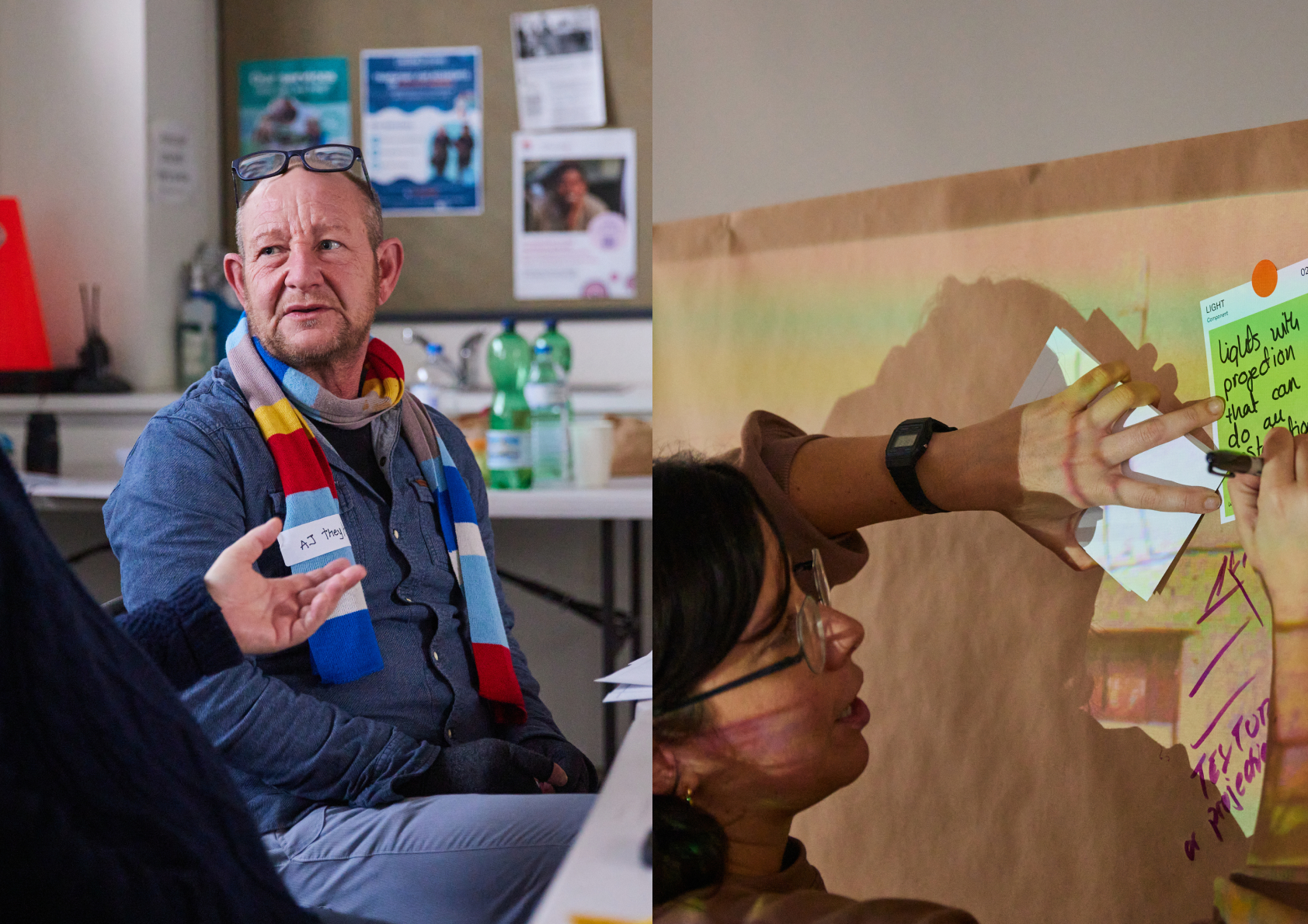
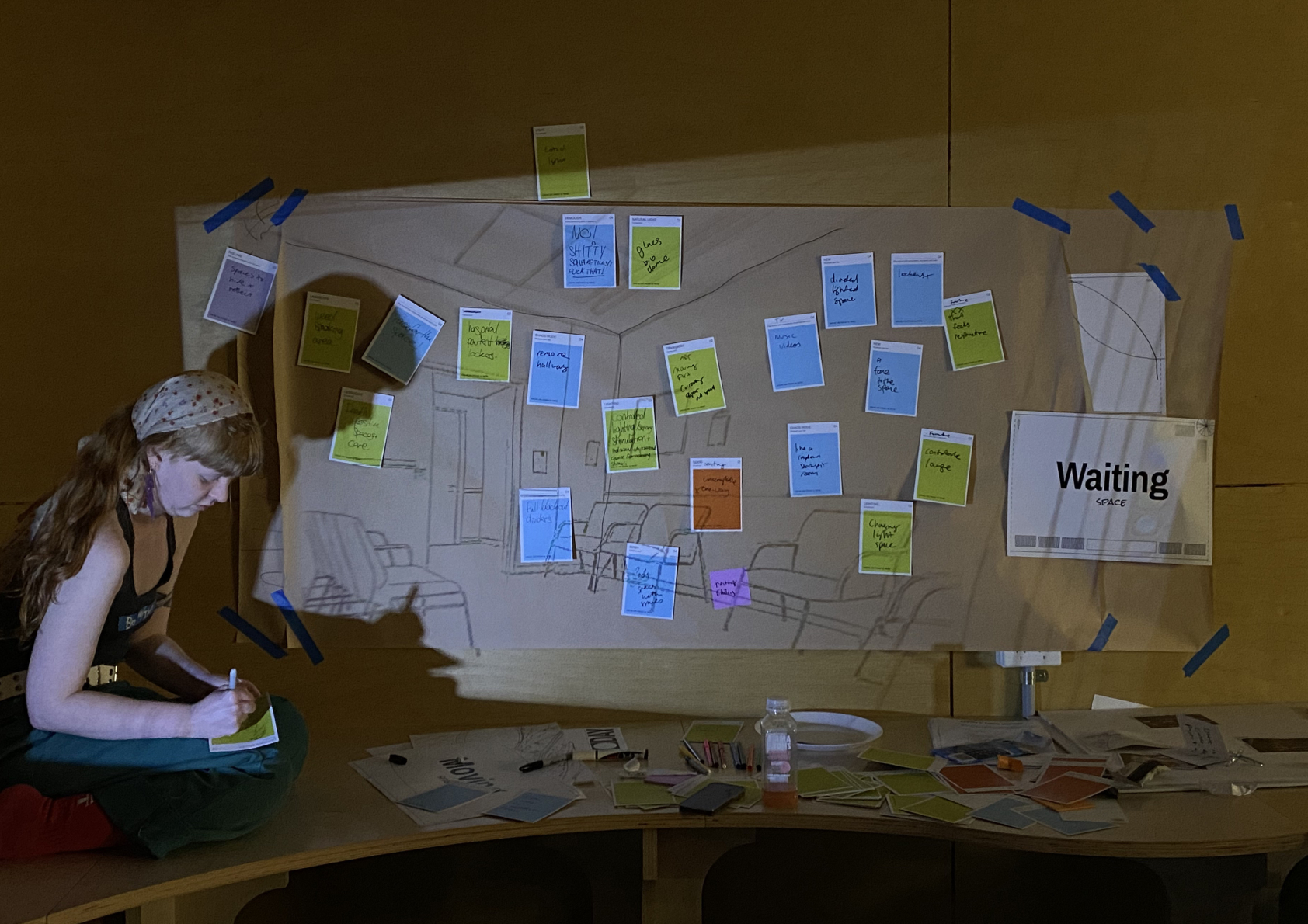
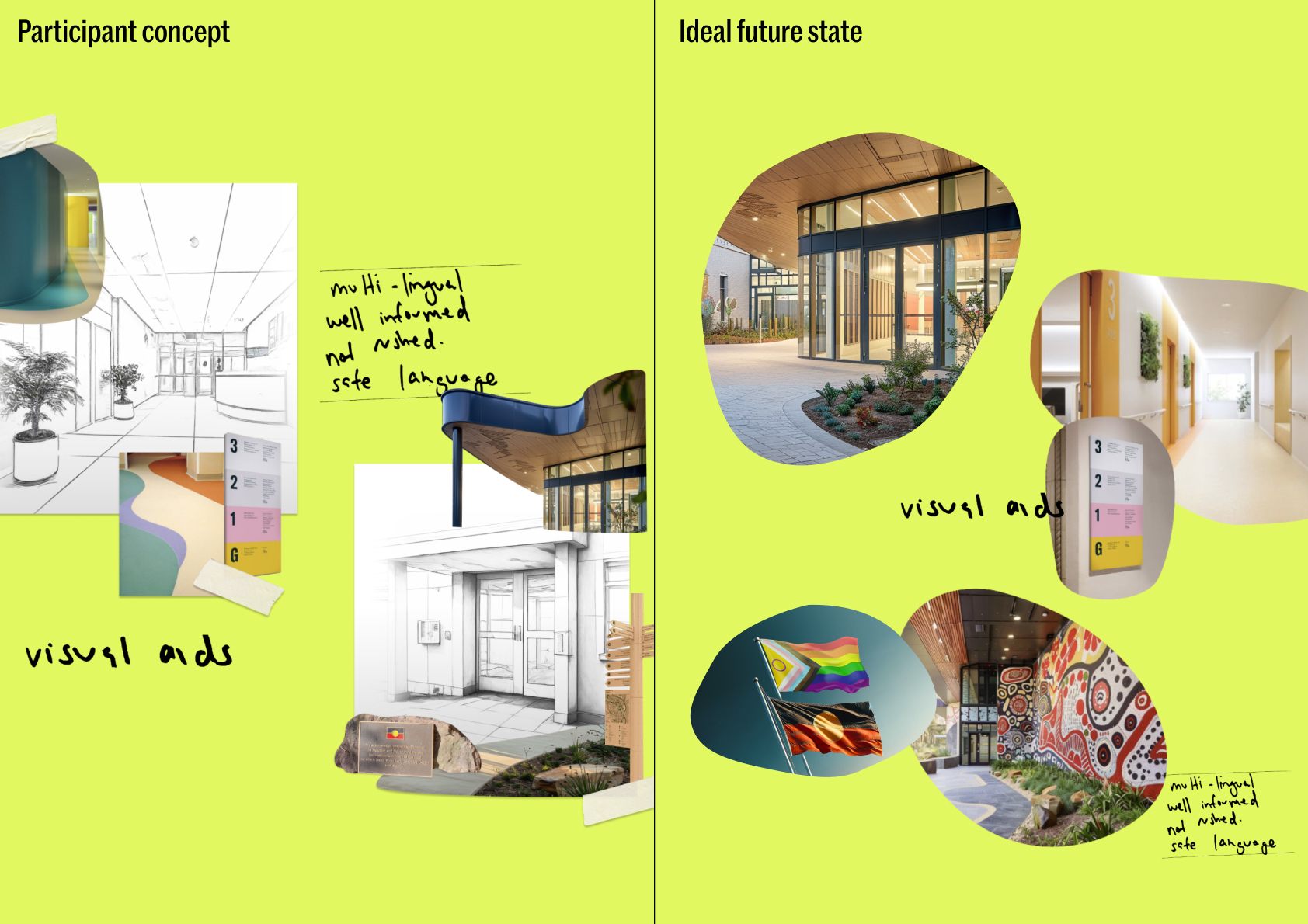
  • Lived experience leadership: The project was led by a Senior Designer with shared identity and deep connections to LGBTIQA+ communities, shaping methodology, facilitation, and outputs from inside the community.Mixed-method approach: A literature review of global best practice grounded the work in evidence before community engagement began, allowing the team to enter co-design with a hypothesis, not an open brief.Future-focused methodology:Participants used futures thinking and generative making to design the spaces they deserved, transforming lived experience and identity into spatial concepts. The methodology shifts the dynamic from consultation to co-design.Intersectional co-design cohort: Participants were recruited to represent the communities most excluded by public healthcare. All identified as LGBTIQA+ with lived and living experience of public hospitals; most were transgender or gender diverse; all were living with disability; many were First Nations or people of colour. One session was closed exclusively to transgender and gender diverse participants.Five-space handbook: Using projected hospital archetype rooms and a design kit, participants redesigned five spaces present in every NSW health facility: to invite, regulate, hide, reinvent, and leave. They reached feature-level detail across a full future-state healthcare visit, including transitions and overnight stays rarely covered by inclusive design practice.