Cast-In Fix: A Prefabricated Concrete Insert System

good-design-award_winner_rgb_blk_logo
  • 2026

  • Next Gen

Designed By:

Designed In:

Australia

Cast-in Fix is a cast-in concrete fixing system designed to eliminate the need for post-installed drilling. Developed for construction workers and prefabrication workflows, it embeds fixing points during the pour while maintaining post-cure flexibility through chemical anchoring, improving installation efficiency, safety, and consistency in reinforced concrete applications.

2.jpg
3.jpg
4.jpg
5.jpg
6.jpg
7.jpg
8.jpg
  • CHALLENGE
  • SOLUTION
  • IMPACT
  • MORE
  • Concrete construction relies heavily on post-installed drilling to create fixing points, a process that is labour-intensive, time-consuming, and highly dependent on installation accuracy. Informal consultation with construction workers identified three recurring challenges: repeated drilling due to rebar interference, tool wear and associated costs, and exposure to dust, vibration, and fatigue. These issues are amplified in reinforced concrete, where misalignment leads to rework and delays. While prefabrication aims to improve efficiency, fixing systems remain reactive rather than integrated into early-stage planning. The challenge was to rethink anchoring as a planned, embedded system while maintaining the flexibility required on construction sites.

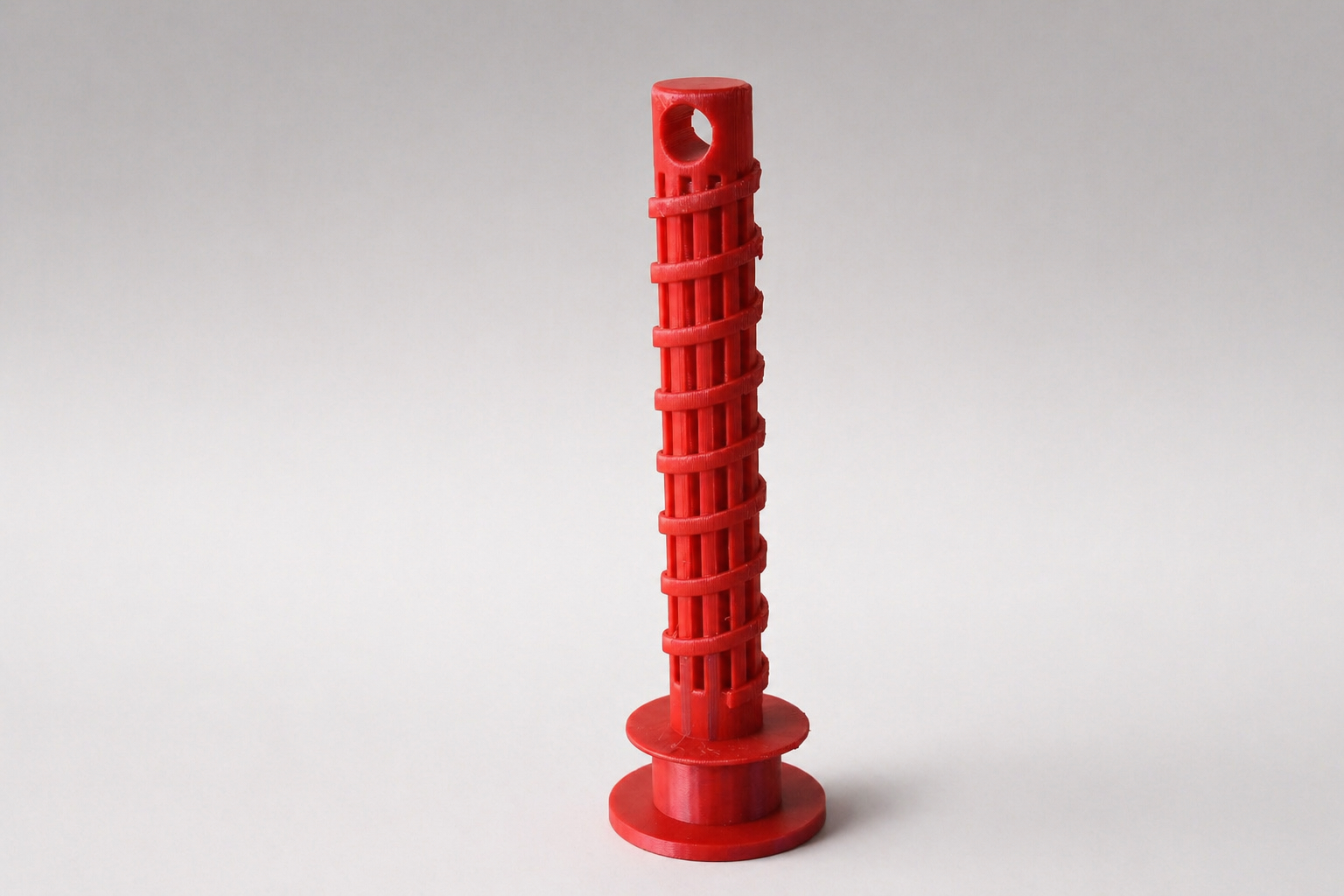
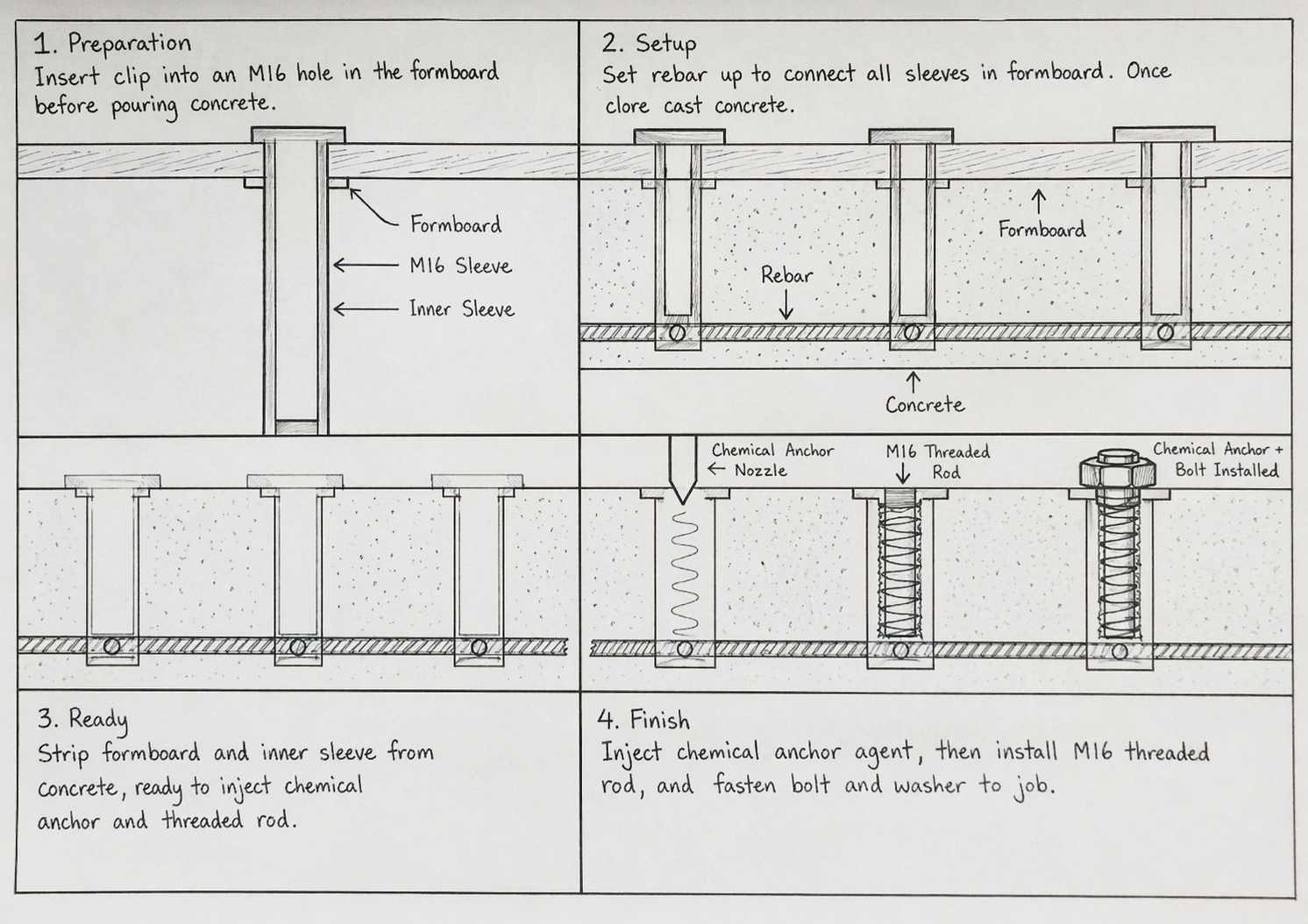
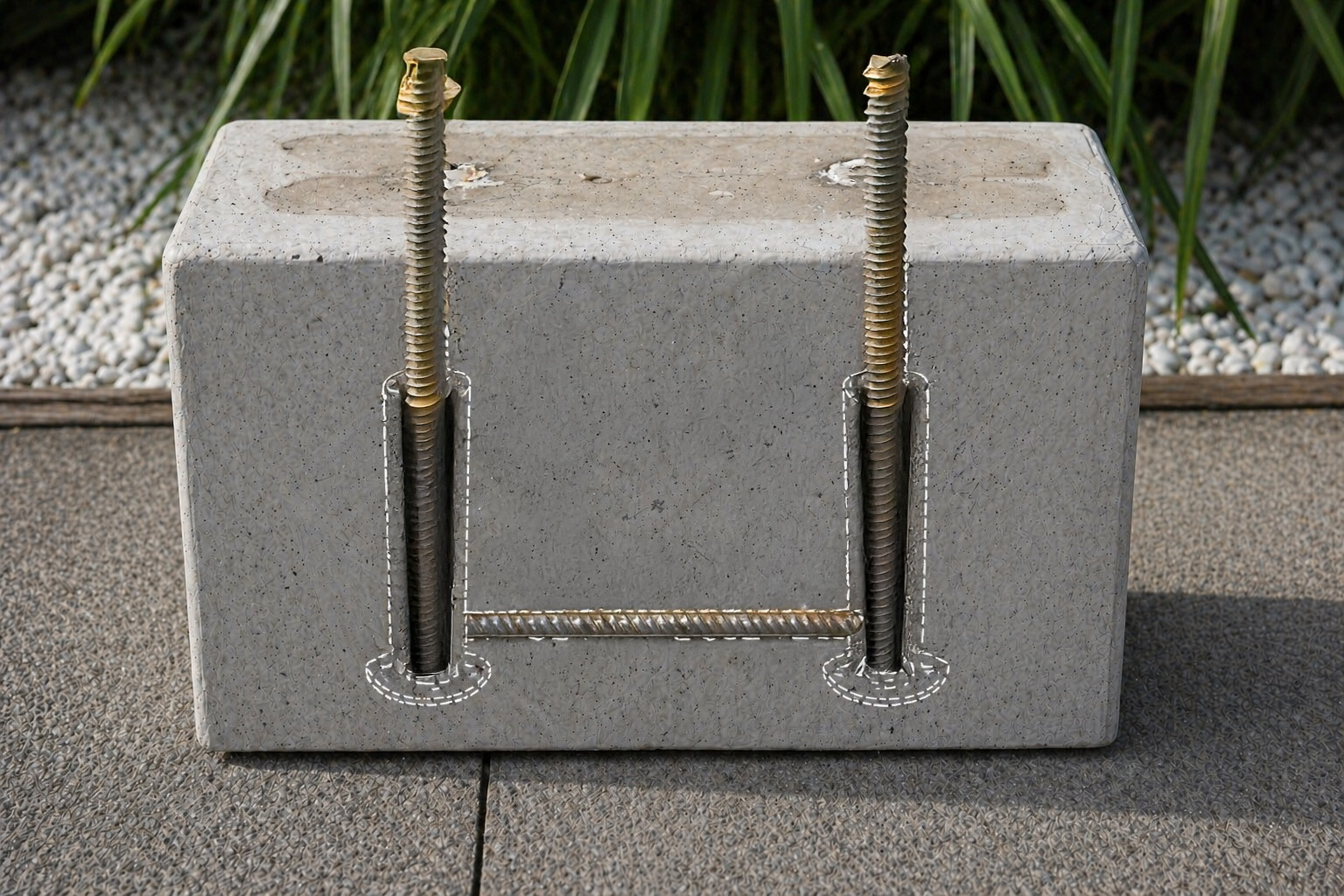
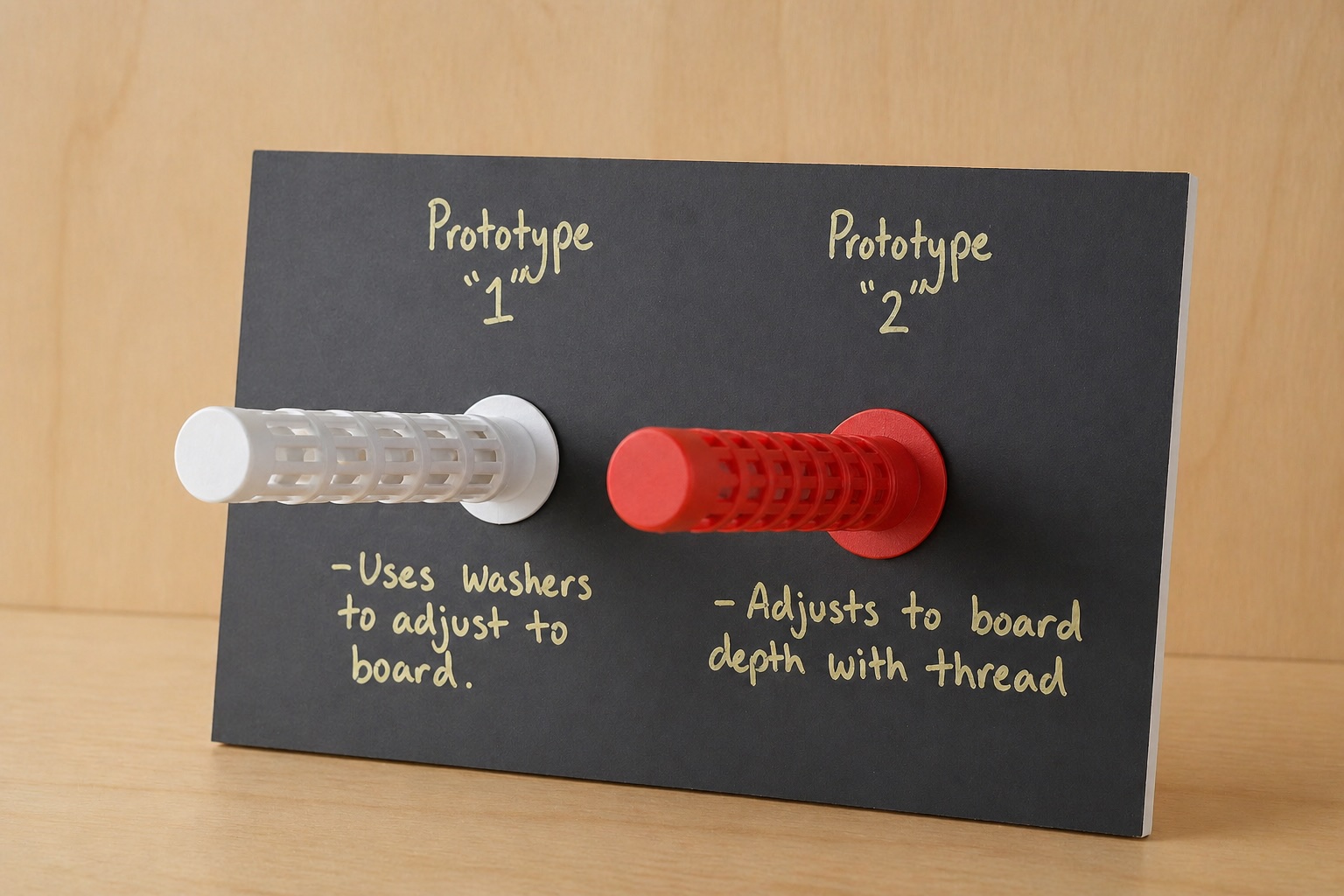
  • Cast-in Fix responds by embedding a two-part sleeve system into concrete during formwork. The ribbed outer sleeve provides mechanical interlock, while a removable inner sleeve preserves the fixing void during pouring. After curing, the inner sleeve is removed, allowing chemical anchor injection and threaded rod installation. The design evolved from early smooth cylindrical prototypes, which lacked stability, into a ribbed and slotted geometry that improved positioning and prevented concrete ingress. Scaled concrete mock-up testing validated placement stability and successful post-cure installation. This approach shifts fixing from a reactive drilling process to a planned and integrated workflow.

  • Cast-in Fix seeks to improve construction efficiency by reducing reliance on post-installed drilling, which in testing scenarios was eliminated at prototype fixing locations. This has potential economic benefits through reduced labour time, tool wear, and rework. Socially, it aims to reduce worker exposure to physically demanding and hazardous tasks, including vibration and dust generated during drilling. Environmentally, the design focuses on process efficiency by minimising unnecessary material use and failed installation attempts. While full lifecycle impacts require further study, the system represents a shift toward more controlled, repeatable, and integrated construction practices aligned with prefabrication methods.

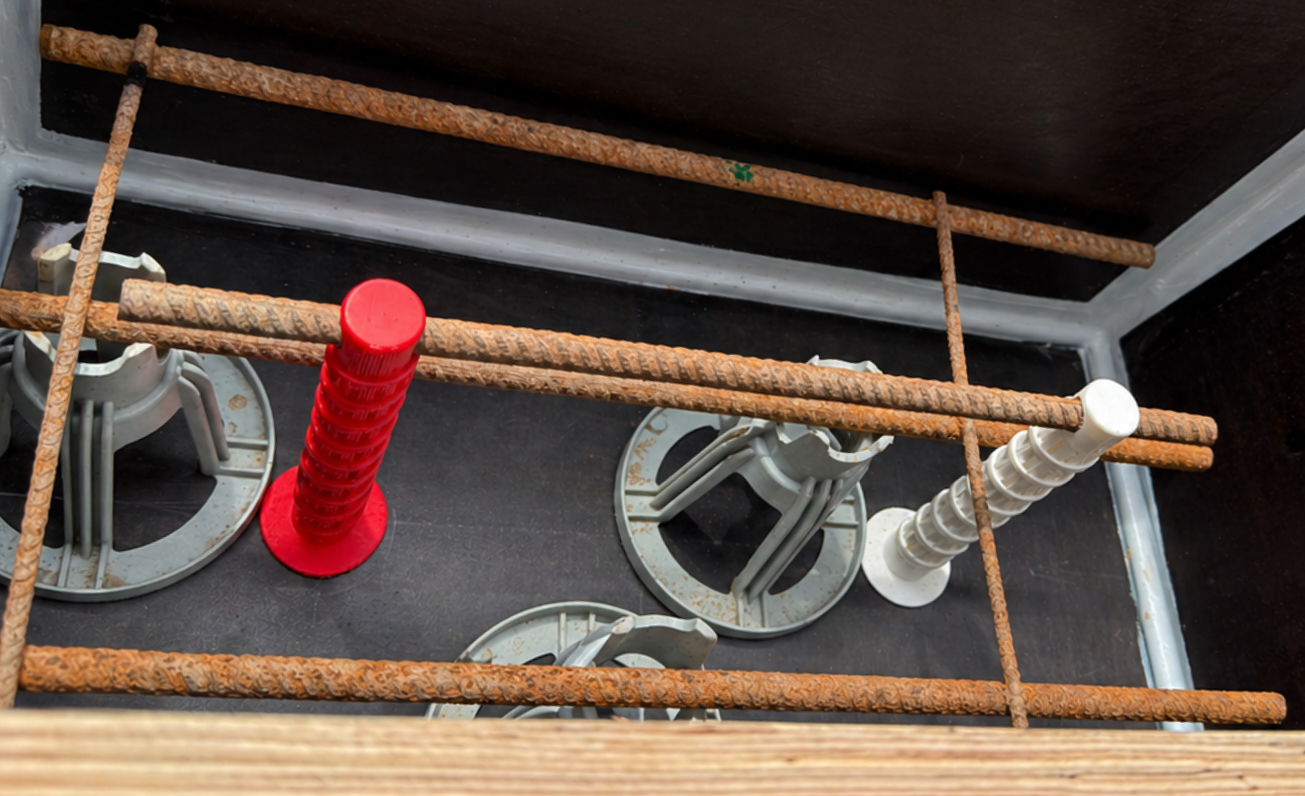
  • Cast-in Fix is a two-part cast-in fixing system consisting of a ribbed outer sleeve and a removable inner sleeve, designed for integration into concrete formwork prior to pouring. The outer sleeve incorporates external ribbing to improve mechanical interlock with concrete and maintain positional stability during pouring. Slotted openings along the sleeve prevent concrete from blocking the internal void and allow chemical anchor bonding directly to the surrounding concrete after curing.A key innovation is the removable inner sleeve, which protects the fixing void during the pour and can be extracted post-cure to enable flexible chemical anchoring and threaded rod installation. This combines the positional accuracy of cast-in systems with the adaptability of post-installed anchors.An integrated top opening allows reinforcement bars to pass through and connect multiple inserts within the concrete matrix, supporting alignment with reinforcement layouts.The system is designed in multiple sizes (M16, M20, M24) and prototyped using PAHT-CF for strength and durability. Prototype testing confirmed improved placement stability compared to earlier smooth designs and demonstrated successful post-cure installation.This design reframes fixing systems as integrated workflow components rather than secondary installation tasks.