Flapper Said: Exploring the Future of Conversational AI

good-design-award_winner_rgb_blk_logo

Flapper Said is an interactive prototype exploring conversational AI as storytelling. It centres on footballer Les “Flapper” Hughes (1908–1962), reconstructed through archives and speculative narrative. Rather than recreating history, it demonstrates the potential for user-driven applications across museums, retail, and care settings, including nursing, companionship, and human-centred conversational experiences.


view website

FlapperSaid_A5_Catalouge_SPREAD_Page_07_Image_0001.jpg
FlapperSaid_A5_Catalouge_SPREAD_Page_08_Image_0001.jpg
AI portrait of Les 'Flapper" Hughes created by Viet Le.
FlapperSaid_A5_Catalouge_SPREAD_Page_11_Image_0001.jpg
Installation image, Flapper Said: Exploring the future of conversational AI, Deakin Library Exhibition. Photo: J Forsyth
FlapperSaid_A5_Catalouge_SPREAD_Page_15_Image_0001.jpg
AI Les "Flapper' Hughes standing in front of the bar at the Royal Derby Hotel.Digital design: Viet Le.
FlapperSaid_SquizBanner_T2_1440pxw_x_1440pxh1.jpg
AI Les "Flapper' Hughes standing in front of the grandstand at Victoria Park oval. Digital design: Viet Le.
Flapper Standing_Page_1_Image_0001.jpg
Les "Flapper' Hughes AI animated portrait painting and historical memorabilia .
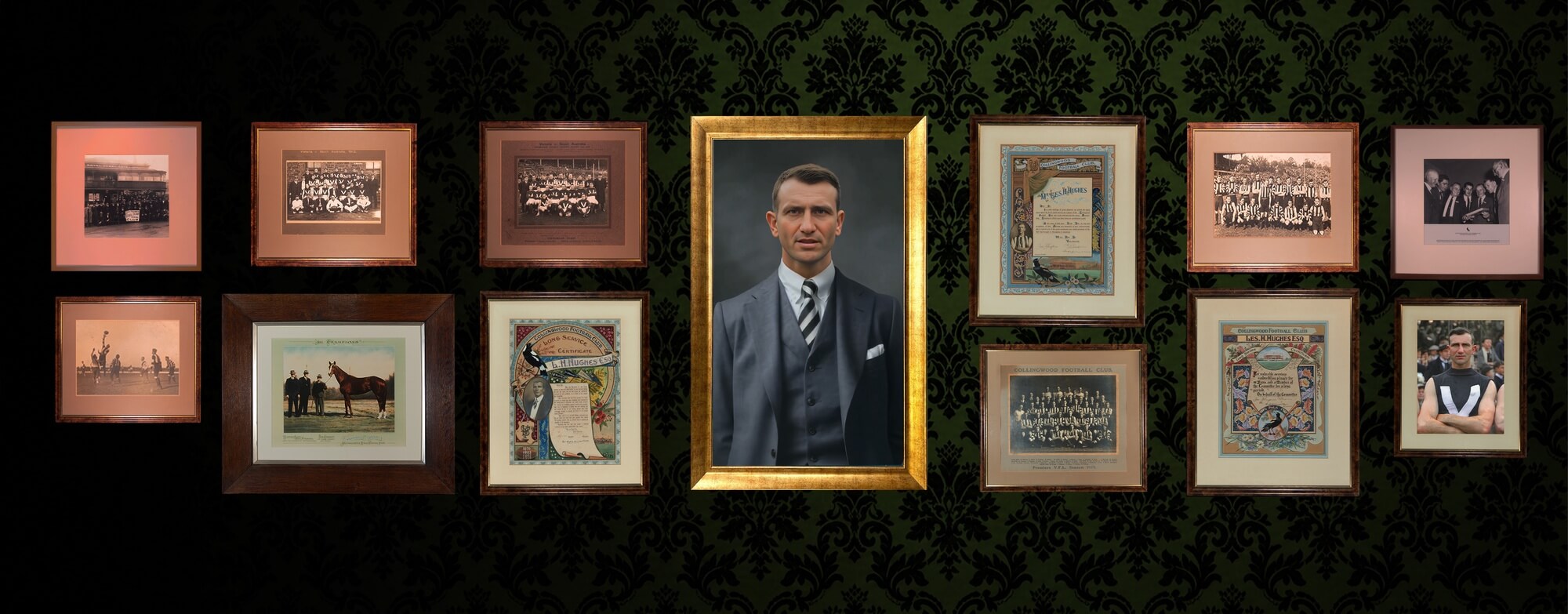
High_Res_Flapper Wall.jpg
Installation image, Flapper Said: Exploring the future of conversational AI, Deakin Library Exhibition. Photo: J Forsyth
  • CHALLENGE
  • SOLUTION
  • IMPACT
  • MORE
  • Flapper Said addresses a user experience design challenge, exploring AI-driven human–machine interaction as a cultural medium. It asks how machines speak and how humans respond, positioning conversational AI as a form carrying memory, personality, and nuance. The project reconstructs Lesley Horace Hughes (AKA Flapper) as an avatar using archives, family histories, and speculative narrative design. Through interactive encounters, users engage via curiosity-driven questions. Working within incomplete records, ethical constraints, and AI uncertainty, it tests how trust, empathy, humour, and ambiguity coexist with information, demonstrating how design shapes AI experiences and influences understanding.

  • The design solution is an interactive model presented in an exhibition setting where visitors engage one-on-one with a conversational AI avatar. Presented at Melbourne Design Week, Flapper Said explores how machines speak and how humans respond. It centres on Les Hughes (AKA Flapper), recreated through archival research, narrative design, and iterative prototyping. Development included voice modelling, personality tuning, and user testing, addressing gaps in records and ethical constraints. The final installation delivers real-time dialogue via integrated systems—LLMs, Unreal Engine, MetaHuman Creator, Convai and ElevenLabs—demonstrating human-centred, trust-driven conversational experiences grounded in storytelling.

  • Flapper Said demonstrates the commercial, environmental, and societal impact of conversational AI as a design-led research platform. Commercially, it has already generated an industry-funded partnership, involving the development of an AI nurse/carer for wearable medical technologies, while also attracting interest from museums and television overage by Nine Network News. Societally, it advances public understanding of AI through accessible, narrative-driven interaction, fostering critical dialogue at Melbourne Design Week (2026) and positioning conversational AI as a medium for human-centred storytelling, care, and engagement.

  • Flapper Said is an interactive conversational AI installation research project that combines archival research, narrative design, and real-time dialogue systems to create an immersive, human-centred experience. At its core is “Les Hughes (Flapper),” a historically grounded AI avatar developed through the synthesis of fragmented records, oral histories, and interpretive storytelling. The UX/Communication Design project integrates technologies such as large language models, voice synthesis, and real-time rendering to enable responsive, unscripted conversations that adapt to each visitor.A key feature is its focus on personality modelling and narrative coherence, ensuring a consistent voice, tone, and perspective. This is supported by a curated knowledge base and structured conversational frameworks that balance factual grounding with creative interpretation. Designed for accessibility, the system enables intuitive one-on-one interaction, fostering presence and intimacy.Flapper Said also foregrounds transparency and authorship, acknowledging the designer’s role in shaping AI dialogue. Ethical considerations—including bias, representation, and cultural sensitivity—are embedded throughout. Presented as both exhibition and public forum at Melbourne Design Week, it positions conversational AI as a powerful medium for storytelling and critical engagement.